With the launch of its United Kingdom subsidiary, United Bank for Africa (UBA) Plc has set its foothold in the financial hub of European-African trade worth EUR280 billion in 2017, according to BusinessDay analysis of European Commission data.
UBA has been granted a wholesale licence in the UK, which it plans to use in facilitating transactions between businesses in Africa and across the globe through the London financial hub.
Investors at the event held in London at the weekend, including Aliko Dangote, president, Dangote Group, expressed optimism that the move is coming at a good time when Africa needs to strengthen trade relations with the rest of the world.
For Dangote, Africa’s richest man, who was a guest at the launch, opening the London bank portrays UBA as dynamic and committed to facilitating trade between Africa and the rest of the world.
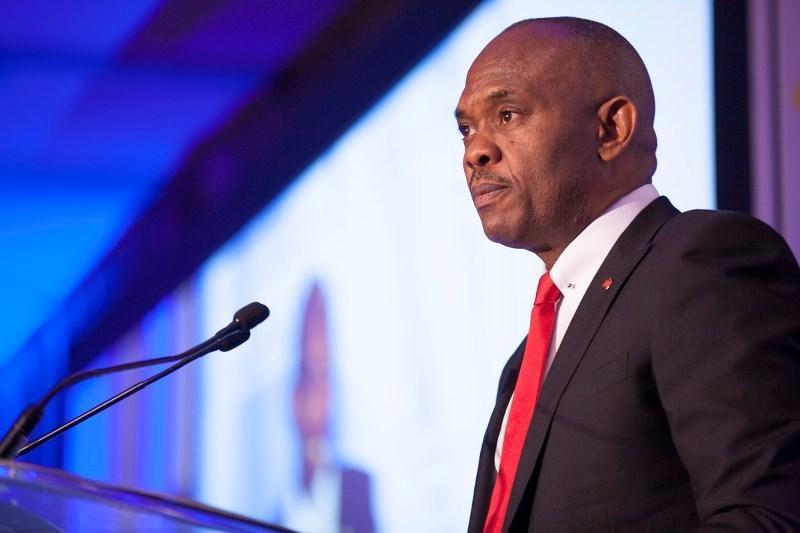
Tony Elumelu, chairman, UBA Group, described the new UK bank as a global financial movement supporting businesses, both big and small, to carry out seamless transactions.
“Our intent is to follow our customers, to continue to support our customers and Africans,” Elumelu said.
“We have been in New York for quite some years. We want to help our customers. We want to be around our customers, and we need to help support our customers,” he said.
As the only bank of Nigerian origin operating in 20 other African countries, UBA says it wants to consolidate its pan-African status by making businesses in Africa transact directly with contemporaries across the world, without the cumbersome involvement of third parties.
Patrick Gutmann, CEO of UBA UK, explained that while the bank has been present in the UK for many years, this is the first time it is present as a full bank.
“This is a key part of UBA’s ambitions to be Africa’s global bank,” said Gutmann. “If you want to be Africa’s global bank, you need to have presence in key financial hubs, and London is one of such.”
This, according to him, gives UBA the opportunity to service not only the UBA Group, but all of the clients that work with UBA across all the 20 African markets.
The UK was the 7th highest European exporter of goods to Africa in 2017, with a value of EUR9.77 billion, and was the 5th European importer of goods from Africa with EUR14.68 billion, having a trade deficit of EUR4.9 billion with the continent, according to data from the European Commission.
The British Office for National Statistics (ONS), in its 2016 report on trade and investment relationship with Africa, also noted that UK’s trade balance with Africa returned to deficit in 2012 following an increase in imports. Trade between Africa and the UK has been growing over time, and remains economically significant.
Brexit, of course, remains topical, particularly when considered from the economic perspective of potential transactions between Europe and Africa.
“Whether Brexit happens or not, the impact is minimal, and the reason is because we are not a bank that deals across European borders as such,” Gutmann said.
“We are a bank that deals with the emerging markets and in our case, the African continent, and those flows are not necessarily going to be interrupted by either of Brexit or no-Brexit,” he said.
But then, the value of European trade with Africa is quite significant and could still be a viable market to be explored by UBA. The European Commission reported in 2017 that EU imports of goods from Africa (which is mostly driven by primary goods) stood at EUR131 billion, although they had been as high as EUR187 billion in 2012.
On the other hand, European exports to Africa as at 2017 stood at EUR149 billion, with 72 percent of these goods exported from the EU to Africa being manufactured goods.
“Regardless of Brexit or no-Brexit, businesses will always be linked between Africa and Europe. And, of course, we have a rep office in France, so whichever direction they go, UBA is ready for them,” Gutmann said.
With the type of licence the bank previously had, African businesses transacting with a partner in England had to deal with another bank, but the UBA now aspires to service that market.
“UBA is interconnecting businesses in Africa with not just United Kingdom but across the world because we have a big franchise in the US which is about 35 years old,” said Kennedy Uzoka, group managing director/CEO, UBA.
Uzoka said what has been done is to create a UBA one-stop shop such that whether a client is in Ghana, Nairobi or any part of Africa, by talking to any UBA in an African country, their transactions across the globe will be consummated without going through any third parties.
“We are taking away that barrier that used to exist for Africans, to make their business easy,” said Uzoka.
In an interview on the sidelines of the launch, Dangote expressed optimism in the Nigerian economy, particularly with the presidential election now concluded.
“The thinking from the business community is that things will continue to grow in terms of trajectory. We were not really bothered about election period or not as we continued to invest heavily in Nigeria, which we will continue to do. I think we will have better days,” Dangote said.
Gutmann also said in an interview that since “the Nigerian election has come and gone, we see that as an impetus for more flows and investments coming into Nigeria”.
CALEB OJEWALE