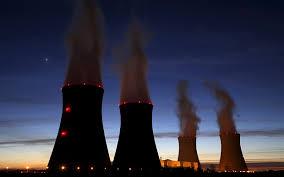
The U.K. government has approved Electricite de France SA’s controversial plan to build two nuclear reactors for 18 billion pounds ($24 billion) in southwest England.
The project will proceed under the condition that EDF won’t be able to sell down its controlling stake in the project prior to completion of construction without U.K. government approval, the Department for Business, Energy and Industrial Strategy said in a statement Thursday. The guaranteed electricity price that underpins the development hasn’t been changed.
U.K. Prime Minister Theresa May decided to review Hinkley Point at the end of July, casting doubt on a project approved by her predecessor David Cameron as a way of reducing greenhouse gas emissions. The unexpected delay came amid concerns about the scale of public subsidy for the plants and whether Chinese involvement was a security risk.
“Britain needs to upgrade its supplies of energy, and we have always been clear that nuclear is an important part of ensuring our future low-carbon energy security,” Secretary of State for Business, Energy and Industrial Strategy Greg Clark said in the statement. “Having thoroughly reviewed the proposal for Hinkley Point C, we will introduce a series of measures to enhance security,” and therefore decided to proceed, he said.

Strategic Investment
The approval crowns almost a decade of efforts by EDF to prepare for the replacement of its U.K. nuclear fleet, acquired when it took control of British Energy Plc in 2008. The previously agreed contract for the plant guaranteed the French company could sell power generated by the plant at more than double current market prices for as long as 35 years. The huge upfront cost of the development still provoked internal opposition, with Chief Financial Officer Thomas Piquemal resigning in March saying the plant would strain the utility’s finances.
EDF Chief Executive Officer Jean-Bernard Levy has said Hinkley Point is key to ensuring the health of the French nuclear industry and providing work for struggling nuclear group Areva SA. Under pressure from the French government, the CEO has agreed to take control of the nuclear-reactor business of Areva, which has been hurt by delays and cost overruns at an atomic plant in Finland.
The project also is of strategic importance for China. State-owned China General Nuclear Power Corp., which is due to provide a third of the finance for Hinkley Point, intends to take a minority stake in a similar nuclear reactor at Sizewell, and then a majority holding in another at Bradwell, which will use Chinese technology.
A blog post written last year by Prime Minister May’s new chief of staff exposed concerns about U.K. energy security and cast a shadow over British-Chinese relations. Nick Timothy warned the involvement of Chinese partners in the project could allow them to “shut down Britain’s energy production at will.”
“After Hinkley, the British government will take a special share in all future nuclear new build projects,” according to the statement. “This will ensure that significant stakes cannot be sold without the government’s knowledge or consent.”

The project, which will take almost 10 years to construct, will provide a 9 percent annual return if built on time and on budget, according to Levy. The U.K. National Audit Office estimated in July that consumer-funded top-ups over the project’s 35-year lifetime may total almost 30 billion pounds, after Cameron’s government agreed in 2013 to pay EDF 92.50 pounds a megawatt-hour for electricity from the plant.
EDF’s labor unions wanted the U.K. project to be delayed by about three years to benefit from feedback from reactors being built in France, Finland and China. At Flamanville in France, where the utility is building a reactor of the same design proposed for Hinkley Point, costs have more than tripled to 10.5 billion euros ($11.8 billion) and construction is six years behind schedule.