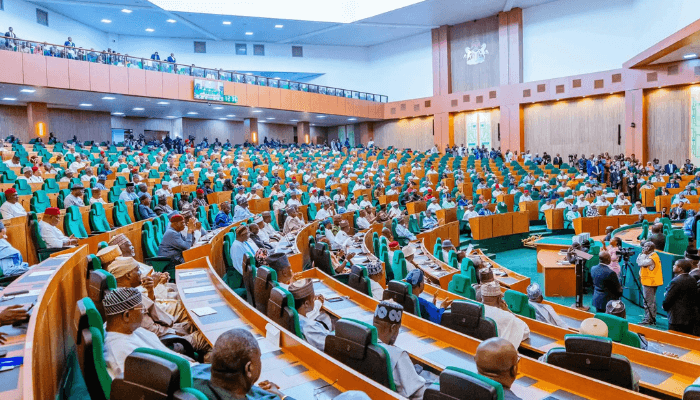
When the 10th House of Representatives was inaugurated in June 2023, it promised not just another legislative cycle, but a new direction. Led by Tajudeen Abbas, the House Speaker and packed with over 80 percent first-timers, the House laid out an ambitious eight-point agenda.
The House agenda bordered on strengthening good governance, improving national security, law reform, economic growth and development, social sector reform and development, inclusion and open parliament, influencing/directing Nigeria’s foreign policy climate change and environmental sustainability, they aimed to restore public trust, modernise governance, and push Nigeria into a more inclusive, secure, and sustainable future.
Two years on, how far has the 10th House walked its talk?
If lawmaking were the sole benchmark, this House would already be in the record books. In its first two years, lawmakers introduced 2,263 bills. Of these, 65.3 have passed their core reading, while 186 have been successfully passed. A total of 51 bills have received presidential assent, according to the House speaker

Read also: Green Chamber: A silent shift: How Nigeria’s opposition is losing its voice at House of Reps
Big-ticket items like the Student Loans Act, amendments to the Cybercrimes and Armed Forces Acts, and a revived National Anthem Bill signal that this House knows how to turn ink into statute. But as the bills pile up, citizens are asking the more pressing question: what difference has all this made to their lives?
One of the most repeated promises from the 10th House was to open up its workings—to become a truly digital, “e-Parliament.” In reality, progress here has been slow. While the National Assembly’s website has remained patchy and often out-of-date, plenary sessions still rely heavily on paper. Legislative records, votes, and budget data are hardly accessible to the public.
Even the much-touted transparency dashboard for tracking implementation of the legislative agenda has remained more an aspiration than a tool.
To its credit, the House has shown readiness in responding to Nigeria’s worsening security climate. It passed amendments to both the Armed Forces and Police Acts and pushed through legislation on the control of small arms and light weapons, in addition to the dozens of motions on insecurity. The Defence Industries Corporation Act was also updated to localise military production.

But oversight, the less glamorous, more consequential part, remains largely invisible. While closed-door briefings are held with security chiefs, the public is still left in the dark on how billions are spent in the name of national defence.
However, one of the areas where the House has broken new ground is inclusion. In 2024, it held its first-ever “Legislative Open Week,” drawing schoolchildren, civil society groups, and everyday citizens. For the first time, sign-language interpretation was introduced during plenary. Town halls on issues like state policing and the Electoral Act were held across the six geo-political zones, bringing citizens directly into the policy process.
It may not be a revolution, but it’s a refreshing shift from the aloofness that has defined the National Assembly for decades.
In the social sector, the House has made some progress with laws like the Student Loans Act and the establishment of the Medical Research Council. It has also reviewed hundreds of public petitions, and 240 motions have been dedicated to social reform. However, turning bills into programmes—and programmes into impact—will be the true test in the next two years.
Economic reform was another big promise. The House held dialogues with stakeholders on tax reform, fiscal policy and power sector regulation. But much of the legislation passed so far sets frameworks; the heavy lifting of implementation, whether on investment, job creation or inflation, rests with the executive.
Read also: Kwankwaso says 10th NASS rubber-stamp, worst in nation’s history
On the climate front, efforts have been tentative. Legislators advanced motions on gas flaring, a National Disaster Fund, and climate adaptation finance. While laudable, most of these are still in committee stages or waiting for executive action.
Perhaps the quietest of the eight agenda points has been the House’s role in shaping foreign policy. Just a few motions and diaspora-related bills have emerged, and little has been seen in terms of proactive engagement with regional or global issues. At a time when Nigeria’s role in ECOWAS and the African Continental Free Trade Area (AfCFTA) is being tested, the House has remained mostly reactive.
At the halfway point of its four-year term, the 10th House has shown itself to be engaged and at times, bold. Yet, the story is far from complete. Grand promises around transparency, digital transformation, foreign policy leadership, and security oversight remain in the works.
As inflation bites and insecurity persists, Nigerians are watching more closely than ever, not just to see what their lawmakers say, but what they actually deliver.
For this House, the next two years will matter even more than the first. Now is the time not for new promises, but for execution, oversight and delivery. That’s what will separate this Parliament from the rest. And that’s what will determine whether Nigerians believe, at last, that this House is truly theirs.