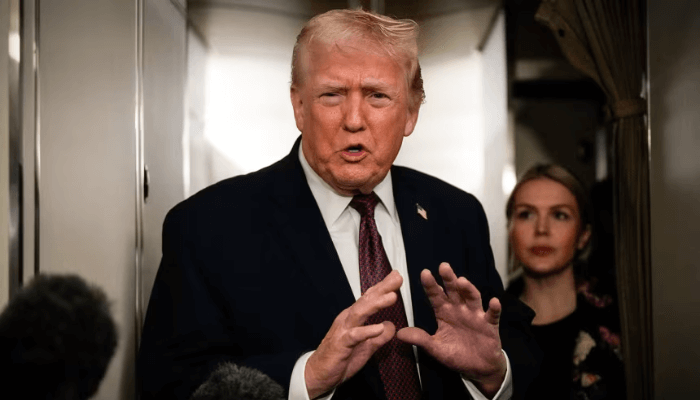
Donald Trump, United States president, has announced plans to raise tariffs on South Korean imports to 25 percent, accusing Seoul of failing to honour a trade deal agreed last year. The move risks unsettling one of Washington’s closest Asian allies and rattling global markets already wary of renewed trade brinkmanship.
Read also: Trump says nations doing business with Iran face 25% tariff on U.S. trade
In a social media post, Trump said the United States would lift tariffs from 15 percent on a wide range of South Korean products, including automobiles, lumber, and pharmaceuticals, as well as what he described as “all other reciprocal tariffs”. He blamed delays in South Korea’s parliament for the decision.
“South Korea has not been living up to the transaction agreed to,” Trump wrote, adding that Washington had “acted swiftly to reduce our tariffs in line with the deal”.
Seoul said it had received no official notice from the United States about the higher tariffs and called for urgent talks. South Korea’s industry ministry said Kim Jung kwan, industry minister, would travel to Washington as soon as possible to meet Howard Lutnick, United States commerce secretary, in an effort to defuse the situation.

Read also: Trump backs down from Greenland tariff threats after NATO talks
The United States is South Korea’s second largest export market after China. Last year, South Korean exports to the US totalled about 123 billion dollars, with car exports alone accounting for roughly 30 billion dollars. Any tariff increase would therefore hit a critical pillar of the country’s economy.
Financial markets reacted cautiously. Shares in Hyundai and Kia initially fell by as much as six percent before recovering to close about one percent lower. South Korea’s main stock index, the Kospi, reversed early losses to end the day up 2.7 percent.
Read also: Nigeria faces 40% US tariff hit over Iran trade ties
Analysts said investors appeared doubtful that the tariff threat would be fully carried out. They pointed to Trump’s recent reversal on plans to impose additional tariffs on European partners after opposition to US proposals linked to Greenland.

“With a delegation on its way from Seoul to Washington, markets are viewing this latest twist as more carrot than stick,” said Derren Nathan, head of equity research at Hargreaves Lansdown to BBC.
Read also: Nigeria-UAE trade deal eliminates tariffs on 13,500 products
The dispute centres on a deal reached last October, under which South Korea pledged to invest 350 billion dollars in the United States, including funding for shipbuilding projects. In return, Washington agreed the following month to reduce tariffs on some products once Seoul began the process of approving the agreement.
The deal was submitted to South Korea’s National Assembly in late November and is still under review. Local media reports suggest it is likely to be approved in February.
If the higher tariffs take effect, the cost will be borne by US importers, who would pay a 25 percent tax on goods bought from South Korea. Trump has repeatedly used tariffs as a negotiating tool during his second term, framing them as leverage to push allies and rivals alike to move faster on US demands.