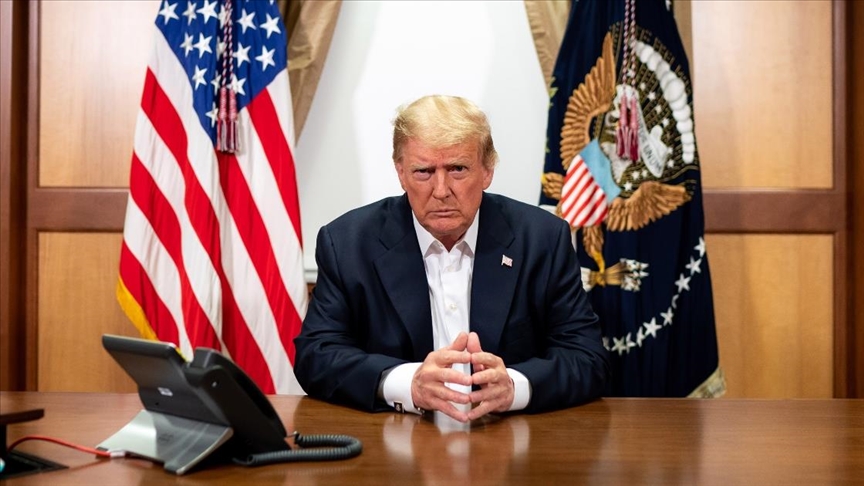
President Donald Trump signed an executive order on Thursday to significantly reduce the federal Department of Education’s role, fulfilling a campaign promise to conservatives. He was surrounded by students, educators, and supporters during the signing.
The order would transfer most education decisions to states and local school boards, which worries liberal education advocates.
“We’re going to be returning education, very simply, back to the states where it belongs,” Trump said.
This move comes after the department announced last week it would cut nearly half its staff. It’s part of Trump’s broader effort to reshape the federal government just two months into his presidency.
Education has been a divisive issue in America. Conservatives typically support school choice policies that benefit private schools, while left-leaning voters generally back public school programs and funding.
These divisions grew sharper during the COVID-19 pandemic, something Trump highlighted during his campaign.
Trump has stated he wants Education Secretary Linda McMahon, who attended the White House event, to eventually eliminate her own position. His executive order aims to reduce the department to basic functions like managing student loans, Pell Grants, and special education resources.
“We’re going to shut it down and shut it down as quickly as possible,” Trump said. “It’s doing us no good.”
Even though Republicans control both houses of Congress, they would need Democratic support to reach the 60 Senate votes required to pass legislation completely eliminating the department.
At the ceremony, Trump suggested Congress might eventually vote on whether to completely eliminate the department.
Republican governors Greg Abbott (Texas) and Ron DeSantis (Florida) joined Trump at the event. He also acknowledged support from the conservative group Moms for Liberty.
The Education Department currently oversees approximately 100,000 public and 34,000 private schools across the United States. However, more than 85% of public school funding comes from state and local governments. The department provides federal grants for schools in need and programs including special education teacher salaries, arts programs, and infrastructure improvements.
It also manages $1.6 trillion in student loans held by tens of millions of Americans who cannot afford college without financial assistance.