|
Getting your Trinity Audio player ready...
|
American warplanes and submarines attacked three key nuclear sites in Iran early Sunday, bringing the U.S. military directly into Israel’s war and prompting fears that the strikes could lead to more dangerous escalations across the Middle East.
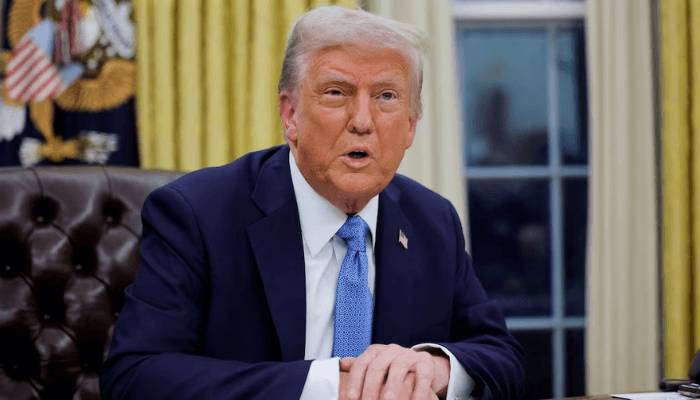
President Trump said the objective of the strikes “was the destruction of Iran’s nuclear enrichment capacity and a stop to the nuclear threat posed by the world’s No. 1 state sponsor of terror.” He claimed success, saying in a televised address from the White House that the nuclear facilities had been “completely and totally obliterated.”
Saturday’s strikes marked the first time the U.S. Air Force had ever used the 30,000-pound bunker-busting bomb called the GBU-57 Massive Ordnance Penetrator in combat.
“Congratulations, President Trump. Your bold decision to target Iran’s nuclear facilities with the awesome and righteous might of the United States will change history… History will record that President Trump acted to deny the world’s most dangerous regime the world’s most dangerous weapons,” said Israeli Prime Minister Benjamin Netanyahu.

The US says it hit three nuclear sites – at Fordo, Natanz and Isfahan.
Fordo is hidden away in a mountainside south of Tehran, and is believed to be deeper underground than the Channel Tunnel connecting the UK and France.
Fordo’s depth below the Earth’s surface has made it difficult to reach with Israel’s weaponry. Only the US was considered to have a “bunker buster” bomb strong and large enough to destroy Fordo.
That American bomb is called the GBU-57 Massive Ordnance Penetrator (MOP). It weighs 13,000kg (30,000lb), and is able to penetrate about 18m of concrete or 61m of earth before exploding, according to experts.
Fordo tunnels are thought to be 80m to 90m below the surface, so the MOP is not guaranteed to be successful, but it is the only bomb that could come close.
US media reports say MOPs were used in the strikes.
It is unclear yet what damage the US attack has had on the nuclear facilities, or whether there are any injuries or casualties.
The deputy political director of Iran’s state broadcaster, Hassan Abedini, said Iran had evacuated these three nuclear sites a “while ago”.

Appearing on state-run television, he said Iran “didn’t suffer a major blow because the materials had already been taken out”.
In his televised address, Trump said the “nuclear enrichment facilities have been completely and totally obliterated”.
But speaking on the BBC News Channel, Mark Kimmitt, a former US assistant secretary of state for political-military affairs, was far more circumspect.
“There’s no way to suggest that it has been destroyed for all time,” he said.
Iran has said that more than 200 people were killed since its latest round of fighting with Israel began, and more than 1,200 were injured.
Meanwhile, Israel is ramping up security in the wake of the US attacks on Iran’s key nuclear sites.
Israel has tightened its public security restrictions across the country, the Israeli Defense Forces (IDF) said.
The upgrade – including a “prohibition on education activities, gatherings, and workplaces” – comes after the US strikes on Iran.
How might Iran retaliate?
Iran has been weakened significantly by Israel’s attacks on its military bases so far, experts say, as well as the dismantling of its regional proxies in Lebanon (Hezbollah), in Syria and in Gaza (Hamas). But Iran is still capable of doing a considerable amount of damage.
Iranian officials warned the US against getting involved, saying it would suffer “irreparable damage” and that it risked an “all-out war” in the region.
It has threatened to target US bases in the region in retaliation. The US operates military sites across at least 19 regions in the Middle East, including in Bahrain, Egypt, Iraq, Jordan, Kuwait, Qatar, Saudi Arabia and the United Arab Emirates.
Among the most obvious targets for Iran is the US Navy’s 5th Fleet HQ at Mina Salman in Bahrain.
It could also target a critical shipping route known as the Strait of Hormuz, which links the Persian Gulf to the Indian Ocean and through which 30% of the world’s oil supply is transported. It could also attack on other sea routes that risk destabilising global markets.