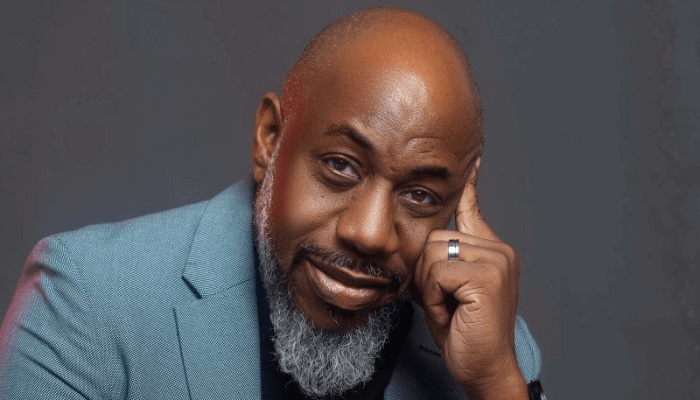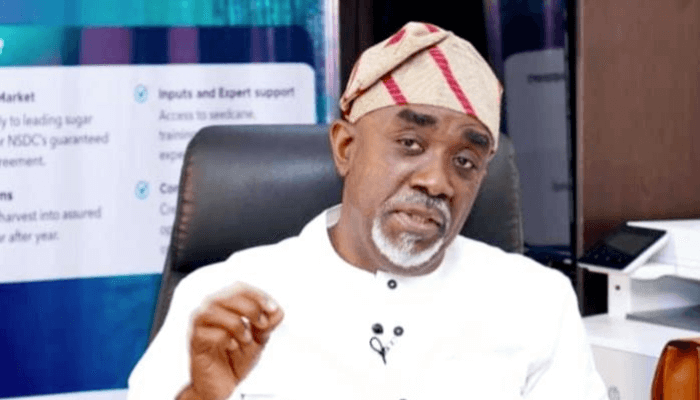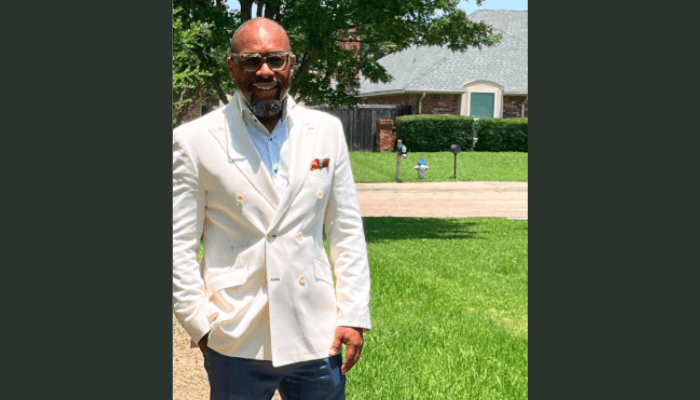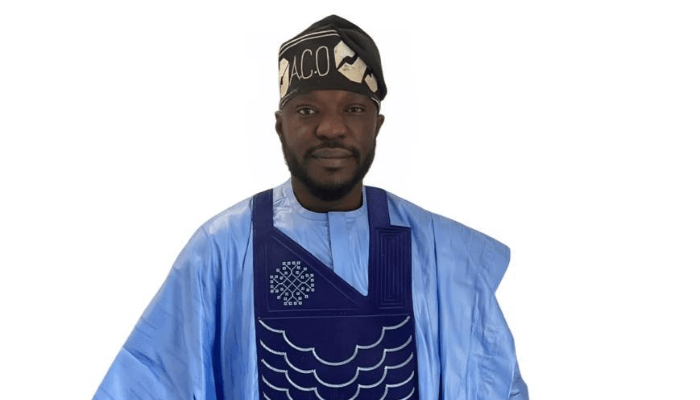
Clinton Akanji is a chieftain of the ruling All Progressives Congress (APC), economist and data scientist. In this exclusive interview with INIOBONG IWOK, he assesses the two years of the Bola Ahmed Tinubu administration, reforms and efforts to tackle insurgency. Akanji said that Nigeria was still experiencing hardship despite improvements in macroeconomic indicators, because microeconomic realities respond differently and often more slowly to economic reforms. Excerpts:
Last May, President Bola Ahmed Tinubu marked two years in office, what is your take on his performance in office so far?
It’s been two years now of President Bola in office and leading the country has been both challenging and interesting for him. It’s interesting in the sense that for the first time, we have a president who not only understands the problems of the country but is also taking deliberate steps to address them. These are problems that have been with us for decades. Many experts and economists have proposed solutions and spoken about them over the years, but we’ve never had a president who was truly committed and had the political will to tackle them head on largely because there are powerful individuals who benefit from the status quo. If we must solve these problems, we must stop these powerful few from continuing to profit off the suffering of the majority. And it can only be done by a president who is bold and willing to take risks; a leader with the courage to confront vested interests and dismantle the systems that enable them.
Many Nigerians have criticised his policies, especially removal of fuel subsidy and floating of the naira, they said they have led to unprecedented hardship and rise in cost-of-living. What is your take?

The issue with the policies and reforms this government has embarked upon is that they are things we should have done at least 30 years ago. Take the example of floating the naira and removing fuel subsidies. Why should we subsidize a product we don’t even produce in abundance? Why should we claim to need ten but we only have five and out of that five, we’re still wasting two or three as subsidies? The idea of subsidy is to provide relief or benefits on goods or services you produce in abundance. If anyone criticizes the removal of subsidy or the floating of the naira, my question is simple: what is your alternative?
Before May 29, 2023, we were using about 97% of our revenue just to service debt, not even to repay it, just to service it. That means we were left with only 3% of our revenue to fund salaries, build roads, provide quality education, improve healthcare, ensure 24/7 electricity, and upgrade our security system with modern technology.
How do you do all that with just 3% of national revenue?
It’s unfortunate we’re facing these challenges now, but it’s the direct result of the failures of past leaders, leaders who refused to make difficult decisions because they were more concerned about political interests than about doing what was right for the country. There is no other way around this. These are reforms we should have done long ago. There’s also a mind-set problem in Africa, especially in Nigeria. People see the government as an entity that must give them everything for free, free food, free roads, free electricity, free healthcare, free education. But I don’t know any country in the world where all of this is truly free. The only people the government provides for directly are the most vulnerable. And even that support doesn’t come from thin air, it comes from taxation.
The truth is, in Nigeria, we don’t like paying taxes. We don’t want to pay for electricity. We don’t want to pay for education. Meanwhile, we complain that public universities charge ₦100,000 or ₦200,000 (less than $100) a year for a degree. Where else in the world can you get a university education that cheap?

These are the deep, systemic issues we are battling.
Our past leaders kept deceiving the people so they could remain in power, telling them what they wanted to hear instead of the hard truth.
What is your take on the defection of opposition politicians to the ruling party in recent times?
On the issue of defection from one party to another, to me, it’s a question of rights, specifically, the right to freedom of association. Every politician has the right to move from one party to another. I don’t think it’s a serious issue, even though some people are trying to make a big deal out of it. In reality, many of the people currently in the ruling party were once in the opposition and many in the opposition now were once in the ruling party.
Nigeria’s opposition leaders have formed a coalition, merging with the ADC ahead 2027. What is your take?
Yeah, the absence of a strong opposition should never be seen as a minus to democracy. Democracy does not mean that the opposition must always be a threat to the ruling party. Instead, democracy provides space for opposition in a way that, if the ruling party is not performing well, people with like minds can organize and challenge that party, either by speaking against its policies or by mobilizing to vote it out of power. But if we are in a situation where the government is doing well and the opposition has not gotten its act together, meaning they have no strong message to sell to the public, that is not a threat to democracy. The platform for opposition will always exist as long as democracy continues to exist. In the future, opposition groups will still rise against any sitting government, just like we did in 2015. If you remember, before 2015, there was barely any strong opposition. From 2003 to 2011, the opposition was weak. It wasn’t until 2011 that people like President Tinubu and others started mobilizing and bringing together like minds to form a more formidable opposition. So, if at the moment there is no strong opposition, it doesn’t mean democracy is in danger. It simply means there’s nothing tangible to oppose or, if there is, the opposition should organize themselves better to provide that challenge.
The Bola Tinubu led administration has failed to check the spate of insecurity, with renewed killings in Benue and Plateau States. What is your take?
Security in Nigeria is a very serious and dynamic issue. We cannot effectively solve the problem of insecurity without first understanding the underlying factors that contribute to it. It’s not just about deploying the military or police; it’s about analyzing the environment, the terrain, and the economic incentives that benefit criminals. Until we understand these root causes, we cannot deploy the proper techniques to address the issue. I believe the president is already taking some steps in the right direction, and there are additional measures I expect him to implement, although I would prefer not to make those public at this time. One major concern is how these criminal gangs organise and operate. If they were planning and launching their operations within urban areas, it would be easier for security agencies to gather intelligence and stop them. But that’s not the case. Instead, they retreat to deep forests where they kidnap, terrorize, and carry out attacks, then disappear back into the bush. The real challenge is how to stop them from gathering and planning these attacks in the first place. That is exactly what the President is trying to address by establishing Forest Guards. Our forests have long been abandoned, and criminal elements are taking full advantage of them. In the West, for example, due to the cold climate, criminals cannot camp out in forests for days. But in Nigeria, we are blessed with favorable weather, so much so that people can survive and even thrive in the open without shelter. This makes our forests vulnerable to misuse. By reclaiming our forests and deploying Forest Guards, the government is closing off the spaces where criminals operate. The idea is that every movement within the forest should be monitored. Once their ability to gather and plan is disrupted, attacks can be prevented, not just responded to. This is a major step forward.
Why are key macroeconomic indicators showing improvement, yet many Nigerians still feel no impact in their daily lives?
The reason Nigeria is still experiencing hardship, despite improvements in macroeconomic indicators, is because microeconomic realities respond differently and often more slowly to economic reforms. When government policies are introduced, whether in the form of monetary policy or fiscal reforms the macroeconomic indicators such as GDP, inflation, and foreign reserves may show signs of growth relatively quickly. However, the impact on the everyday lives of Nigerians takes much longer to materialise. For example, take the removal of fuel subsidy and the unification of the naira exchange rate. These reforms have helped improve government revenue and are showing positive signs in macroeconomic terms. But their effect on microeconomic conditions like household income, food prices, and standard of living takes time to stabilise. The key issue is that until we start deploying the increased revenue into critical sectors that affect the common Nigerian such as education, infrastructure, and security the average person will not yet feel the benefit of these reforms.
Moreover, many of the problems Nigeria is trying to fix today like poor power supply, bad roads, weak healthcare, and failing education systems are not things that can be fixed overnight. These are long-term structural issues that require at least 7 to 10 years of consistent investment and policy continuity to resolve.
What steps can the government take in the short to medium term to make the recovery felt at the grassroots?
At this critical point, the Nigerian government must take bold and practical steps to ensure that economic recovery is felt by the people not just on paper, but in their daily lives. One of the first and most urgent steps is to bring down inflation, especially food inflation, by all means possible. While I support the idea of producing what we eat and eating what we produce, I do not believe we should completely stop importing items we don’t yet produce in abundance, just to force local consumption. That approach risks causing more harm than good in the short term. The government should; encourage local farmers to produce in large quantities. They should also subsidize their production to ensure they make profit and buy up their farm produce at profitable prices and store them in government warehouses across the country.
At the same time, we must open up our borders for food items only at least temporarily to ensure there is enough food available to prevent hunger and further inflation. This should be done while we are still ramping up local food production. Once we reach a stage where we have sufficient food supply locally, then we can start talking about gradually reducing or banning food imports. But for now, closing the borders too early in the name of self-sufficiency will only create scarcity and allow some people to exploit the situation by selling food at ridiculous prices, making life harder for ordinary Nigerians.
If we don’t take these balanced steps, food inflation will continue to rise, and Nigerians will keep suffering from hunger and hardship.
What is your take on the rumoured plan of Governor Ademola Adeleke to join APC?
The issue in our state about Uncle Demola, the governor of Osun State, possibly joining our party is a very complicated one. Some people feel that the governor’s style of leadership which sometimes comes across as playful or unserious, especially with his dancing doesn’t align with the image they expect in a leader. There are also concerns about how he won his last election and the crisis that occurred within the state during that period. Some people even lost their lives, and for many, that’s a bitter pill to swallow. So now, for some people to start suddenly singing the governor’s praises is hard for them to accept. The governor has been called all sorts of names from “Adedancer” to many others and it’s clear that this is a very sensitive issue. That said, I believe the governor needs to join us if he wants a better chance of winning re-election. The statistics show that the PDP is no longer a strong or viable platform for him to actualise a second term.