|
Getting your Trinity Audio player ready...
|
While their mates in the private universities in the country have continued their studies unhindered, undergraduates of federal universities are idling away at home with a possible bleak future awaiting them.
Since March this year, the gates of federal universities have remained locked. First, following the outbreak of Coronavirus (Covid-19) pandemic, and secondly on account of the lingering industrial action embarked upon by members of the Academic Staff Union of Universities (ASUU).
While the strike persists, the Nigerian employers, especially the private sector, are most concerned because of the anticipated negative impact on the quality of graduates.
The employers fear that the strike could result in the churning out of half-baked graduates who would further increase the number of unemployable graduates in the already saturated labour market.

It would be recalled that in early 2018, Tunde Fowler, the former chairman, Federal Inland Revenue Service (FIRS), said a staggering 700,000 graduates applied for 500 advertised positions in the FIRS, with 2,000 of the applicants holding first-class degrees.
Yet, supervisors of some of the then new employees, kept complaining of the poor output from the new recruits, including the first-class degree holders among them.
The sad reality is likely going to worsen with the lingering strike, as many undergraduates have lost the seriousness, zeal to read, and even interest in graduating, if not for what their parents would say.
“Having stayed months doing nothing at home, the undergraduates need overhauling in order to catch-up with lectures, but our less concerned lecturers would rather pass everybody and the universities issue certificates to half-baked graduates, who are disadvantaged in today’s very competitive labour market”, Muniro Akani, a civil servant and concerned father, decried.
According to Simidele Ogunu, an educational psychologist, most students return to school after long vacations very empty due to less engagement in educational activities while on holiday. For her, ASUU and the Federal Government need to resolve their issues as undergraduates are almost lost to idleness and slow brain activities while in the ‘forced holiday’, which would negatively impact their class work and general performance even on later jobs.

But considering that the 144 universities comprising 40 federal universities, 43 state universities and 61 private universities churn out about 500,000 graduates annually, excluding Nigerian graduates from foreign universities and unemployment rate stands at 27.1 percent as at the second quarter of 2020, the current strike is further preparing the ground for more unemployable graduates, more restive youths and crime tomorrow.
Issues at stake
The Federal Government is persuading ASUU to enroll its members in the Integrated Payroll and Personnel Information System (IPPIS), which was generally meant for civil servants across all governmental departments and agencies, while ASUU is insisting on running with the University Transparency and Accountability Solution (UTAS), which it has successfully deployed earlier for its members across the country.
While IPPIS is said to curb corruption in the university system, ASUU insists that it lacks the capacity to do so.
Lagi said: “All government has been doing is to tell us stories. Until government meets all of our demands, not one left, we will remain at home. Even if they pay our outstanding salaries, we are not going anywhere until all our demands are met,” he insisted.
He further said that the union would not key into the IPPIS and that government must adapt its own homegrown payment platform, University Transparency and Accountability Solution (UTAS).
On whether ASUU is not apathetic to the plights of students, he said his children are in the same situation as well as many other lecturers.
Recall that ASUU embarked on a nationwide industrial action on March 23, 2020, demanding proper funding of the Federal universities, which it claimed had been neglected over the years. Chief of the dispute with the Federal Government however, is the government’s insistence on the implementation of the IPPIS in the payment of University lecturers’ salaries and allowances, as against UTAS, which they believe guarantees the autonomy of the university
IPPIS, as a platform which commenced in 2007, and controlled by the government, is one that integrates and harmonises payments of federal employees.
It has remained a bone of contention between the Federal Government and ASUU. ASUU has vehemently rejected to be keyed into the platform and developed UTAS in its stead.
Uzo Onyebinama, a zonal coordinator, ASUU, Port Harcourt Zone, said that IPPIS lacks the capacity to curb corruption in the university’s system.
He explained that IPPIS was not a legal instrument that could dictate and tackle fraudulent activities of some university administrators insisting that the government’s payment system breached university autonomy.
“IPPIS is not the legal instrument for solving the problem of monumental fraud perpetrated by some administrators of the universities. The legal instrument to probe corruption in the universities is the visitation panel. For almost a decade, ASUU has been clamoring for the constitution of visitation panels in federal universities”, Onyebinama said.
“Even when the panels visit, their reports will remain secret and empty white papers will be released with nothing actually to implement and this will be done in connivance with some unscrupulous officers of the Federal Government.”
Explaining further on the incapacity of IPPIS to curb corruption in the university system, ASUU’s Port Harcourt zonal coordinator said that IPPIS taxes rent subsidy, allowances for journals, conferences, hazards among others with an Associate Professor paying as much as N672,000 tax per annum.
Fred Esumeh, a professor, zonal coordinator, Benin Zone, ASUU, accused the government of introducing the IPPIS to divert public attention from the lack of sincerity and will to implement agreement reached with ASUU, insisting on the union’s rejection of IPPIS, given its violation of the University Autonomy Act and its inadequacies to carter for the peculiarities in the university system.
He decried that the IPPIS and UTAS imbroglio, noting that the government had withheld salaries of ASUU members for months, even when the union met with timelines agreed with the government to develop UTAS amid challenges of the COVID-19 pandemic.
However, the Federal Government is insisting that IPPIS is working and has yielded anticipated results across other government establishments.
Sulemon Bukar, a top government functionary, noted that the rot in the university system is so much, undermining huge investments of the government in the past and needs to be checked, especially now that the government has zero tolerance to corruption.
“If we want public universities to work, we need to checkmate corruption in the system else funds meant for infrastructural development, research, upgrade among other projects will keep going into private pockets”, Bukar said.
But the concerned public and stakeholder think otherwise. For most parents, the stalemate on the issues is because both the federal government and ASUU do not have anything at stake.
“If children of top government officials and university professors are schooling in Nigerian public universities both parties would have resolved the case in the interest of their children. But their children are all abroad”, Muniro Akani, civil servant and concerned father decried.
In his opinion, Abdullahi Suleiman Omale, a former Nigerian ambassador, observed that Nigerian students have always served as bait in the actualization of the interests of both ASUU and the federal government since the inception of the ASUU strike.
He decried that in the seeming ego battle that has been raging months now, none of the two parties (the Federal Government and ASUU) care about the educational future of Nigerian students.
“How would a single lecturer lecture in five universities (Visiting Lecturing) and expect to give maximum efficiency in the field and how would opportunities belonging to teeming intellectual graduates both at B.Sc and Masters levels still remain hanging just because one lecturer occupy spaces that should be given to unemployed experts in the field?” he queried.
On the other hand, Reginald Emehara, a lecturer in a private university, thinks that ASUU may be objecting IPPIS because of failed promises of the government in the past, but that government should also review the UTAS to see if there is a way to harmonise or integrate it into its IPPIS.
“If UTAS and IPPIS are both aimed at achieving transparency, why is there still stalemate on the issue? Someone needs to tell the angry parents and students the truth; they have waited for too long and are rotting at home, and giving everybody a sleepless night. What if the idle students begin another round of protest? He asked rhetorically.
Lagi described the UTAS as better suited in the University system, as it recognised all agreements entered into between government and university based trade Unions.
He noted that the UTAS platform ensured simultaneous payments of employees’ salaries and third party deductions like tax, pension, Union dues, cooperatives and bank loans.
Stakeholders express concern
Anyalewechi Princewill, a retired Deputy Director, ministry of education and a father whose child is also affected by the strike, warned that the prolonged industrial action will only encourage moral decadence and increased crime rate because a lot of students are idle. He expressed regrets that government does not seem interested in addressing the situation.
He deplored the state of education in the country, pointing out that the prolonged ASUU strike is not only demoralising, but does not speak well of Nigeria which is supposed to be the giant of Africa.
Unfortunately, the children of the poor bear the greatest brunt while children of the highly placed are studying in the best universities across the world.
Only recently, the Executive Secretary of the Nigerian University Commission (NUC), Abubakar Adamu Rasheed took to social media to flaunt his son’s graduation from a United Kingdom University.
Edeatan Ojo, executive director, Media Rights Agenda (MRA), described FGs plan to cripple ASUU and replace lecturers with Diasporan Nigerians as a joke of a plan which government lacks capacity to bring to realty.
“If the government is unable or unwilling to pay decent wages and allowances to lecturers in Nigeria, one wonders how they hope to attract Nigerians in the Diaspora who are obviously better paid and operate in a more conducive environment to give up their current jobs in favour of entering into a dysfunctional system,” he said.
Ojo noted that if at all the government is able to attract lecturers from the Diaspora to lecture in Nigerian universities, they will likely be the rejects in those systems as well as those who have been unable to make it abroad and are therefore, willing to accept any offer, noting that Nigeria cannot build her university system on such lecturers.
“It is clear that the Federal Government is determined to cripple ASUU and are considering various strategies for achieving this objective, including facilitating the formation of a parallel union, which will obviously be made up of stooges that the government can rely on to do its bidding.
“However, the idea that the Federal Government can solve the problem by employing Nigerians in the Diaspora to come and lecture in Nigerian universities is a fanciful one and makes a joke of the idea,” he further said.
Ojo also warned that the prolonged strike if not resolved quickly, would have implications for the country. According to him the public university system is now on the verge of collapse due to the inability or unwillingness of the Government to resolve the dispute, particularly in the interest of the students who are facing uncertainty about when they are likely to finish their studies.
The director added that the situation can permanently damage public confidence in Nigerian universities.
Michael Adeleye a retired lecturer, said: “I have not been impressed with the way the government has handled this issue, the Ministers of Education and Labour and Employment seem not to know what they are doing; in a serious system both men would have lost their job by now.
“I think the government should seek the help and intervention of well-meaning Nigerians in resolving these issues, it is a shame that our universities can be shut for this long, it is the longest I can remember ever.”
ASUU decries Ngige’s role
The union particularly accused the Minister of Labour and Employment, Chris Ngige of showing disdain for Nigerian academics.
“One needs not be a psychologist to understand the behaviour and recent utterances of the Minister of Labour and Employment, Chris Ngige. The Minister has clearly shown his disdain for Nigerian academics and has failed to play the role of an unbiased umpire in moderating the imbroglio.
“He has now become the spokesperson to the Accountant General of the Federation and the Ministry of Finance, instead of finding a solution for lecturers to get back to work; he is turning the wheel of progress backwards by setting ASUU on a collision course with other pressure groups in the university. Clearly Ngige is on a war footing with ASUU.
FG accused of ‘divide and rule’ tactic
While the search for amicable resolution is still on, the Federal Government is said to be tinkering with the plan to register a rival union to the ASUU. Reports had it that the Federal Government, through Chris Ngige, minister of Labour and Employment, may have initiated moves to register a group called, Congress of University Academic (CONUA), to replace ASUU. Members of CONUA do not belong to ASUU.
The indication emerged last Thursday when the leadership of CONUA, led by its National Coordinator, Niyi Sunmonu, paid Ngige a courtesy visit in his office in Abuja.
Ngige said, “We are receiving you in audience formally today in this ministry. We have the right to receive associations of persons that are workers, whether we have registered them or not, just as you have the right to apply for registration which is the lawful thing to do.
“We have the right to receive and hold meetings with you. The journey to have you registered has just started. You have done the right thing by applying and this ministry has also done the right thing by processing your registration.’’
“The review of your application for registration is ongoing. I have put up a committee to look into that review. I will ask the committee to wind up its work. We are giving them four weeks from today to turn in their report to the ministry. Part of our job here is to register unions; it is also part of our job to make sure that unions that are not functional are helped.”
Critics have however, accused the Federal Government of behaving the ostrich by plotting to choose the option that would not lead the country anywhere. They have rather urged the FG to face the reality by attacking the challenge head-on.
The minister had also said that the UTAS has been sent to NITDA for integrity and security check, and would take between six and eight months to be completed.
But Ben Bem Goong, director of press, ministry of education, in an interview with journalists on Thursday said the UTAS would not be accepted as long as the Muhammadu Buhari administration is concerned.
Goong maintained that the only valid solution will be if ASUU accepts the IPPIS platform.
“UTAS will not happen, not under Buhari. You can’t just give bulk money to universities to pay people you don’t know. It’s not going to happen and under a period that government is finding it difficult to pay salaries
“Nobody is going to accept UTAS; if you accept UTAS you are going to create more problems for the system,” he said.
Goong maintained that ASUUs claim that university structure has its peculiarities which will not be suitable for IPPIS holds no ground.
“The military that are in the war front have greater peculiarities than universities. Lecturers use one lesson note for 30 years and you are telling me you have peculiarities.
“IPPIS will ensure that you are paid one salary which is what they don’t want; you know why, because you find one lecturer teaching in several universities and he does not give students enough time. This will be the last strike ASUU will embark on,” he said.
Why ASUU rejects IPPIS
Some of the reasons ASUU advanced for rejecting IPPIS include that: The system does not, for example, capture the remuneration of staff on sabbatical, external examiners, external assessors, and Earned Academic Allowances, and does not address the movement of staff as in the case of visiting, adjunct, part-time, consultancy service, which academics offer across universities in Nigeria;
That IPPIS does not recognise the 70 years retirement age of academics in the professorial cadre, and 65 years for those in the non-professorial cadre, as against the 60 years in the civil service.
The IPPIS restricts the ability of universities to employ much-needed staff at short notice. Such staff, when recruited, may not be paid until cleared by the Office of the Accountant General of the Federation (OAGF).
That IPPIS will not allow for deductions from staff salaries arising from legally sanctioned union and cooperative society activities and thus infringe on the constitutionally guaranteed fundamental right of staff to association.
ASUU said it would suspend the strike if the Federal Government pays their withheld salaries and completes the negotiations of what led to the strike, i.e the implementation of all outstanding provisions in the 7th February 2019 FGN/ASUU Memorandum of Action.
Also they are demanding the revitalisation of the entire university system in terms of infrastructure and quality of education.
Meanwhile, Goong disclosed that the Federal Government is already nursing an ambitious plan to render the Union moribund. Part of the plan is to employ Diasporan Nigerians as lecturers and introduce educational broadcast to phase out classroom learning.
Students, parents in tale of woes
Grace Okere (not real names) is a final year student in the faculty of education, University of Abuja (UniAbuja), like every other student, she had looked forward to graduating this year and joining her mates in the mandatory national youth service, but the prolonged strike by the Academic Staff Union of Universities (ASUU), has made that impossible and has left her frustrated, angry and depressed.
On Friday 13th November, her mother and siblings woke up to realise that Grace had packed her bags and left the house to a location which is still unknown till this date. In a terse text message she sent to her mother, Grace lamented that the strike has left her frustrated, especially seeing the economic condition of her family, and that she has gone to make a living, as continuing with her studies is no longer her priority.
Grace’s situation is only one of the many unpalatable experiences of students who are frustrated and have their expectations dashed by the ongoing face-off between ASUU and the Federal Government.
While some students are pleading with government and ASUU to settle their differences so that they can return to their lecture halls, several others say they have lost interest completely in furthering their education and are thinking about dropping out.
“This strike is so tiring, I am begging ASUU and government to please resolve their differences and call off the strike; I am supposed to be a graduate in Agricultural Engineering this year for crying out loud, but here I am, the first child of my father still at home with my siblings and I am not getting any younger,” Calistus Chukwu, a final year student of Michael Okpara University cried.
“I feel really bad and worried; what is more depressing for me is that my mates who are in private universities are moving on, but since I can’t afford those schools, I am just at the mercy of ASUU and government. Why do our leaders like to make this country so difficult for us; why?! To go to school is a problem; after school getting a job, the struggle continues. What type of a country is this?” Ramat Idris, a 300-level student of Nasarawa State University, lamented.
Precious Amadi said he is even yet to write his post UTME exams which was initially delayed by the COVID-19 pandemic and now taken over by the strike.
“I have not even started the journey and I am already frustrated; my friends who are already in schools are thinking of dropping out. Honestly, if the strike continues I will just forget about school and go and acquire a skill; these people are just making education so stressful for somebody; it’s not fair,” Amadi said.
While several other students continue to lament, several others have moved on. Giwa Kehinde from Ogun State University said he has already started a business and no longer cares how much longer the strike will last.
“I don’t want us to resume now because I want my business to get matured first and do more business; in fact, right now, I see school as a distraction. School is a scam! I feel like I have wasted my time so far,” Kehinde said.
“I decided to turn the ugly situation into something good for myself. I have learnt how to bake all kinds of snacks and pastries. But I still want to be a broadcaster and I want to go to school,” said Princess Kelechi, a 400-level student of English at the University of Abuja.
Mathias Roland, Federal University, Otuoke, said he is both sad and happy about the strike.
“I’m sad because it delayed my graduation. I am supposed to graduate this year but it has been postponed till further notice. But am happy because it helped me to learn a lot of skills, open some kind of trade which has helped me financially,” Roland said.
As students cry out, parents too are not happy with the situation. Mitchell Obele, a parent said the situation has left her really unhappy because a lot of time has been wasted and can never be regained.
“ASUU should try and resume so that those that want to graduate will graduate, those that want to serve will serve. Time is going, now NYSC’s age limit is 30; this delay will definitely deny some people the opportunity to graduate. They would have passed the serving age by the time the strike is over. The last JAMB exams my daughter wrote has wasted, she will have to wait to write it again next year,” she said.
Grace Amos, another parent said: “Every day I wake up, my children who are supposed to be in school moving forward in life are just at home and not doing anything valuable.”
Some of the students who spoke with our correspondents accused the current administration of toying with their future with the lackadaisical attitude it was adopting in resolving the current faceoff with ASSU, urging the government do everything within its powers to meet the demand of ASSU.
Mercy Okoye, a final year student in one of the federal universities, lamented that the strike had made her lose a year, adding that she would have graduated and proceeded to NYSC this year if not for the strike.
According to her, “I am begging the government; Muhammadu Buhari should find a solution to this strike, because I am tired of staying at home, I search for work but I can’t find it. This government is not taking education seriously; it is not even only education; that is the way they are handling everything.
“I should have graduated by June and proceeded to do my service with the NYSC this November, but I am sleeping at home. It is just so sad,” Mercy said.
A parent, Louis Edet, equally urged the administration to show more sincerity and commitment in its negotiation with ASUU, noting that the current situation shows that the government did not prioritise education.
“Why can’t they jettison this IPPIS and continue to pay with the old way while negotiations continue? This government is not taking education seriously, or how can you explain universities being shut for this long and what you are seeing is a government that is less concerned.
“We keep on hearing different things from the Minister all the time. It is sad, they are not just taking education seriously,” Edet said.
Uzoma Uruakpa, a 500-level student of Financial Management Technology, Federal University of Technology, Owerri (FUTO), said that the strike has affected him negatively.
“Negatively, I am staying more than the years planned. I’ve been in my finals since 2019, so it’s taking my time. Also, in Nigeria, getting an employment also depends on age and now, imagine ASUU wasting my time and at the end of the day, one would grow older than that particular job. It is also affecting thinking of many people, making them believe that education is not necessary both for the undergraduates and others aspiring to seek admission,” Uruakpa said.
By the same token, Nwankwo Jeremiah, a 500-level student of Statistics, Federal University of Technology, Owerri (FUTO), lamented that his programme/calendar has been disrupted.
“Whereas I was supposed to spend a maximum of 5 years; I’m spending over 6 years which would lead to me restrategising my life. Also, there is a little bit of seriousness when one is on campus. Staying out of the academic environment gives rise to laxity and makes students unserious. I have been unserious,” Nwankwo said.
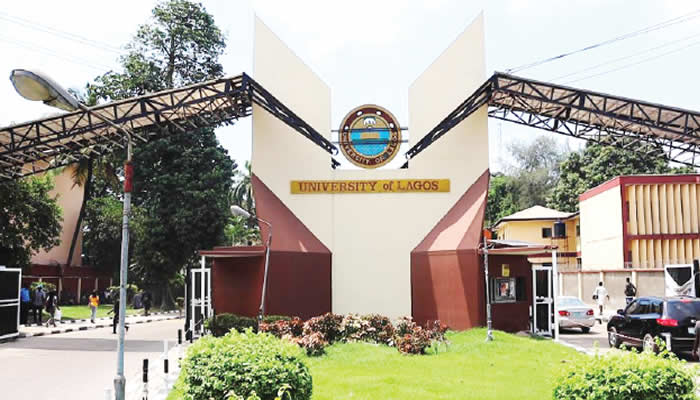
Ebenezer Saiki, a 100-level student of Zoology,
University of Lagos (UNILAG), said: “The ASUU strike is negatively impacting my life because, the normal stipends I get from parents can’t be gotten for now. They feel they shouldn’t give me money because I’m at home. This ASUU strike has put one in a corner where one can’t move forward. You can’t get some white-collar jobs because you need certain qualifications. One can’t also take a step further by working or involving in something tangible because ASUU could call off the strike at any moment and you can’t leave the work half-done. Again, as it is said, an idle mind tends towards evil thinking, if not guided. The rate of crimes and unrest in the society keeps increasing because people who are supposed to be in school are roaming the streets without anything tangible to occupy them.”
Resolution at Friday meeting raises hope of imminent resumption
The Federal Government last Friday yielded to the demands of the ASUU over the disputed issue of the Integrated Personnel Payroll Information System (IPPIS) even as it cumulatively offered the university teachers N65 billion for Earned Academic Allowances(EAA) and funding for revitalization of public universities.
This was the conclusion reached at the meeting by both sides on Friday at the instance of the Ministry of Labour and Employment as the government shifted its earlier position to align with ASUU demands to be exempted from IPPIS for the payments of their withheld salaries and allowances in order to end the 8-month old strike embarked upon by the university union.
The development has raised hope of imminent resumption.
OBINNA EMELIKE, INIOBONG IWOK, PEACE IHEANACHO (LAGOS); GODSGIFT ONYEDINEFU, UDOH OFONIME CLEMENT & CHUKWUEMEKA VICTORIA (ABUJA)