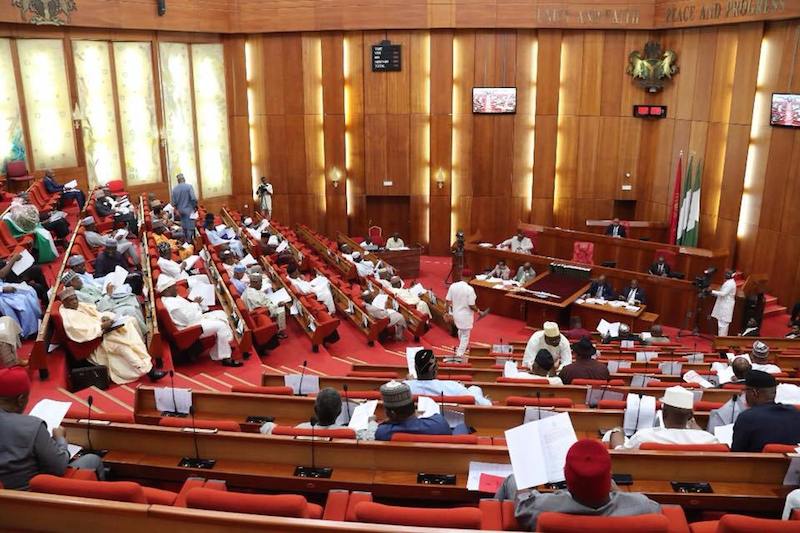
The words and allegations being traded of late between members of the ruling party over the choice of the would-be leader of the Senate should worry every well-meaning Nigerian. Viewed lightly it could pass as the typical Nigerian way of disagreeing; braggadocio. But Nigeria’s democracy is at stake, particularly in an era where representative form government is losing ground to different shades of autocracy. And Nigeria’s young democracy needs to be inoculated against this streak of dictatorial democracy.
Squabbles within the ruling party over who the preferred choice as Speaker of the Senate is presage turmoil in the National Assembly. Nigeria can’t afford to have another ineffectual arm of government. With the sack of the Chief Justice of Nigeria on spurious grounds, one of the three arms of the government is weakened already.
Internal party politics is a good barometer of how whatever party in power will run the government. Naturally every political party has its criteria for selecting who leads in the legislature. If a party considers seniority, loyalty, experience and zoning (given Nigeria’s peculiar make-up) as part of its “democratic principles”, no qualms. If other party members complain it’s democracy by imposition, there are ways to build consensus. There are ample examples from other presidential systems of democracy.
Take how Nancy Pelosi emerged Speaker of the US House of Representatives. Almost certain to run for and win the post, yet she clinched the post with 220 votes out of 430 (only 15 voted against her). Did she have to cajole other Democrats? Certainly. Did she make concessions to rebellious party members? Of course. Democracy, they say, is the art of the possible.

In all of this there were no public threats to dissenting party members or the opposition who, besides, didn’t have the numbers to oppose Pelosi. There was no press conference organised to read them the riot act; to smugly insist that voting would be unnecessary for electing the Speaker and officials because the occupiers of the positions will be presented or to decide which ‘juicy’ and ‘strategic’ committees won’t be shared with the opposition. And there was certainly no party spokesperson threatening ahead of the yet-to-be inaugurated Assembly that bipartisan politics was off the table.
It’s unclear if the APC press conference, reported in local press last week, was just grandstanding similar to how Nigerians (especially Lagosians) resort to swagger and bombast in the face of imminent wahalas. It’s to prevent what happened four years ago when some APC members colluded with the opposition to elect a Speaker against the party’s wish.
Whatever the intention behind the press conference, it projects a winner-takes-all mentality. A zero-sum version of democracy and the statements give worrying indications of things to come. It’s the opposite of a healthy democracy.
Unfortunately this tactic of haranguing dissenters publicly can backfire and may set the Ninth Assembly to a roiling and combative start. Delays in passing budgets and critical bills like the PIGB were some of the reasons the Presidency blamed the outgoing Senate for. Besides the immediate risk to the economy, the real worry is that it could set off a do-me-I-do-you political culture.
There are many advantages of being in the majority; stirring political brawls however, isn’t one of them. Being in the majority is a mandate from Nigerians (increasingly made up young and unemployed youths, a generation for whom democracy is the only form of only form government they’ve ever known) to fast-track reforms by passing bills that will reset the economy on an even and stable growth path.