



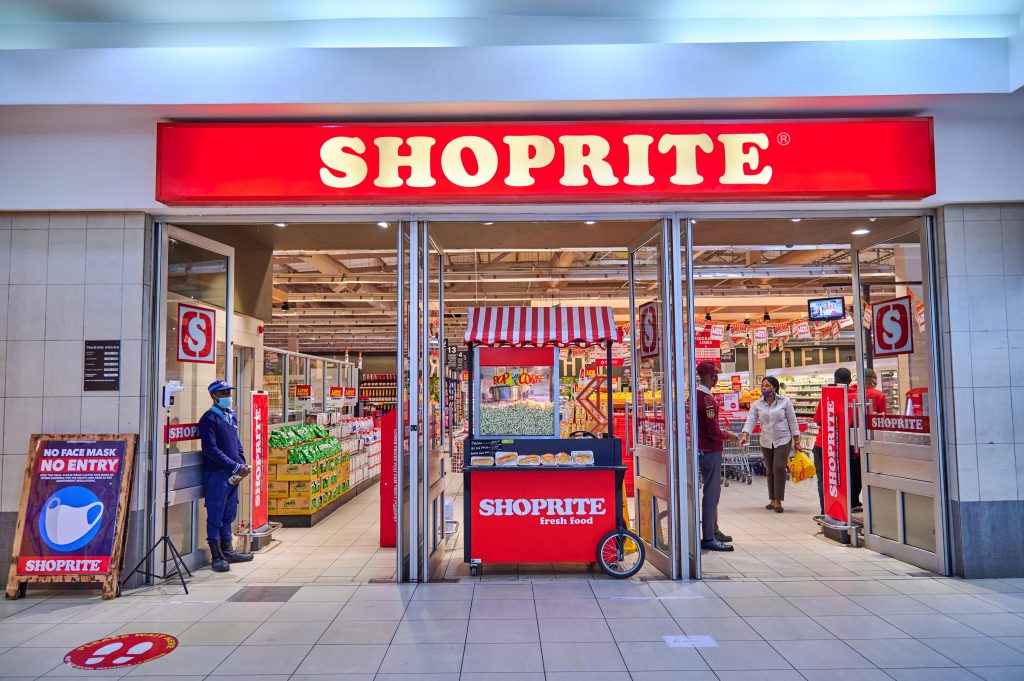
Nigeria’s retail sector is fast-growing, and over the years, a handful of retail chains have emerged as industry leaders, setting new standards that redefine the shopping experience
Shoprite by Novare was one of the few institutional investors that took the Nigerian retail market by storm, developing large-scale Grade A retail properties in major cities of Nigeria. The firm contributed significantly to what was, arguably, a revolution in that segment of real estate in the country.
The company, in a surprise move in 2023, was reported to have announced that its four facilities, including the Lekki Mall, Apo Mall Abuja, Novare Central Mall, and Gateway Mall Abuja, were up for sale, which was interpreted as its decision to exit Nigeria as a whole.
Recent conversations, sparked by rankings of top supermarket chains, highlight the need to look beyond mere store counts to understand true market leadership. While the focus is on the sheer number of outlets, a deeper analysis reveals that factors like geographical spread, quality of service, and the overall shopping experience are increasingly important indicators of a retailer’s strength and future trajectory.

The gradual exit of Shoprite, a South African retail giant that once held a significant position in Nigeria, has created a void and an opportunity for other players to step up and potentially “take over” a larger share of the market.
However, the narrative of a single entity outright replacing Shoprite might be too simplistic. Instead, a more nuanced picture emerges of several strong contenders vying for dominance in different ways.
Recent data suggests a shift in the top sector of Nigerian retail. While Shoprite still maintains a presence with 26 stores across 13 states, other indigenous and international brands are demonstrating significant growth and impact.
Geographic reach beyond store count
In terms of broadest geographic reach and national presence, Shoprite historically led by operating across 14 states and the FCT, a benchmark now closely matched by Market Square, which has a notable footprint of 36 stores across 15 cities including major hubs like Lagos, Abuja, Port Harcourt, and others spread across the country.

SPAR also demonstrates a significant, though more concentrated, national presence with its 13 stores located in key major cities such as Lagos, Abuja, and Port Harcourt.
Conversely, other retailers primarily focus on regional or hyper-local dominance. Bokku! Mart, despite having the largest number of stores at 124, focuses its rapid expansion mainly within Lagos, Ogun, and Ibadan, indicating a strategy of deep penetration in select, high-density areas rather than national spread.
Similarly, Addide Supermarket is heavily concentrated with its 44 stores almost exclusively in Lagos, while Justrite operates its 31 stores across Lagos, Ogun, and Osun states. Foodco also maintains a regional focus with its 22 stores found in Ibadan, Lagos, and Abeokuta.
Finally, players like Blenco and Prince Ebeano, though known for their very huge stores, are primarily concentrated within Lagos and possibly other major urban centers, emphasizing deep market presence within specific high-value locations rather than broad national distribution.
Range of products
In terms of product range, the retailers offering a comprehensive and extensive selection, akin to a hypermarket experience, include ShopRite and Market Square.
Both boast a wide array of goods, from fresh groceries and health & beauty products to home & office items, computing, fashion, and even niche or boutique brands.
SPAR also falls into this broad category, offering a substantial assortment of over 12,000 items spanning fresh vegetables, hot meals, wine and spirits, mobile and household appliances, groceries, cosmetics, and furniture. Conversely, Bokku! Mart differentiates itself with a limited range of products, focusing instead on highly discounted items and not aiming to provide a full-fledged supermarket experience, thereby catering to a consumer base primarily seeking affordability and basic necessities.
Building size counts even more
In terms of individual store sizes, the hypermarket and larger supermarket category is prominently led by Market Square with 30 of its supermarkets at 2000 sqm, and SPAR, whose average store size is around 2,220 sqm, including a notable new store of 1,425 sqm.
Prince Ebeano also falls into this larger category, with at least one significant store reaching 2500 square meters inclusive of a 1000 sqm mezzanine. Justrite follows, operating a mix of maxi-stores above 1,500 sqm, midi-stores between 1,000-1,500 sqm, and mini-stores under 1,000 sqm.
Foodco and Blenco likely operate in the mid-to-large supermarket range to accommodate their broad offerings, though specific square meterage for individual stores isn’t provided.
In the smaller/convenience supermarket category, Addide Supermarket primarily focuses on neighborhood outlets, with most of its stores being less than 100 sqm, and Bokku Mart is known for its even smaller, convenient hard-discount format.
Goodies also operates as a general supermarket, likely with varying store sizes but generally not in the hypermarket scale of the largest players.
The narrative of “taking over Shoprite” is less about a single successor and more about a redistribution of market share among several strong contenders.
While Shoprite’s exit in some states created an opportunity, the future of Nigerian retail is likely to be shaped by a diverse set of players, each with their unique strengths and strategic focus.
Companies like Market Square, with their emphasis on national presence and quality, alongside the rapid expansion of smaller format stores, and the continued presence of international brands, will collectively define the evolving landscape of supermarket shopping in Nigeria.





