In all true representative democracies, where the electorates are taken seriously, Â elected officials and the people they lead develop some essential shared values on a number of issues, even some key symbolic objects. These shared values and symbolic objects are strongly defended, and in some cases the “non-defence” of them by any group sometimes leads to a parting of ways between politicians and electorates. One such significant symbol that has the power to draw strong emotional outpourings from both politicians and electorates is a nation’s currency. Therefore, it is not only in its economic usage and impact on the material wellbeing of the electorates that a currency holds meaning to the citizens of any particular country. That was why in 1992, in what has become known in British political and economic history as Black Wednesday, the Conservative government of Margaret Thatcher was forced to withdraw the British Pound from the European Exchange Rate Mechanism (ERM) after it became clear it could not keep the Pound Sterling above its agreed lower limit.
Today, the emotional attachment of the British people to the Pound is one major reason politicians are wary about getting the United Kingdom to join the European common currency, the Euro. It has become a major subject at every election, with many electorates fiercely opposed to any talks about joining the Euro Zone. Two major reasons fuel this opposition – the British see the Pound in its symbolic sense, are proud of it and don’t want to lose it; and they love it for its strength against other currencies as they can go on holiday with few pounds and enjoy themselves as if they were kings! British politicians, both in the ruling and opposition parties, recognise this and are therefore careful how they go about tackling the issue. And that’s because in their democracy, electorates can make their votes count if they want to – by simply going out there to vote out those who are bent on pursuing policies that are inimical to the wishes and interest of the majority of citizens.
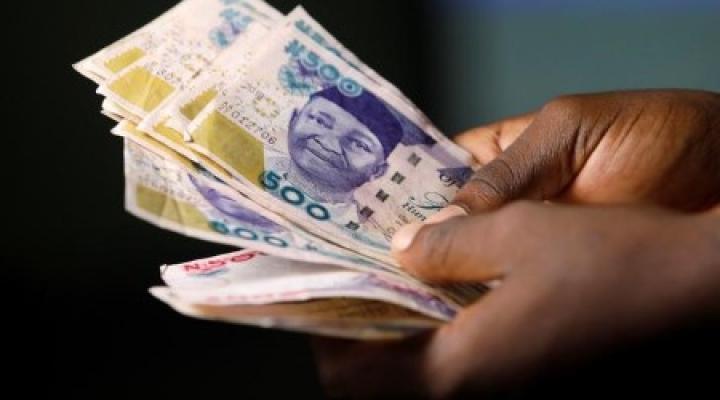
Genuinely-minded elected officials know that they are elected to lead on both the political and economic fronts. They know they should provide leadership not only in ensuring that the machinery of government is efficiently run, but that the economy of the state they run is soundly managed to the benefit of the people they have been elected to serve. We know that this, unfortunately, is not what is taken for granted in this country. We are permanently on the evolving template; the foundation of our democracy is forever on quicksand. That is why this kind of connection is not easily made by those who should do so ordinarily in this country. In our situation where we currently face a predicament with the battering of the Naira, the real question is: “What is the bottom level that the Nigerian Naira will fall to before the politics meets the economics in the current saga of the domestic currency?”
Read Also: Nigeria’s central bank’s dollar restrictions endanger Azura Power plant
It is really difficult to proffer a straight answer to this question, especially if the connections are not easily understood. But we know it often happens that politicians will soon get to ask questions of those they have entrusted to manage the currency at the Central Bank of Nigeria (CBN). Here is a caveat: I am not an economist, so I really have no authority to lay claim to some deep understanding of the management of a country’s currency, much less the often abracadabra-laden management of the Nigerian currency, the Naira. But as a journalist whose job it is to mind every other person’s business for the good of society, I have come to the conclusion, after speaking with those who should know, that depleting your foreign reserves by as much as $15 billion in two months in order to fight a battle you could have better prepared yourself for is not good for the political economy of this nation. Ladies and gentlemen, in case you don’t know, the people at the CBN have been fighting a battle for about two months now. That is about how long the Naira has been in trouble! Those who have been following developments on the currency markets here and abroad are worried, while they continue to wonder what exactly those put in charge of managing the Naira are doing under the circumstance!
At first, they said they didn’t do anything at all. Then they admitted they did it deliberately in order to save the economy, or was it Nigeria’s external reserves? Now, I have it on good authority that they are probably afraid to put up a bold face in their approach to solving the problem because once the CBN got stung trying to revalue the Naira by the political establishment the last time, its hierarchy has wised up to how mortal they truly are. I used to share a house in Manchester, UK with Ogho Okiti, our chief economist here at BusinessDay. Whenever we talked about Nigeria and we got to the point about the type of people who got appointed to the governorship of the CBN in the past, he took the view that the position belonged to an economist. Q.E.D. He would say an economist was the only person eminently qualified to lead a central bank on account of the major function of such an institution – stabilising prices in an economy. I would argue that any good banker, who had managed a large bank successfully, could do the business. Then they appointed Chukwuma Soludo, the deep-throated economist, who will have as two major legacies, consolidation of the banking industry and a “hugging the klieg lights” approach to central banking (especially in the form of opening bank branches in London).
If price stability, as Okiti used to tell me in Manchester, is the principal function of the Central Bank, does it not matter that the Naira is having a free ride on the slide called “Free Fall”? Why is there no activism in the approach to dealing with this currency crisis that has hit the Naira, the type we saw when consolidation was on top of the bill? Which is easier to deal with – bank consolidation or arresting a falling Naira? There is no doubt that there is a need to do something, but when will this be seen to be happening? One analyst in London suggested to me that the CBN governor seems to be wary to make the bold move that is required to arrest the slide of the Naira. But if price stability is a major remit of the CBN, then it should follow that arresting the Naira’s slide should be part of helping to maintain price stability.
We need to see the activism displayed during the bank consolidation exercise and during London branch opening ceremonies brought to bear on this matter. This is not the time to play self preservation. Otherwise the real political economy of one dollar equalling N170 will be dangerous. This is the time to be an economist. So long!