



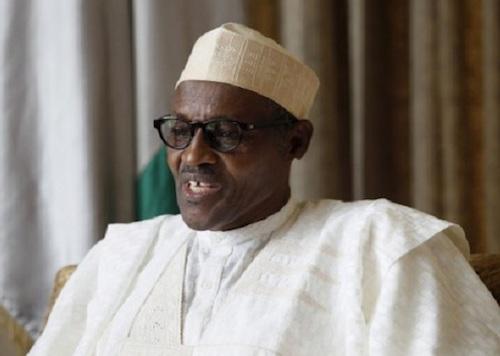
The emergence yesterday of Muhammadu Buhari, standard bearer of the All Progressives Congress (APC) in Saturday’s Presidential election did not come by happenstance; it was a product of calculated efforts at retooling the foundations of Nigeria that have been tampered with by several years of misrule.
For 12 years, Buhari, who was sacked from his seat in 1985 by the military junta under General Badamasi Babangida, made unsuccessful attempts to return to power through the ballot box.
When it was muted some months ago, that he was set to give the contest another shot on the platform of the APC, critics jeered and sneered. They thought it difficult for him to break the resolve of Nigerians. Religious and ethnic sentiments beclouded the judgment of many people who said he was an Islamic fundamentalist and could compromise the secularity of the country.
Some others said he was not a reformist after all, and possessed no moral fibre to tame the dragon of corruption and impunity in the country.

They argued that the credibility his regime enjoyed as a khaki-man was conferred on it by the sheer doggedness of his late deputy, Tunde Idiagbon. In fact, those in this school of thought insisted that Buhari was not a democrat and that it was impossible for a leopard to change its spots.
Many of those who have skeletons in their cupboards were scared stiff about his return bid, particularly when he dropped a hint that the yesteryear’s sins of some people would likely find them out.
The threat became a campaign point and formed part of the jingle of the opposition, which asked their supporters if they would prefer somebody that would clamp them or their parents in jail as a result of corruption.
But Buhari was not oblivious of people’s sentiments. “I had contested the presidential election three times and I lost three times and I ended up in the Supreme Court three times. We thank God because the Constitution does not limit how many times you can contest.
“Whichever stage you are, once you are 18 and above, you are fit to apply for the country’s highest political office. They did not put age limit in the exercise,” he said.

On why he insists on leading Nigeria once again, Buhari said: “I believe what Nigeria needs now is to be secure and efficiently managed. This is the APC’s stand. And I will like to use this opportunity through my party and through the system to ensure a secure and efficiently managed Nigeria as the country is not being well managed now.”
In his historic speech to round off his presidential rallies in 2011, Buhari who was contesting for the presidency for the third time, now on the platform of the Congress for Progressive Change (CPC), had wept openly as he lamented the decades of incompetence, failed infrastructure, and corruption of epic dimensions in Nigeria. He had regretted that he might not have the opportunity to carry out some reforms in the country.
Explaining why he wept, Buhari said: “This is a country that is well-blessed both materially and otherwise. God has blessed us more than we expected. We have so much land for agriculture.
“But majority of Nigerians can’t send their children to school, can’t afford medicine for their children, and no potable water to drink. Where does the money go to? This was why I broke down when I was rounding off my presidential campaign in 2011.”
According to him, “From the level of exporter we have moved to the level of importer of oil? Are you surprised? All the infrastructure were allowed to die and decay. And now they say they want to remove subsidy. I was there when the refineries were built with Nigeria’s money and we didn’t borrow any kobo to do that.
“Now we have ended up buying fuel from the world market. I believe that God will punish those who have perpetuated corruption in this country and put us where we are today.
“I think we are reversing. With what is happening in the petroleum industry and all the corruption, we are reversing. You know about the pension scam?”
At that time, he had exuded confidence that he had served his country in various capacities- as minster of the Federal Republic, state governor, chairman of Petroleum Trust Fund and Head of State, and in all these offices, he had never let his hand into the public till.
Analysts say that the resounding victory recorded by Buhari this time around was an eloquent testimony that Nigerians may have been weary of the style of the PDP government and desperately need a change.
Aliu Maiha from Adamawa, a businessman resident in Lagos, said: “He believes in the rule of law. He has always explored legal means to address injustice against him. He is a lover of peace.”
The newly-elected president has been described as a father-figure to the down-trodden in society, in his native Daura and indeed, around the Northern region, hence the sweeping victory he recorded there. He is a man of the people, who analysts believe is not acquisitive and lives a low-profile life which is at variance with the opulent lifestyle of his ilk in Nigeria.
During the campaign for the 2015 presidential poll, the Daura-born politician refused to be cowed but kept his cool and addressed the task ahead, despite the mudslinging against him.
Buhari emerged standard bearer of the APC at the party’s presidential primary held inside the main bowl of the Teslim Balogun Stadium in Surulere, Lagos. He polled 3,430 votes to beat other aspirants- Rabiu Kwankwaso (974 votes), Atiku Abubakar (954), Rochas Okorocha (624) and Nda-Isaiah (10).
The former head of state became the preferred candidate of the party, following his contributions to the successful merger of the opposition parties in 2014.
In league with like minds who craved for a change in the affairs of the country, particularly the business of governance, Buhari’s CPC teamed up with the defunct Action Congress of Nigeria (ACN), the All Nigeria People’s Party (ANPP) and a faction of the All Progressives Grand Alliance (APGA) to form the APC.
Although his emergence as the party’s presidential candidate was hugely criticised, the party was adamant. In the course of the campaign, Buhari was buffeted from all sides. All manner of allegations were leveled against him. A lot was also said and written against him from ethnic and religious points of view.
Buhari was born on December 17, 1942, in Daura, Katsina State. He attended Primary School in Daura and Mai’adua from 1948 to 1952, before proceeding to Katsina Middle School in 1953. He attended the Katsina Provincial Secondary School (now Government College Katsina) from 1956 to1961.
On graduation from Secondary School in 1961, Buhari went to the Nigerian Military Training School, Kaduna in 1963.
In October of the same year, he was sent to the officers’ Cadet School in Aldershot in the United Kingdom and was thereafter commissioned Second Lieutenant in 1963 and posted to the 2nd Infantry Battalion, Abeokuta as Platoon Commander in 1963.
It was at the Abeokuta Garrison that the real traits of a great soldier were identified in the young man. From 1963 – 1964 he was sent for further training on the Platoon Commanders’ Course at the Nigerian Military College, Kaduna.
In 1965, he went for the Mechanical Transport Officers’ Course at the Army Mechanical Transport School in Borden, England. He went to the Defence Services’ Staff College, Wellington, India in 1973 and to the United States Army War College from June 1979 to June 1980.
In August 1975, after General Murtala Mohammed took power, he appointed Buhari as Governor of the North-Eastern State, to oversee social, economic and political improvements in the state.
In March 1976, the then Head of State, General Olusegun Obasanjo appointed Buhari as the Federal Commissioner (position now called Minister) for Petroleum and Natural Resources. When the Nigerian National Petroleum Corporation was created in 1976, Buhari was also appointed as its chairman, a position he held until 1978.
In 1983, Buhari and Major-General Tunde Idiagbon were selected to lead the country by middle and high-ranking military officers after a successful military coup d’etat that overthrew civilian President Shehu Shagari on December.
In 1985, Buhari was overthrown in a coup led by General Ibrahim Babangida on August 27, ostensibly, because he insisted on investigating allegations of fraudulent award of contracts in the Ministry of Defence.
Between 1995 and 1998, Buhari served as the Chairman of the Petroleum Trust Fund (PTF), a body created by the government of General Sani Abacha, and funded from the revenue generated by the increase in price of petroleum products, to pursue developmental projects around the country.
Buhari contested the Presidential election as the candidate of the All Nigeria People’s Party in 2003 and lost to former president Olusegun Obasanjo.
Again, he contested under the ANPP banner in 2007 against the late Umaru Musa Yar’Adua of the PDP and lost.
In 2011, he slugged it out with President Jonathan on the platform of the CPC.
In March 2010, Buhari left the ANPP for the Congress for Progressive Change (CPC), a party that he had helped to found.
Buhari was the CPC Presidential candidate in the 16 April 2011 general election, in which he lost to incumbent President Goodluck Jonathan of the People’s Democratic Party (PDP).
ZEBULON AGOMUO




