The India-Pakistan conflict stands as one of the most enduring and dangerous rivalries in the post-colonial world. Born out of the violent partition of British India in 1947, the conflict has evolved into a deeply entrenched geopolitical and ideological contest between two nuclear-armed neighbors. While it is primarily viewed through a regional lens, its reverberations are felt globally, particularly in terms of nuclear security, terrorism, and regional instability. Among the regions most at risk from a potential escalation is the Arabian Peninsula, due to its geographic proximity, economic entanglement with South Asia, and strategic position in global energy and trade flows.
The origins of the conflict lie in the hurried and traumatic division of British India, which gave rise to the newly formed states of India and Pakistan. The princely state of Jammu and Kashmir, whose ruler acceded to India amid a Pakistani-backed tribal invasion, became the core territorial dispute. Since then, India and Pakistan have fought three major wars – in 1947 – 48, 1965, and 1971 – and a limited but high-altitude conflict in Kargil in 1999. Despite multiple peace efforts, including the Simla Agreement, Lahore Declaration, and Agra Summit, the conflict remains unresolved due to territorial disagreements, deep mutual mistrust, and diverging national ideologies.
In recent years, the conflict has taken on new dimensions amid changing geopolitical realities. The 2019 abrogation of Article 370 by India, which revoked the special status of Jammu and Kashmir, triggered a sharp escalation in rhetoric and military deployments. Pakistan condemned the move as a violation of international law, while India deemed it a domestic constitutional matter. Pakistan has consistently called for an independent international investigation into alleged human rights violations and demographic manipulation in Indian-administered Kashmir, urging the United Nations and international human rights bodies to intervene.
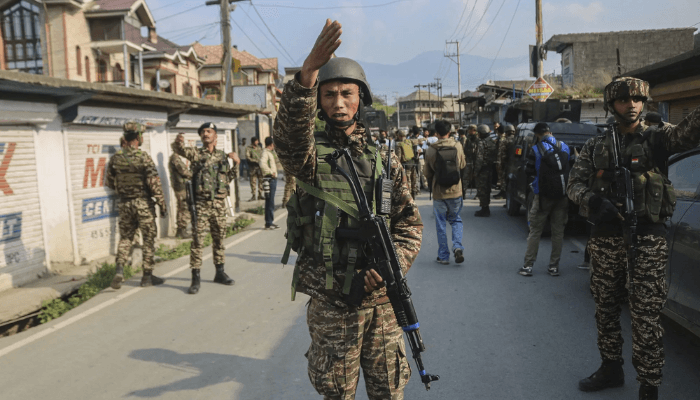
Tensions surged again in April 2025 following a devastating terrorist attack in the Baisaran Valley near Pahalgam, where five militants opened fire on a group of Indian and foreign tourists, killing 26 civilians – marking one of the deadliest such incidents since the 2008 Mumbai attacks. The assailants, armed with military-grade weapons, were reportedly affiliated with a Pakistan-based group, although Islamabad denied any involvement. India responded with cross-border airstrikes targeting what it claimed were militant training camps inside Pakistani territory. Pakistan condemned the strikes as violations of its sovereignty and reported civilian casualties, prompting a series of diplomatic protests and aerial skirmishes. Pakistan reiterated its demand for an independent international investigation into both the attack and India’s military response, accusing New Delhi of using the incident to justify disproportionate force and divert attention from Kashmir’s political grievances.

Although a fragile ceasefire was reaffirmed in early 2021, violations along the Line of Control (LoC) have increased intermittently, particularly in response to militant activity in Kashmir, which India links to Pakistan-based groups. In 2024, following a deadly suicide bombing in Kashmir attributed to the Jaish-e-Mohammed network, India again launched targeted air operations. Pakistan responded with military mobilization along sensitive sectors of the border, escalating fears of wider confrontation. The growing use of high-altitude drone surveillance, cyber warfare, and media-driven narratives further complicates the operational landscape, often blurring the lines between provocation and deterrence.
Pakistan has voiced deep concerns over India’s evolving nuclear posture and increasing investment in missile defense and hypersonic capabilities, which it interprets as a drift toward a possible first-strike strategy. Although India officially maintains a “No First Use” doctrine, recent rhetoric by Indian policymakers and strategic planners has cast doubt on its permanence. Pakistan argues this shift undermines regional stability and has therefore expanded its short-range tactical nuclear weapons program to deter conventional incursions, especially in the context of India’s Cold Start doctrine.
Cross-border militant activities remain a persistent irritant, with India pushing the international community to designate Pakistan as a state sponsor of terrorism. Pakistan, conversely, continues to frame the Kashmir issue as a matter of self-determination under international law, citing decades of UN resolutions and calling for third-party mediation – an offer India consistently rejects, affirming bilateralism as the only path forward.
India, meanwhile, has strengthened strategic ties with the United States, France, and Gulf nations, further complicating the regional balance. India’s growing naval presence in the Indian Ocean and defense cooperation with Gulf states like the UAE and Saudi Arabia indicate a broader regional ambition – one that intersects with the Arabian Peninsula’s evolving security framework.
The presence of nuclear weapons continues to cast a long shadow over South Asia. Both nations maintain nuclear-capable ballistic missile systems and evolving doctrines. The ambiguity around nuclear thresholds, coupled with the absence of structured dialogue mechanisms, raises the risk of miscalculation. False alarms or misinterpretation of military movements – especially in the age of satellite surveillance and cyber manipulation – could quickly spiral into catastrophic escalation.

The Arabian Peninsula, particularly the Gulf Cooperation Council (GCC) states, faces indirect but substantial risks from any India-Pakistan conflict. The Gulf hosts millions of South Asian expatriates from both nations. Any escalation risks inflaming ethnic or sectarian tensions within these communities, potentially destabilizing internal social harmony in countries like the UAE, Qatar, and Saudi Arabia. The Arabian Sea serves as a vital maritime link between South Asia and the Gulf. A conflict between India and Pakistan could endanger shipping lanes and oil transport routes, threatening global energy flows and destabilizing economies dependent on uninterrupted trade.
The GCC’s deepening defense and economic relationships with both India and Pakistan place them in a delicate position. Saudi Arabia and the UAE, for example, have significantly increased investments in India’s infrastructure and defense sectors, while simultaneously maintaining strategic and religious affiliations with Pakistan. A major conflict would strain this diplomatic balancing act, possibly compelling difficult realignments.
Beyond the Arabian Peninsula, the India-Pakistan conflict continues to intersect with broader geopolitical rivalries. China’s strategic backing of Pakistan, particularly via the China-Pakistan Economic Corridor (CPEC), places it in ideological and strategic opposition to India’s alignment with the West and its participation in Indo-Pacific frameworks. The United States, while encouraging de-escalation, sees India as a counterbalance to China’s rise and continues limited counterterror cooperation with Pakistan. Russia retains defense ties with both, positioning itself as a potential mediator amid shifting alliances. The risk that great power competition could converge with a regional flashpoint significantly heightens the global stakes of any South Asian conflict.
The India-Pakistan conflict, once perceived as a localized territorial dispute, now looms large in the calculus of global security. The risks posed by nuclear escalation, asymmetric warfare, and ideological polarization are not contained within the subcontinent. For regions such as the Arabian Peninsula – with their energy dependencies, demographic sensitivities, and geopolitical stakes – the costs of inaction are high. A proactive international framework, focused on sustained dialogue, conflict de-escalation, and regional integration, is urgently needed. In an increasingly interconnected world, enduring peace between India and Pakistan is not merely desirable – it is imperative for global stability.