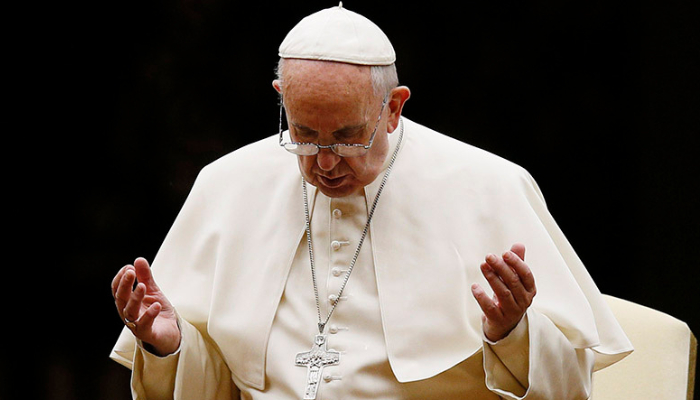
On April 11, 2019, at the Vatican, a strange drama unfolded, before the eyes of a watching world. A frail and ailing Pope Francis, eighty-two years old, got to his knees with painful difficulty, and proceeded one by one to kiss the feet of the black men and women who were standing in audience with him. The delegation were leaders from South Sudan, and they had just concluded a spiritual retreat organised by the Pope. Slowly, the Pope moved to kiss the leather-shod feet of President Salva Kiir, his Vice President Riek Machar, and three other Vice Presidents.
His message as he got slowly to his feet was simple.
‘I am asking you as a brother to stay in peace. I am asking you with my heart – let us go forward…’
He encouraged the leaders to be ‘fathers of the nation’, and to keep their disagreements private, to avoid inflaming destructive, negative passions in their people. He encouraged them to strive to be ‘fathers of the nation’.

It was a powerful, symbolic act of humility by the Pontiff, like Jesus washing the feet of his disciples.
It touched the battle-hardened leaders.
Salva Kiir would remark later,
‘I was shocked and trembled when His Holiness the Pope kissed our feet. It was a blessing and can be a curse if we play games with the lives of our people…’
South Sudan is one of the youngest independent nations in the world. It gained independence from Sudan in July 2011 after a protracted military struggle. Its population is made up of more than 60 ethnic groups, with the ethnic Dinka making up about two-fifths, and the Nuer making up one fifth. Christianity, Islam and traditional practices constitute their major religions. The country has oil, which should have made it wealthy if all things were equal.

Several years of conflict before independence led to significant socio-economic dislocations, with a large proportion of the population being internally displaced persons who required humanitarian assistance.
Unfortunately, nominal independence and the emergence of an ‘elected’ government did not bring about an end to the peoples’ sufferings.
In December 2013, President Kiir accused his former deputy Riek Machar and a number of his supporters of trying to arrange a military coup. Fearing for his life, Machar fled the capital with his group. Soon, open hostilities broke out between the opposition SPLM-IO and the country’s army – the Sudan People’s Liberation Movement (SPLM). A full-blown civil war was afoot.
In January 2014, a ceasefire agreement was reached. With the mediation of several bodies, including the African Union, the United Nations and the European Union, after several hiccups, a ‘Compromise Peace Agreement’ was eventually signed in August 2015. Machar was able to return to the capital Juba, and he was appointed Vice President.
Sadly, the peace did not last. A renewed outbreak of fighting within Juba led Machar and his SPLM-IO to escape to his ethnic stronghold. The President sacked Machar and replaced him with another opposition figure – Taban Deng Gai. There were in-fighting and realignments among the different groups.
In February 2020, Kiir and Machar came together again to form a coalition government.
All these high-wire shenanigans took a heavy toll on the masses of South Sudan. 400,000 by then had been killed, one in ten of whom were children. There was violent animosity between the Dinka and the Nuer.
This was the context in which the Vicar of Saint Peter and Pontiff of the Catholic Church world-wide kissed the feet of the African leaders. If anything deserved to be a watershed moment, surely this humble gesture was it.
Pope Francis died on 21st April 2025 at the age of 88 years.
Sadly, the peace he sought for South Sudan has continued to elude that African nation. The people of South Sudan are not enjoying the dividends of ‘independence’ or ‘democracy’. The country’s economy is in shambles. Many of the citizens are forced to rely on foreign aid for their daily sustenance. Oil has not brought wealth and a new lease of life.
There is fear, currently, of a second civil war breaking out.
It may be asked – how did these people, who were celebrating freedom from foreign religious and racial oppression in 2011, become victims of internecine massacres and savagery among their own people?
The country’s population, now 11.94 million, is made up predominantly of Christians. It has a Human Development Index of 0.388, which makes it bottom out of 193 ranked nations in the world. 80% of the population live below the poverty line. Illiteracy is high. Years of conflict and economic instability have rendered any thought development all but impossible.
It would seem there is no end in sight, yet.
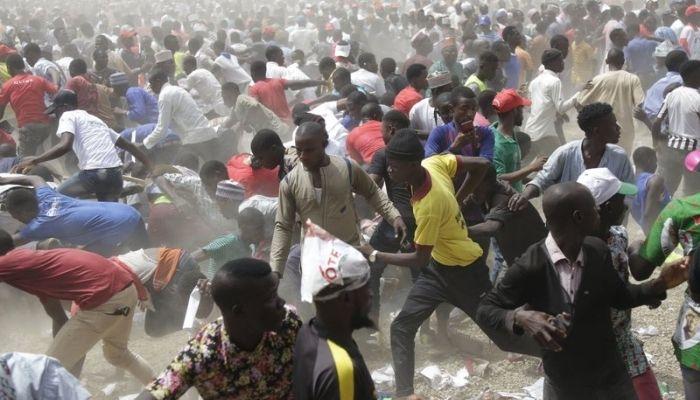
Riek Machar has been removed from office yet again by President Kiir and charged, along with other members of his SPLM-IO party, with treason, terrorism and crimes against humanity, for their alleged role in an attack on a military garrison in which 250 people were killed. The trial has created a tinderbox situation across the nation. There is renewed fighting between government and rebel forces, and the fighting is especially brutal and redolent with atrocities on civilians in areas where rebels have made some territorial gains. Some zealots on the government side are talking of a ‘fight to the finish’, especially in Jonglei state. Humanitarian agencies are closing shop due to cuts in their funding and safety concerns.
Who will rescue South Sudan from its own people, and for its people?
It is a question the late Pope Francis thought he had answered by kissing the feet of President Salva Kiir – a Dinka, and Vice President Riek Machar, a Nuer.
It is a question that is still waiting to be answered.