Peace
I have thought of commenting on the Lekki toll road for five weeks now, but as many columnists will appreciate, there are times when you need to get some issues out of the way. It was the case with me when I wrote my column titled: “We are all corrupt”; and followed up with my thoughts on inflation, and later, on statistics in Nigeria.
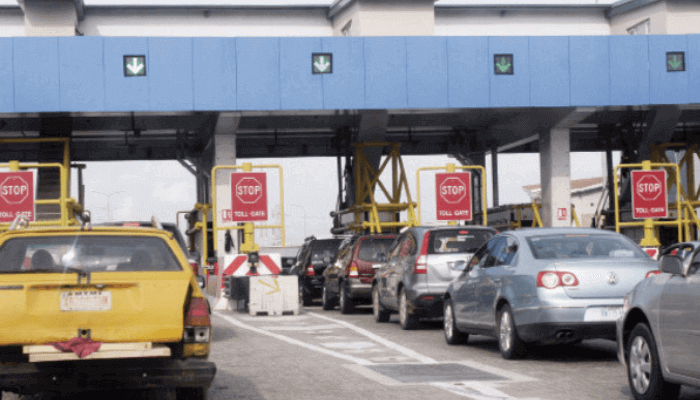
Now, those opposed to the Lekki toll road often make two very valid arguments. First, that every toll road around the globe has a toll-free alternative, but it does not appear that the proposed Lekki toll road has one. Second, that there was not adequate consultation with the residents and businesses in the area before the road was concessioned. Effectively, they are arguing that there should have been more widespread consultation before the road was made a toll one. Other arguments, but less valid, include the thinking that the poor may not be able to pay the toll. There is also the argument that the road is not new but an extension of an existing road.
I will attempt to address these points one by one. But let me first introduce two interesting and critical key economic principles related to the arguments. First, following natural economic behaviour, no one likes to pay for anything. Everyone, all over the world, likes free things, and the developed countries have managed to develop only by resisting this natural economic behaviour. It is the reason why taxes are paid, and people are made to go to jail when they don’t pay. In our fifty years economic history, we have always resisted paying for anything (natural, as I argued), and it has left us with PHCN, NITEL, and so on.

Read Also: Lekki massacre and God’s anger
The second economic principle related to this debate is that there is a difference between public good and private good; though this difference can be blurred sometimes. For example, my mobile phone and the credits on it constitute, strictly, private good. It is up to me to load my phone or not. I enjoy private benefits from the use of the phone and I suffer private loss when I’m not able to use it. However, some goods have always been termed public goods either because it is difficult to exclude others from deriving benefit from it, or because they carry no element of rivalry or competition.
This classification of a public good is very important to our discussion. Even economists agree that there is no public good where there is not an element of excludability or rivalry. For instance, the reason why there is traffic on the Lekki road is because motorists “rival” each other for the road. This is the reason why toll roads have been introduced all over the world when there are intractable traffic situations on existing road, to create some level of excludability.
Notwithstanding, governments are involved in order to ensure that it is still fair to everyone. Do I think the Lekki toll road is fair? Sure. To those who argue that there is no alternative road to the toll road, my reaction has always been to demonstrate that in the first place, there was nothing you could describe as a road before now, not to mention an alternative. What is the essence of a road that takes five hours to drive through, instead of 30 minutes? If there was an alternative, would everyone travel five hours? We should not forget that in countries where all the right things have been done in applying toll, even the existing roads are already fantastic, it is just that traffic has become problematic. In the Lekki case however, the road was virtually non existent; the traffic situation actually resulted from that fact. If private funds are now being used to build it, it has to be paid for.
The second argument used against the toll road is the most ridiculous of all the arguments, and I will explain why. It is often said that the government did not consult them adequately. It is interesting to think that government should consult us on everything; it is ideal, but nothing is ideal in Nigeria. Which of the Nigerian governments, at any level (more than 800 of them) consults us before they steal from public purse? Which of them consults us before they do all the horrible things they do in government, and in our name? Now, there is this positive thing, but because it will cost me N200 per day to enjoy, I want the governor himself to come and meet me at home. We should be honest enough to admit that this cost is much less than the current costs endured by residents in that link, which include costs to cars, stress levels caused by traffic, among others as well as the benefits which will include significant increases in property prices and improvement in the standard of living. These benefits cannot be easily quantified.

The poverty argument in Nigeria is a funny one. The road will actually lift thousands of poor on that road. How? It will open up opportunities in the area for businesses, investments, growth, and of course, jobs. That is what will lift many out of poverty, and these things will only come as a result of improvement in the road infrastructure which will complement other things. The poor do not have cars, and will only go in public transport. Nothwithstanding, the poor on that road will pay less than the poor elsewhere because there will not be those in “green” uniforms collecting the real ‘toll’ from them – if you do not understand this one, check what happens again on Orile road.
Now, the argument that the road is just one additional lane is most disingenuous. Saying that the new Lekki road is just an additional lane is like saying my Ph.D. is just an additional degree to my masters. Yes, it is in nominal terms, but the difference is four years and fifty thousand pounds. Now, is the completed part of that road not a beauty to behold, and comparable to the best roads anywhere in the world? Please, let us not discourage a good thing.