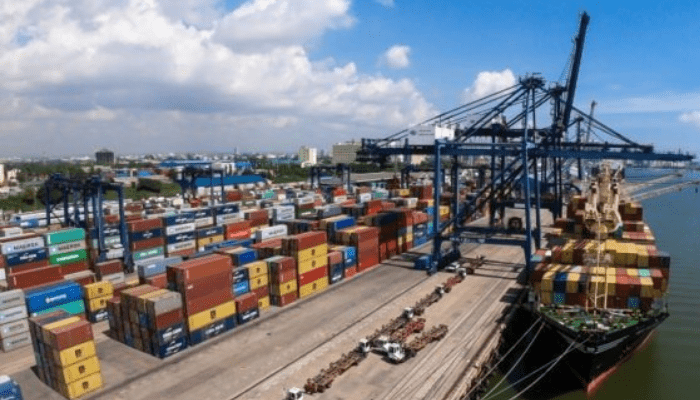
The forces of geopolitical tension—spanning territorial disputes, political instability, and military conflicts—have significantly shaped the trajectory of global history. These tensions hold particular relevance in international trade, with the global shipping industry acting as the central artery of the world economy. As nations grow increasingly interdependent for the flow of resources, energy, and manufactured goods, geopolitical disputes can disrupt essential maritime routes, sending shockwaves throughout global markets. These disruptions not only lead to short-term economic instability but can also have long-lasting consequences for trade, national security, and global power structures.
Historically, the control over strategic shipping routes has been a critical aspect of geopolitical dominance. From the rise of powerful empires to the standoffs between modern superpowers, maritime trade routes have consistently been the focus of political and military struggles. During the Age of Exploration in the 15th and 16th centuries, European powers like Spain and Portugal sought control over vital maritime passages, driven by a desire for wealth and dominance. These struggles for control led to the establishment of colonial empires and the securing of strategic waterways, such as the Strait of Malacca, the Suez Canal, and the Strait of Gibraltar. These choke points were not just seen as trade routes but also as symbols of economic and political power.
In the 18th and 19th centuries, the British Empire, with its naval might, ensured its dominance over crucial maritime passages like the Cape of Good Hope and the Suez Canal. These strategic points were vital for safeguarding Britain’s vast global trade network, emphasizing how closely global power and maritime routes were intertwined.
The Napoleonic Wars (1803-1815) further underscored the significance of naval power in controlling shipping routes. Conflicts between European powers led to disruptions in trade, as each side sought control of vital maritime lanes through territorial claims and naval warfare. The historian Andrew Lambert aptly remarked, “Navies are not just tools of war, but essential instruments of economic control and protection.” This highlights the vital role that naval strength plays in maintaining economic interests, especially during periods of geopolitical instability.

The 20th and 21st centuries saw these geopolitical tensions manifest in even more complex and multifaceted ways. A pivotal example occurred in 1956 during the Suez Canal Crisis, a defining moment in global politics. When Egyptian President Gamal Abdel Nasser nationalized the Suez Canal, a vital maritime link between the Mediterranean and Red Seas, it sparked an international conflict involving Britain, France, and Israel. This crisis revealed the vulnerability of strategic shipping routes to political instability. As Middle East expert Geoffrey Kemp observed, “The Suez Canal has long been a symbol of the vulnerability of global trade to geopolitics.”
The Gulf War (1990-1991) offers another significant example of how geopolitical tensions impact global shipping. Iraq’s invasion of Kuwait had far-reaching effects, particularly in the Strait of Hormuz, a crucial choke point for global oil supply. Almost 20% of the world’s oil flows through this narrow passage, making it a critical point of contention. The military operations that followed disrupted shipping in the region, influencing global oil prices and commodity markets. Former U.S. Ambassador to Israel Martin Indyk emphasized, “Whenever a war threatens the Strait of Hormuz, it’s not just a regional conflict; it’s a global economic shock.”
In recent decades, the South China Sea has become a flashpoint for geopolitical tensions, especially between China and several Southeast Asian nations. This sea, rich in natural resources and serving as a vital trade passage for over $3 trillion worth of goods annually, has become a battleground for territorial disputes. China’s territorial claims and the militarization of artificial islands in the region have exacerbated tensions with nations like the Philippines, Vietnam, and Malaysia. As Bonnie Glaser, Director of the China Power Project, noted, “The South China Sea is the world’s most important shipping route—its stability is not just a regional concern but a global one.”
Geopolitical instability and piracy also contribute to the volatility of key shipping routes. The Strait of Malacca, one of the busiest maritime corridors in the world, is critical for global trade between East Asia, Europe, and Africa. However, piracy, terrorism, and escalating tensions between China and the U.S. have made the Strait a potential chokepoint for disruptions. Geopolitical analyst Robert D. Kaplan stated, “Piracy, terrorism, and geopolitical tensions have transformed the Strait of Malacca into a potential choke point for global trade.”
The COVID-19 pandemic also highlighted the vulnerability of global shipping. Widespread port closures, labor shortages, and restrictions on movement severely disrupted shipping routes, impacting industries such as electronics, automotive, and pharmaceuticals. This event underscored how non-traditional geopolitical factors can significantly affect global trade patterns.

In 2021, the Ever Given incident, when one of the largest container ships became lodged in the Suez Canal, marked one of the most high-profile disruptions in modern global shipping. For six days, the canal was blocked, leading to a backlog of over 400 ships and billions of dollars in lost trade. Former Saudi Minister of Foreign Affairs, Adel Al-Jubeir, aptly remarked, “The Suez Canal is more than a waterway—it’s a lifeline that connects global economies.” This incident highlighted how fragile international shipping systems can be, even without military conflicts or territorial disputes.
As the global geopolitical landscape continues to shift, the future of critical maritime routes will remain an area of significant concern. The competition for control over strategic maritime chokepoints, along with the rise of regional powers and the ongoing threat of both conventional and unconventional warfare, will inevitably affect the stability of international trade. In this evolving environment, nations and corporations must prepare for continued disruptions by diversifying supply chains, implementing contingency plans, and investing in alternative shipping routes.
The Suez Canal Crisis of 1956 was not only a critical moment for global shipping, but it also marked a turning point in international politics. The crisis began when Egyptian President Gamal Abdel Nasser nationalized the Suez Canal, which was previously operated by a British-French company. This decision was perceived as a direct challenge to Western influence in the Middle East and sparked military intervention from Britain, France, and Israel. At the heart of the conflict was the control of the Suez Canal, a vital maritime passage that facilitated trade between Europe and Asia.
Nasser’s move to nationalize the canal was motivated by a desire for Egypt to assert its sovereignty and reduce foreign influence. The canal was a vital economic and strategic asset, providing a shortcut for ships traveling between Europe and Asia. By taking control of the canal, Nasser sought to solidify his position as a leader of Arab nationalism and challenge the legacy of colonialism in the region. This move was seen by Britain and France as a direct threat to their interests, given the strategic importance of the canal to their trade and oil supplies.
In response, British Prime Minister Anthony Eden, supported by French Prime Minister Guy Mollet and Israeli Prime Minister David Ben-Gurion, orchestrated a military intervention to reverse Nasser’s nationalization. Israel’s role in the conflict was crucial, as it launched a military operation in the Sinai Peninsula, advancing toward the canal. The aim was to seize control of the canal and depose Nasser. However, despite initial military successes, the British and French forces faced strong resistance both on the ground and from the international community.
The crisis took on a global dimension due to the involvement of the United States and the Soviet Union. U.S. President Dwight D. Eisenhower was critical of the British and French actions, fearing that military intervention would exacerbate Cold War tensions. Eisenhower also sought to avoid alienating Arab nations, which were seen as important in the fight against Soviet influence. Under intense pressure from the U.S. and the United Nations, Britain and France were forced to cease military operations and agree to a ceasefire.
The Soviet Union, under Nikita Khrushchev, also played a pivotal role in the crisis by supporting Nasser. The Soviets viewed the British and French intervention as an example of imperialism and sought to use the crisis to gain influence in the Middle East. Khrushchev even threatened to intervene militarily against Britain and France, further intensifying Cold War tensions.
The United Nations, led by Secretary-General Dag Hammarskjöld, played a crucial role in resolving the crisis. The UN brokered a ceasefire and established the first-ever United Nations Emergency Force (UNEF) to supervise the truce and maintain peace. This marked a significant moment for the UN, demonstrating its ability to act as a mediator in international conflicts.
The Suez Canal Crisis illustrated the vulnerabilities of key global shipping routes to geopolitical conflict. It also highlighted the changing dynamics of global power, as the United States emerged as the dominant force in mediating international disputes. The crisis marked the decline of British and French influence in the Middle East and signaled the rise of the U.S. and the Soviet Union as the primary superpowers in the Cold War.
In conclusion, the Suez Canal Crisis was a pivotal moment that not only impacted global shipping but also reshaped the geopolitical landscape. The crisis underscored the importance of strategic waterways in global politics and demonstrated the potential for international cooperation in resolving conflicts. As the world continues to face geopolitical tensions, the lessons learned from the Suez Canal Crisis remain relevant in navigating the complexities of global trade and diplomacy.