On January 29, 2026, in Umuahia, Abia State, a small but radical shift took place in Nigerian agriculture.
Officials from the Federal Ministry of Agriculture gathered to distribute knapsack sprayers to 300 smallholder farmers. Government support programs like this are not new. What was new was how the beneficiaries were identified. There were no political lists, and no guesswork. For the first time, there was no need to “spray and pray”.
Instead, they logged into a live, dynamic database of verified farmers, mapped, validated, and profiled using satellite imagery, remote sensing, and artificial intelligence. In minutes, they could see who the farmers were, where they farmed, what they grew, and how much land they cultivated.
That database, Abia’s Agriculture Digital Data System (Abia ADDS), served as a single source of truth for agriculture in the state. And in that moment, it quietly demonstrated what Africa’s food system has been missing all along: data that actually works. But by building it and showing its potential impact, Kitovu Technology Company validated the sermons it has been preaching for many years.

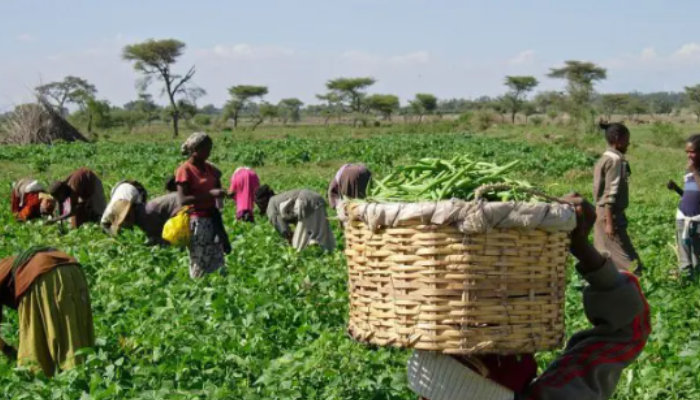
Let’s face the fact squarely; Africa’s food problem is not just about inputs. It’s About Information. Africa produces nearly 80 percent of its food from smallholder farmers, yet these farmers remain largely invisible to policymakers, financiers, and markets. Governments plan subsidies without knowing real farm sizes. Banks refuse to lend because they cannot verify production. Extension agents give generic advice because they lack localized data. As a result, billions of dollars in agricultural spending deliver only marginal impact. This is not a failure of effort. It is a failure of information.
According to the World Bank, countries with strong agricultural data systems are significantly better at targeting subsidies, improving productivity, and stabilizing food prices. In India, the digitization of farmer records through Aadhaar-linked land databases enabled direct benefit transfers that reduced leakage and improved farmer incomes. In Brazil, satellite-backed farm registries have been critical to credit access, traceability, and deforestation control. Rwanda’s national land and crop data systems have helped align extension services with real-time farm conditions, contributing to sustained yield growth. Where data is coherent, agriculture works. Where it is fragmented, it fails.
The Abia pilot revealed something deeper than efficient distribution. It highlighted one often neglected fact; what data makes possible, when it’s done right. With reliable farm-level data, governments can move from blanket interventions to precision policy. Support can be tailored by crop, location, soil type, and season. Input subsidies can be timed correctly. Emergency responses can be targeted before crises escalate.
For farmers, the implications are even more profound. When farm, soil, weather, and satellite data are combined, advisory services stop being generic. Farmers receive crop-specific fertilizer recommendations, precise herbicide guidance, and early warnings for pests, droughts, or floods. Evidence from multiple studies shows that such data-driven advisory systems can increase yields by 20–40 percent while reducing input misuse and emissions.
Critically, data also unlocks finance. A verifiable production history becomes an alternative credit score. Financial institutions can lend based on observed performance rather than collateral farmers do not have. In Kenya, digital farm records linked to mobile platforms have already enabled thousands of smallholders to access loans previously considered impossible. Data doesn’t just improve farming. It rewires the entire food economy.

Despite its catalytic power, agricultural data remains one of the most underfunded assets in Africa’s development landscape. But why does Africa still underinvest in agricultural data? The reasons are familiar. Data infrastructure is expensive upfront. The returns are indirect. Benefits accrue across sectors rather than to a single investor. Existing data is scattered across ministries, NGOs, and private platforms, locked in silos that don’t talk to one another. In short, agricultural data suffers from a classic market failure: everyone benefits, but no one wants to pay. Yet Africa has solved this problem before.
Nigeria’s financial system works today because of shared infrastructure. The Nigeria Inter-Bank Settlement System (NIBSS) enabled interoperability, trust, and scale across banks that would never have built such systems alone. It made digital payments viable, and profitable. So what lessons can we borrow from banking? What If Agriculture had its own NIBSS? Because in truth, agriculture needs a similar leap.
Imagine an Agricultural Data Infrastructure Processing System (ADIPS): an interoperable backbone connecting public and private agricultural data sources under shared standards. Governments, agribusinesses, financial institutions, and development partners could contribute and access verified data through incentive-based sharing. Now imagine taking it a step further. What if data itself could be tokenized, allowing investors to fund data collection and infrastructure, while accessing liquidity instead of waiting years for indirect returns? What if development finance institutions, pension funds, and even governments could invest in agricultural data the way they invest in roads or power grids? These questions are unconventional, but so was digital banking once. And it can be done. The question is, who will fund it?
Africa’s food system is under pressure from climate change, population growth, and fiscal constraints. We can continue to operate in the dark, distributing inputs without insight, designing policies without evidence, and blaming farmers for systemic failures. Or we can recognize a simple truth: you cannot fix what you cannot see. That is the choice before us; continue with the status quo, or embrace a new path forward.
The Abia experience shows that building a single source of truth for agriculture is not theoretical. It is possible. It works. And when done right, it changes everything, from farmer dignity to policy effectiveness. The real question is no longer whether data can transform Africa’s food system. It is whether we are bold enough to invest in the invisible infrastructure that makes transformation inevitable.
Because in the end, food security is not just about seeds and soil. It is about knowledge, and the systems that allow it to flow.
Emeka is a Nigerian agritech entrepreneur and systems builder focused on transforming Africa’s food system through climate-smart infrastructure, digital innovation, and data infrastructure. He is the founder of Kitovu Technology Company, which builds agricultural data platforms and post-harvest systems supporting smallholder farmers across Africa. His work sits at the intersection of food security, technology, and poverty reduction.