There was a time Nigerian government officials and elite pretend to educate their children in Nigerian public universities as a sign of their belief in the Nigerian education system. For those who chose to send their children to Western universities, they do so discreetly and without making much noise about it. Not so anymore. Now, every summer, Nigerians are treated to a photo gallery of who is who in Nigeria (from the president and his family to the struggling members of the middle class) celebrating the convocations of their children in European and North American universities. There is absolutely no shame and no discreetness to it anymore. The spectacle of Nigeria’s highest political office holders openly celebrating the education of their children abroad while schools in Nigeria are shut almost permanently due to strike by teachers is one contradiction they no longer give a damn about.
Of course, I do not need to remind us that most of these are financed from the public treasury. Even for those in the private sector or in private business, the Nigerian state highly subsidises the foreign education of their children. An Indian associate of a Nigerian once told him Nigeria helped finance the foreign education of all his children through cheap foreign currency subsidy – a benefit he could never have been able to get in his home country of India.
In 2016, as the economic collapse and forex scarcity were biting really hard, the President, Muhammadu Buhari, made a cheeky attempt to ban students studying abroad from accessing forex at the Central bank to pay for tuition and other costs. During an Interview with Al Jazeera television, Buhari announced the stoppage: “Those who can afford foreign education for their children can go ahead, but Nigeria cannot afford to allocate foreign exchange for those who decided to train their children outside the country. We can’t just afford it. That is the true situation we are in,” Buhari curtly told the Interviewer. However, when the journalist interviewing him pointedly reminded him that he also had children studying overseas, Buhari replied in his characteristic manner: “Yes, I have children abroad because I can afford it.”
Of course, after every section of the Nigerian elite and middle class assailed the president, that policy was speedily cancelled and the allocation of subsidised forex for foreign education and, may I add – foreign healthcare – resumed. One Senator made the point to remind the president he was not voted into office to deny their children foreign education. Many others wondered why the government should ban forex for foreign education while it still allocates forex for pilgrimages to Saudi Arabia and Israel.

In addition to announcing the stoppage of subsidy for education, the president also promised to end the practice of sending government officials for overseas medical treatments, especially when Nigeria had the expertise. But three months after he made the promise, the president himself flew to the United Kingdom to treat a common ear infection, an action the then president of the NMA described as a “national shame” considering that Nigeria had more than 250 ear, nose and throat (ENT) specialists, as well as a national ear centre.
To show the extent of the problem, a former central bank governor in 2014, at a forum, revealed that as at that time, there were 71, 000 Nigerian students in neighbouring Ghanaian universities and they spend about $1 billion yearly on tuition and upkeep. According to Sanusi – who, I must warn, also has a history of exaggerations and hyperbolic statements – “the tuition paid by Nigerian students studying in Ghana with a better organised education system is more than the annual budget of all federal universities in the country.” A source from the central bank once revealed that the bank processes about two million foreign exchange applications annually for students abroad – at all education levels.
A president that proclaims his love for Nigeria but cannot educate any of his children in Nigeria even when he told the entire country he is poor and cannot afford the funds to buy his party’s nomination form for the presidency?
Are we then surprised that no matter how economically ruinous the forex subsidy regime is, the Nigerian government will continue with it? Like I argued last week, “Nigeria’s government officials and elite have mentally checked out of the country and identify with Nigeria only because of its extractive value.” The country is their biggest source of revenue and easy money and they must remain in charge to continue to extract as much as they can from it while building a separate life for themselves and their families safely outside the country.
Government officials love to talk about patriotism and love of country, but if we could just discount their words and look at their actions for a brief moment, we will see exactly what they are after. A president that loves to talk about Nigeria being the only country he has but cannot even treat a common cold or ear infection in Nigeria? A president that proclaims his love for Nigeria but cannot educate any of his children in Nigeria even when he told the entire country he is poor and cannot afford the funds to buy his party’s nomination form for the presidency?
Most government officials proclaim their love of country but hold permanent residencies or citizenships of other countries and never use Nigerian hospitals or educate their children in Nigerian schools.

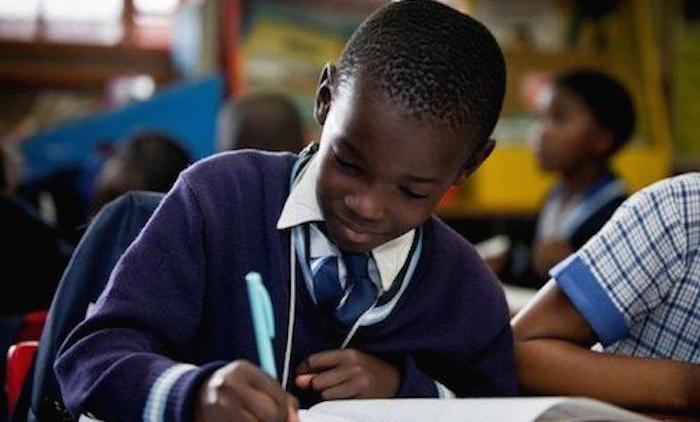
Back home in Nigeria, we have even stopped talking about quality education. Our greatest problem is now that of access. A survey conducted by UNICEF and the Nigerian government shows that Nigeria has the highest number of out of school in the world at 13.2 million. A majority of these out of school children come from the three geopolitical regions of Northern Nigeria – Northwest, Northeast and North central. Perhaps, it is the desire to ensure every Nigerian child has access compulsorily to primary and three years of secondary education that led the government to introduce the Universal Basic Education in 1999, a scheme where both the federal government and state governments contribute to fund basic education across the country. Sadly, since becoming fully operational in 2004, the UBE has not recorded much improvement in enrolment not to talk of quality in recent years. But how do Nigerian government officials care so long as they can send their kids to expensive private schools and universities abroad!