The Nigerian political space is increasingly becoming noisier each passing day. Fresh issues continue to emerge. If Mr. A is not dumping his party, Mr. B is endorsing a sitting president for another round of elections. The nation’s severely bandaged constitution has become a huge concern to the Patriots, and they are kicking to usher in a brand new ground norm. It is simply a bedlam in Nigeria right now.
“How would the new constitution be implemented since it is the same set of people that have refused to implement the available one? If they had been able to properly implement what is available, even with all the imperfections, Nigeria would have been a better place!”
The Patriots: For the love of country
They gathered from various parts of the country. They said they convened in the interests of their people, but they were not elected by the people. Many of them were also part of the 2014 Constitutional Conference organised by the Goodluck Jonathan administration. The copies of the recommendations are still gathering dust on the shelf inside the Aso Rock Villa. They are the Patriots from various ethnic nationalities in Nigeria.
In the last few days, the issue of the constitution has enjoyed many headlines in the media. The National Assembly said it visited all the geopolitical zones in its move to carry out some amendments.

The Nigerian 1999 Constitution (as amended) has continued to breed rancour. Many citizens dismiss the document as neither reflecting the views of the people of Nigeria nor representing their aspirations. It has always been dubbed a military document and is not far from a military decree.
Since 1999, the Nigerian National Assembly has amended the 1999 Constitution five times. These amendments are often referred to as the First, Second, Third, Fourth, and Fifth amendments.
Although the current federal legislature has since embarked on another round of constitutional amendments, the Patriots strongly believe that the nation’s constitution needs a complete change and not even an alteration. The group also believes that the document, as it is, favours the nation’s political class; hence, their aversion to the call for a complete change of the constitution.
Ann-Kio Briggs, a human rights activist and environmentalist who was at the Patriots’ meeting, said, “Let’s stop amending; let’s come together and give ourselves a new constitution. For Nigeria to move forward, there’s a need for a new constitution.”
The question that has continued to be asked since the Patriots rose from the meeting is the possibility of the current administration giving attention to whatever recommendations that may have been drawn by the elder statesmen and women.

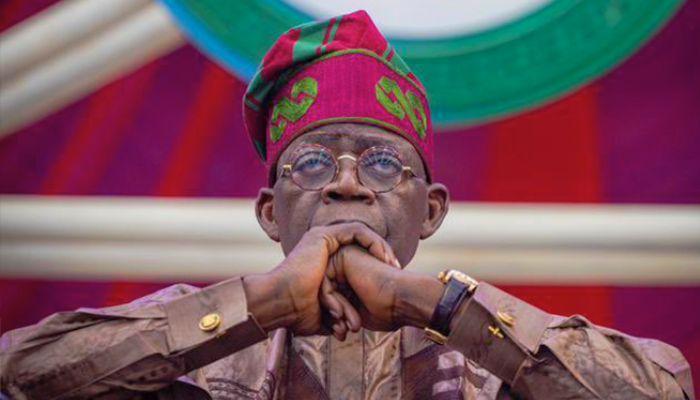
In August last year, the Patriots had met with President Bola Ahmed Tinubu, urging him to convene a National Constituent Assembly to produce a people’s democratic constitution for the country.
The group was led by Emeka Anyaoku, former Commonwealth Secretary-General.
Anyaoku affirmed that “Nigeria is a pluralistic country, and that pluralistic countries exist all over the world. Those of them that address their pluralism by having true federal constitutions have survived. Examples are India and Canada.”
According to him, “Those pluralistic countries that failed to address their basic challenge of pluralism through a federal constitution have ended up disintegrating. Examples of that are Yugoslavia and Czechoslovakia. And here in Africa, Sudan.”
At the time of the visit, the president was said to have promised the Patriots that he would listen to them subsequently, since his focus then was on the economy.
In April last year, Ayo Opadotun, secretary general of the pro-democracy group National Democratic Coalition (NADECO), had urged Tinubu to invite leaders of the various ethnic nationalities to produce a draft constitution that would spell out how the heterogeneous people of Nigeria agree to live together.
“President Bola Tinubu, who was part of us in the trenches, has no other business than to restore Nigeria to constitutional governance,” Opadotun said.
“More to it, he has an added advantage in that his party, in its manifesto, Article 7 of the APC manifesto, enjoins them to restore Nigeria to federal constitutional governance.”
Observers have said that the major challenge with the existing constitution has to do with implementation.
How would the new constitution be implemented, since it is the same set of people who have refused to implement the available one? If they had been able to properly implement what is available, even with all the imperfections, Nigeria would have been a better place!
Now that the Patriots have come up with recommendations, which will be presented to the President soon, it is left to be seen if anything positive will come out of it.
The regrouping of the Patriots has been described by some Nigerians as an effort in futility. They also noted that it is the same All Progressives Congress (APC) that refused to implement the 2014 Constitutional Assembly recommendations.
Some other Nigerians have, however, commended the Patriots, many of whom are now old and ordinarily would think less of the country’s problems. They have been commended for their resilience and for the love of country, which has been their motivation for fighting on. They paid their way to Abuja, fed themselves, and accommodated themselves, all for the love of the country.
May Abuja not allow the efforts of our fathers to continue to be in vain.
Is PDP still ‘kampe’?
The once largest political association in Nigeria, the People’s Democratic Party (PDP), is still embroiled in internal wrangling. This is evident in the speed at which those considered its backbone in the past are jumping ship. While some state governors have dumped the party and joined the ruling All Progressives Congress (APC), some have decided to physically hang in there while their minds have strayed into the APC. The latest in the latter scenario is the reported endorsement of President Bola Ahmed Tinubu for a second term by Governor Ademola Adeleke of Osun State, while he claimed that he and his supporters were still in the PDP. This is like a snail, the shell of which has been left empty after being devoured by a predator.
The umbrella association has been hard-hit recently following the exodus of its former chieftains into the African Democratic Congress (ADC). The ADC is a vehicle many of the opposition politicians are hoping to ride to power in 2027.
The decampees hinge their reason on the intractable crisis in PDP, even though many of the defectors’ hands are not clean in the cause of the internal impasse ab initio.
While the mass exodus has continued, the remnants in the PDP have described it as good riddance to bad rubbish.
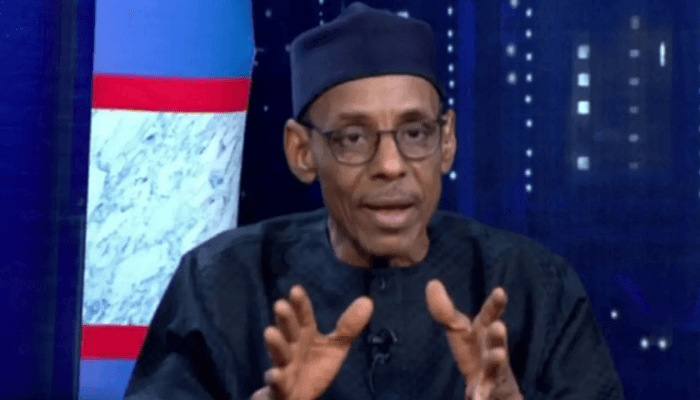
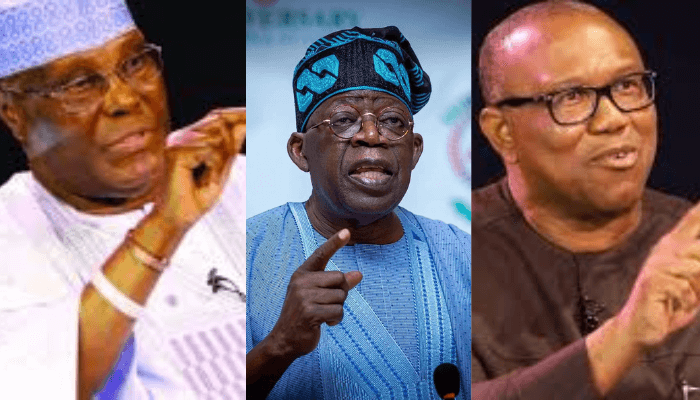
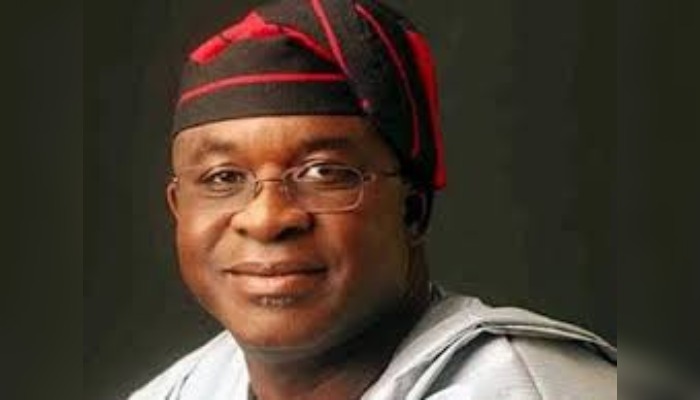
Abba Moro, the senator representing the Benue South Senatorial district, who was on Channels the other day, vehemently said he would not leave PDP and would not follow his so-called allies, such as Atiku Abubakar and David Mark, into an unknown future.
He was miffed at some of the hypocritical utterances of some of the defectors to the effect that a party that had made them whatever they became in politics since 1999 lacked “ideological clarity.” He said they were half smart by half.
Gabriel Suswan, a former governor of Benue State, has been complaining about everything in the PDP for a long time. Before he joined the ADC, Senator Moro said Suswan had wanted to bring down the roof.
For the record, the PDP began its descent during its presidential primary in 2022, when Atiku picked the ticket in controversial circumstances.
His decision to pick the then-governor of Delta State, Ifeanyi Okowa, aggravated the situation.
Curiously, both Atiku and Okowa have dumped the party and moved on.
Moro, who is the minority leader in the Senate, feels so pained that he asked rhetorically, “Does it not tell you the characters of the defectors?”
Many are leaving the PDP for fear of their future, for political survival. They believe that if they do not join the APC, the party has the capacity to derail their future political survival.
While the day is still young to draw conclusions on what happens to the PDP as Nigeria draws closer to the next general election, the signs are everywhere that the party is not “kampe.”
Blame Nyako for Natasha’s drama Tuesday
Opinions are divergent on the action of the suspended Senator Natasha Akpoti-Uduaghan at the National Assembly on Tuesday.
While some Nigerians believe Natasha was right to have made good on her plan to forcefully resume at the Senate, some others strongly think there was no need for that drama. The judgement delivered by Justice Binta Nyako provided the basis for dichotomous interpretations. Some said that the judgement was all-encompassing even though it did not pointedly order the Senate to recall Natasha. But looking at the drama at the National Assembly on Tuesday, Binta Nyako, and not Natasha, must be blamed. She papered over the case and gave an “uncertain” judgement, which created a lacuna that has opened another avenue for judicial acrobatics.
Looking back at the drama at the National Assembly on Tuesday, it must be stated straightaway that Natasha should not have followed that route. She enjoys the support of many Nigerians in the struggle and must not be seen to squander such goodwill. Nigerians must, on a serious note, begin to hold the judiciary to account for credible judgments. The “dubious” Certified True Copies (CTCs) emanating from the courts nowadays, which allow all the parties in the case to interpret the judgment in their own favour, must have misled Natasha. The nation’s judiciary is in a sorry state, and many believe that institution has been heavily compromised.