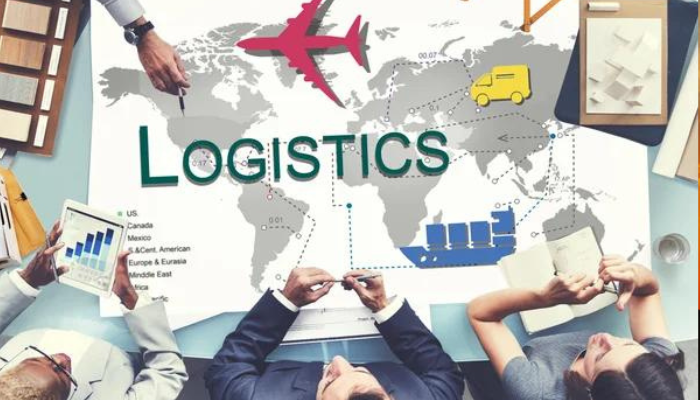
The Age of Uncertainty and the Supply-Chain Reckoning
The last decade has stripped away the illusion of stability in world trade.
- The Age of Uncertainty and the Supply-Chain Reckoning
- Africa stands at a turning point.
- The leadership gap: Why CEOs must take charge
- Technology as the new artery of trade
- Sustainability: The new currency of logistics
- Resilience through regionalisation
- People: The final frontier
- The CEO’s action playbook
- From movement to meaning
- About the author:
Pandemics, geopolitical conflicts, cyber-attacks, climate disruptions, and inflationary shocks have converged to reveal a hard truth: the global supply chain was built for efficiency, not endurance.
From congested ports to material shortages and data breaches, the logistics ecosystem is being redesigned in real time. The invisible veins of globalisation now require leaders who can act as engineers of continuity rather than caretakers of convenience.
Africa’s unfinished infrastructure and unbounded potential

Africa stands at a turning point.
With a population of 1.4 billion, the youngest workforce on the planet, and an expanding consumer market, the continent is not a peripheral player in global trade; it is the next growth engine. Yet inefficiency in logistics still adds as much as 40 percent to the cost of doing business in many African economies.
While infrastructure remains fragmented, the African Continental Free Trade Area (AfCFTA) offers an extraordinary opportunity: a single market that could lift intra-African trade from its current 15 percent to more than 50 percent by 2035, if the movement of goods can match the movement of ideas.
Africa does not lack capacity; it lacks connectivity. The task of building those connections now belongs to both visionary CEOs and forward-thinking policymakers.
The leadership gap: Why CEOs must take charge
Too many organisations still treat supply-chain strategy as a technical function buried deep in operations. That thinking no longer works.
In an era when one delayed shipment can distort an entire quarter’s performance, logistics has become a boardroom priority.

The modern CEO must combine the mind of an engineer with the perspective of an economist and the empathy of a humanitarian. Effective leadership means orchestrating data, sustainability, finance, and ethics into one integrated system.
The most important questions have changed:
• Where are the vulnerabilities in our ecosystem?
• How predictive is our data, and how human are our decisions?
• What will resilience look like five disruptions from now?
Leaders today are not judged by how much they control but by how quickly they recover.
Technology as the new artery of trade
Artificial intelligence and advanced analytics are transforming global supply chains.
Predictive models now forecast port delays, blockchain secures documentation, and Internet-of-Things sensors track every movement with surgical precision.
Yet technology alone does not guarantee resilience. What matters is intelligent integration. Automation without insight only accelerates failure. The CEO’s duty is to ensure that digital transformation bridges people, processes, and purpose.
Sustainability: The new currency of logistics
Supply chains account for roughly 60 percent of global carbon emissions, and regulators are responding with stricter mandates.
Sustainability has moved from corporate social responsibility to competitive necessity. Clean fleets, recyclable packaging, and renewable-energy logistics hubs are now decisive factors in winning contracts and investor confidence.
For African businesses, embracing green logistics is not imitation of the West; it is a strategic move that attracts climate finance, builds brand credibility, and secures a long-term licence to operate in a changing world.
Resilience through regionalisation
The post-pandemic economy is shifting from pure globalisation to balanced “glocalisation”, where trade remains global but production and storage are regionally anchored.
This model reduces exposure to crises by distributing risk across multiple hubs.
Africa can benefit enormously by developing cross-border corridors, from Lagos to Accra, Mombasa to Kigali, and Cairo to Cape Town, supported by digital customs and harmonised regulations.
Across Europe and Asia, similar diversification of sourcing and near-shoring of manufacturing are already strengthening resilience. True preparedness comes from designing systems that bend without breaking.
People: The final frontier
Technology can automate movement, but people create meaning.
As automation expands, the real revolution lies in cultivating talent that understands both data and diplomacy. CEOs must invest in professionals who can interpret analytics, manage ethics, and navigate cultures.
In Africa alone, logistics could generate 15 million new jobs by 2035 if talent development keeps pace with infrastructure. The most sustainable supply chain will always be the one powered by capable, creative, and confident people.
The CEO’s action playbook
1. Map dependencies: Identify every link, partner, and potential failure point.
2. Digitise with purpose: Use technology to enhance visibility and decision-making, not just appearance.
3. Diversify sourcing: Build flexibility across multiple regions to withstand shocks.
4. Embed sustainability: Treat emission reduction and transparency as non-negotiable performance metrics.
5. Invest in people: Develop agile, ethical, and globally aware teams.
6. Shape policy: Work with governments to modernise trade frameworks rather than merely complying with them.
Modern leadership is not about commanding supply chains; it is about connecting the world through them.
From movement to meaning
Supply chains are the bloodstream of civilisation. When they flow, nations thrive.
From vaccines reaching remote villages to entrepreneurs exporting beyond borders, logistics defines the rhythm of progress.
The 21st-century CEO must look beyond movement and measure meaning. Logistics is not simply the science of delivery; it is the art of enabling possibility.
The future will belong to leaders who understand that they are not just moving goods; they are moving humanity forward.
About the author:
Dr Joe Enobong is the founder and chief executive officer of Parcels Mart Solutions Ltd, one of Africa’s most dynamic, technology-driven logistics and supply-chain enterprises, operating across more than 2,000 cities and 180 countries. He is a two-time Stevie® Award winner for excellence in sales, business development, and corporate social responsibility, and a proud member of the Forbes Business Council. Recognised globally as an influential logistics visionary, Dr Enobong is also a published research scientist in toxicology and biochemistry, an advocate for youth empowerment, and a champion of women in logistics and entrepreneurship.