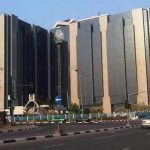
The central banking needs of colonial West Africa were served by the West African Currency Board. With independence, however, the various countries established their own monetary authorities and the Central Bank of Nigeria 1958) was/is one of such independence projects across West Africa. Its objectives, in consonance with those of similar institutions globally, are to ensure monetary and price stability, issue legal tender and currency, maintain external reserves to safeguard the international value of the currency, promote a sound financial system and act as a banker and provide economic advice to the government. The CBN has had 11 governors since inception, starting with R. P. Penton in 1958 up to Godwin Emefiele currently. I became conscious of CBN governorship and its occupants from Clement Isong (the 3rd governor) and started observing and commenting on banking (including CBN) affairs from the tenure of the 6th governor, Alhaji Ahmed.
There has been an increasing visibility of the CBN and its governors, a trend that started in 2004. J. O. Sanusi who handed over to Soludo was/is a banker to the core, conservative as expected, speaking only when extremely necessary, while moving on with the strenuous work, which then included distress management and introduction of universal banking. Soludo is an intellectual of the econometric, model-building and laptop generation. It was difficult for him not to practice what he had studied and preached across the world as a consultant to this and that and with the usual dose of professorial arrogance, he wanted to concretise his vision. The banks became big, bigger, and mega; they overran the West African sub-region, had their imprints all over Africa and showed up in the Global-1000 table (a key Soludonian dream). He had to talk about this uncommon transformation and his attempts to sustain it through Vision 20:2020. But the growth was too much and too fast. People managing N3 billion banks suddenly found themselves with N100 billion banks and the transition was just in a matter of months. It also appeared that there was a regulatory capture as it became as if the tail started wagging the dog. We achieved the size but the ‘Ts’ and ’Is’ were not adequately crossed and dotted.
And then, Sanusi II came onboard. In CBN circles, I refer to him as Sanusi II in deference to J. O. Sanusi, who was there before. Incidentally, now he is actually the Emir of Kano, Mohammed Sanusi II. So, he has taken the title I gave him on this page years ago! He continued to place the institution and its boss in the front burner, especially in the global media and was almost actually competing with the minister of information for front page attention by what he did or said. It even started before he assumed duties when he criticised his employer’s policy thrust (7-point agenda) while still being interviewed.
His tenure as the CBN governor was characterised by some wonderful developments. These include the cashless banking, the Islamic banking (the groundwork was laid by Soludo), and sustainable banking.

READ ALSO: Additional cost for lenders as CBN plans N10bn fund to save struggling banks
But it was also dogged by several unusual firsts and circumstances. For the first time, the CBN top job was not filled as and when due; we had no CBN governor for about four days after Soludo’s departure. Furthermore, we had a CBN governor who was operating as the spirit directed and would rather refer you to his Financial Times interview if one enquired about his agenda. (He eventually came up with the four pillars.) He had what seemed like a divided loyalty, serving two masters as it were, and his loyalty to the Kano Emirate appeared paramount (eventually it paid off). He had a strange interpretation of CBN independence and while he behaved like a social crusader against the government of which he is a critical player, he did not deem it necessary to resign in protest. He was probably the only CBN governor in our history (and perhaps across the globe) who badmouthed his banks, castigated the executive, legislature and judiciary and did not give a damn about it. He thrived in controversy and seemed to stroke it when there was none. Of course, he is the first CBN governor to be suspended, who ended up in court with his employers and who also ended up as the Emir of Kano.
Next week, we shall look at figures. We shall also examine some of the policies, projects and pronouncements and draw on some lessons from his tenure. I have written a lot while he was ‘on seat’ and so, my views are pretty obvious. But I will not pass any judgment this time around. (to be concluded)
Ik Muo