When a key employee in a leadership role announces that she is leaving an organisation, effective immediately, often it is one of those nasty surprises that create incredible turmoil for human resources professionals. Not only was this person anointed as having the potential to be developed for a senior leadership role and slotted for a more responsible upper-level position, but her departure can also create a domino-like effect that leaves leadership gaps all along that succession line.
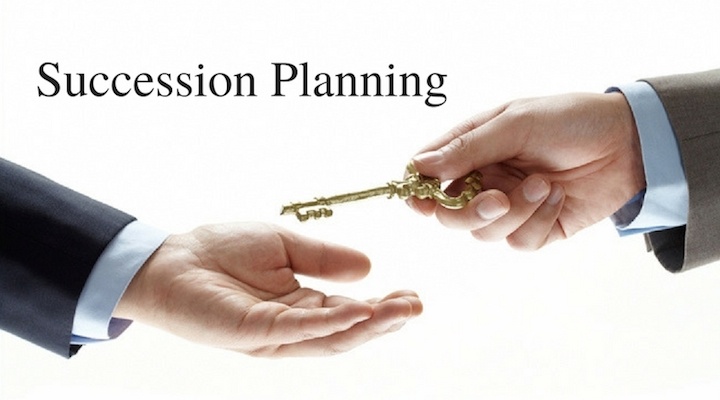
Despite the inevitability of surprises, what matters most is how the human resource function responds on such occasions. The foundation for coping successfully with staffing surprises is succession planning. Organisational survival in a globally competitive environment depends in part on having identified and developed replacements or successors for key positions. This is the essence of succession planning. A more formal definition of succession planning is the process of identifying one or more successors for key positions and preparing them for expanded organisational responsibilities through job assignments and other developmental activities. Part of this definition regarding preparing individuals for expanded responsibilities overlaps with what is typically considered leadership development, broadening an individual’s capacity to be effective in leadership roles and processes.
When an event such as a surprise resignation occurs, it is impossible to jumpstart a dormant succession system. This is because effective succession planning involves more than just a replacement planning process. It also includes a comprehensive employee development system. When a sudden leadership void is experienced, it makes no sense to start the development process then. It is too late because proper development can take months or even years. For this and other reasons, succession planning and leadership development initiatives must be linked in clear and coherent ways to manage an organisation’s leadership talent best. Now consider what happens in the event of a surprise resignation when there is an integrated succession management initiative in place. In such cases, the loss of any individual is not so traumatic to the organisation because of a greater overall leadership capacity. There is the capability to fulfill the job responsibilities of the person who is leaving through existing employees temporarily. There is not one person but any number who can step in and assume part or all the open job responsibilities until a successor can be appointed either from the inside or as an external hire. This deep leadership capacity implies that no one is irreplaceable. Indeed, the greater the number of irreplaceable employees in an organisation, the more risk an organisation is to turnover trauma.
An organisation cannot afford to pin its succession hopes on one very talented individual to have tragedy strike. Surprises do not only happen when key employees suddenly quit or retire. There are dangers of designating only one possible successor to a key position, regardless of its level. Leadership bench strength, the leadership pipeline, and leadership capacity are popular metaphors for the underlying issue of ensuring that an organisation’s leadership is adequately developed to face current and future challenges.

Regardless of the term used, the concept emphasises that leadership is not centralised in a single or small number of individuals. It begins with the belief or organisational norm that leadership is everyone’s business. Why? Because the kind of challenges faced in today’s globally competitive environment are way too complicated for any individual to figure out alone. To survive and thrive, successful organisations must be keenly aware of their leadership talent and best develop it across all levels. Succession planning and leadership development are key processes in assessing and developing an organisation’s leadership talent.
Regardless of the industry sector, there are several overarching and interrelated reasons why succession planning and leadership development are crucial concerns.
Rapid, radical, and discontinuous change
The speed of change is increasing, and the type of change that organisations experience is likely to be radical and discontinuous. This argues for more significant shared leadership in organisations. Shared leadership supports more effective change management in terms of both sensing needed organisational changes and building momentum for change more quickly than relying on a single change leader.
Increasingly complex challenges

Complexity in the challenges faced by organisations across most industry sectors is increasing exponentially. This has resulted in the heightened feeling of anxiety and uncertainty. Such complexity typically exceeds the capacity of any single leader to make sense of and develop workable solutions.
Greater leadership responsibility at lower levels
Task migration occurs whereby traditionally higher-level leadership responsibilities are transferred to leaders at lower levels. This is partly a function of the trend toward redesigning flatter organisations in which greater leadership gaps become apparent, but it is also due to more incredible speed and complexities of challenges. What was typically handled by senior leaders in the past has been handed down to junior leaders so the former can focus on even more complex issues.
Recruitment and retention of the best talent
Recruitment and retention are tied to whether employees feel that their professional potential is being developed and used in the best possible way. Having opportunities across the organisational spectrum to participate in leadership development efforts can provide an incentive to join and remain with an organisation.
In conclusion, these factors are the primary drivers behind the need for effective succession planning and leadership development, but many others could be included. Rather than providing an exhaustive list to justify the business case for development, it might be more persuasive to imagine your organisation’s future if you did not engage at all in succession planning and leadership development. What would be the odds of long-term survival and success? The ultimate sin is to do nothing.
Toye Sobande is a Lawyer and Leadership Consultant. He is a Doctoral Candidate at Regent University, Virginia Beach, USA, for a Ph.D. in Strategic Leadership. He can be reached through Email: contactme@toyesobande.com