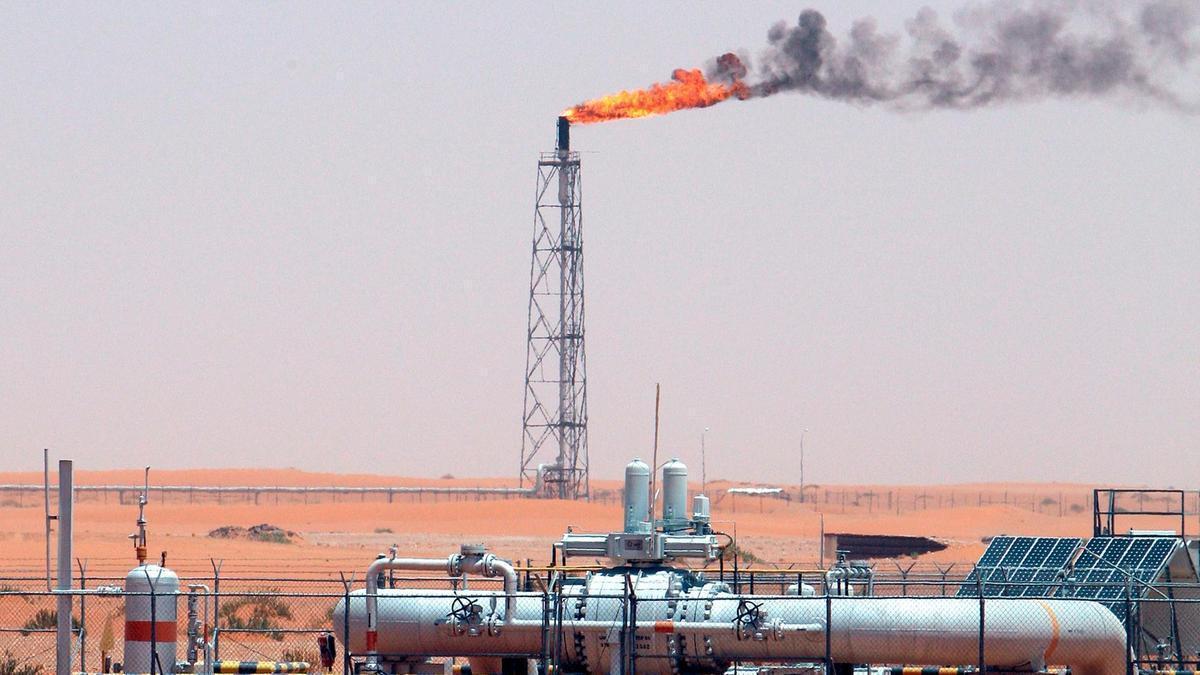
Almost a week ago, an attack on Saudi Arabian oil facilities knocked off 5 percent of global production and some 5.7 million barrels per day of Saudi production in one fell swoop.
It was the single biggest sudden disruption on record, which triggered the biggest one-day jump in Brent crude prices on record.
The Saudi disruption surpasses the loss of Kuwaiti and Iraqi petroleum output in August 1990, when Saddam Hussein invaded his neighbour to the South.
It also exceeds the loss of Iranian oil production in 1979 during the Islamic Revolution, according to the International Energy Agency.

Oil prices jumped more than 20 percent initially after the coordinated drone and possible cruise missile attacks, blamed on Iran and/or Houthi rebels who are engaged in a bitter war with Saudi Arabia in Yemen.
Crude has since retreated from its highs of $71 per barrel reached in the aftermath of the attacks and Brent was trading at $64.83 per barrel on Friday.
At first glance the return of geopolitical tensions and premium on oil prices might seem positive for producers like Nigeria, but look again and it is clear that things are not quite as rosy as they seem.
While the Sept. 14 attack on two of Saudi Arabia’s biggest crude oil production plants sent shock waves through energy markets, it was not nearly the Armageddon that people had feared, because Saudi Arabia holds almost all of the world’s spare capacity — seen as insurance against unexpected supply disruptions.
The reaction of oil has been telling in that the initial price spike has moderated amid ample supplies from the U.S shale producers, Russia and the rest of OPEC.

But it is not just the availability of immediate supply cushions and release of oil from strategic reserves that is leading to benign reaction from oil markets.
It could be a watershed moment that historians looking back in 20 years from now could pinpoint as the beginning of the end of the oil age.
The attacks in Saudi Arabia has alarmed nations from Japan to France.
In a sense it is an attack on the global economy (and has been condemned by most countries including President Muhammadu Buhari), which for all intents and purposes still runs on oil.
Big oil price spikes often precede global recessions.
Economist James Hamilton has shown that each oil shock since the end of WW II was followed by a U.S. downturn.
Net importers of oil in Europe and Asia, as well as China and India, will see fuel costs rise, which could slow their economies and indirectly hurt the global economy.
What this means is that most nations will not fold arms and wait for their energy supplies to be determined by the minefield that is the Middle East with its numerous wars.
This could then be a wakeup call for the world to switch to non-oil sources of energy such as renewables (solar, wind, etc.) as quickly as possible.
Germany, China, Japan and a host of other countries are intensifying research into Hydrogen as a source of clean energy.
Hydrogen releases only water when burned and therefore is considered cleaner than coal, oil or gas, which emit greenhouse gases.
Japan’s automakers have put hydrogen fuel cells in their cars, while consumers there are buying home energy units using hydrogen.
China and the U.K also are investigating the technology, with Shell Plc seeing it as reliable and easy to transport.
Battery powered cars are another means of achieving this goal. Electric vehicles are forecast to outnumber gas-powered cars in the U.S. in about 20 years, with battery costs coming down.
The posterchild of that is Tesla and its Super star CEO Elon Musk, but other vehicle manufacturers from Europe to Japan are investing heaving in alternatives to fossil fuel as an energy source.
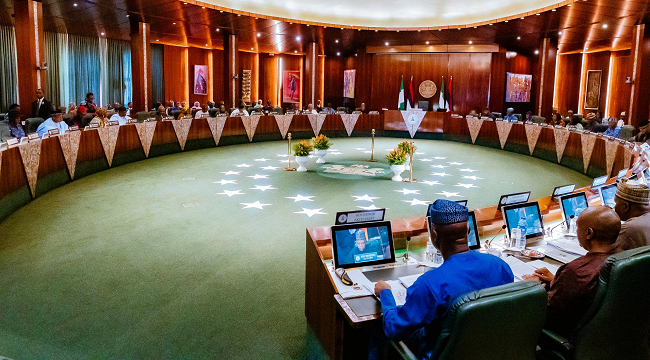
Amid all these, Nigerian government officials are still behaving as if the day of reckoning will not come regarding the end of the oil age.
We spend trillions of naira each year subsidizing petrol, are loathe to sensible reforms to attract private capital – that even oil rich Saudi Arabia is undertaking – believe the Federal Government can borrow/print and spend its way out of its economic crises, and continue to behave like the proverbial ostrich, with no sense of urgency around the major issues confronting the nation.
It is said that “the stone age did not end as a result of a shortage of stones” therefore the oil age will probably not end from the production of the last barrel of oil.
The attacks in Saudi-Arabia should then present another incentive for Nigerian policy makers to learn the right lessons and think for the next generation.
There will be little or no Gulf war type oil windfalls to be had this time from the Geopolitical mess that is the Middle East.