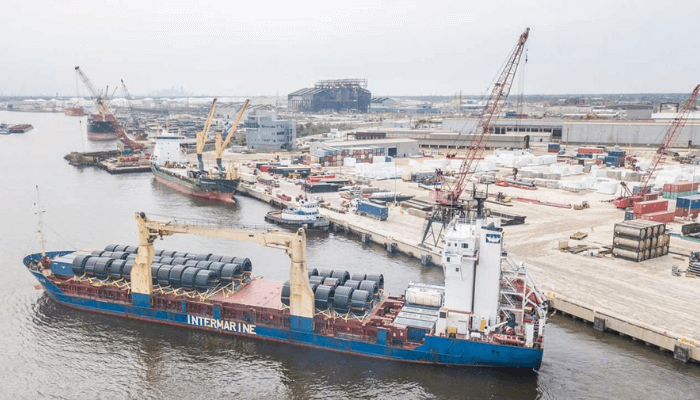
There is a timeless truth tucked within the chronicles of economic progress: a nation’s prosperity is only as secure as the diversity and resilience of its trade gateways.
For far too long, Nigeria’s boundless commercial vitality has flowed through a narrow corridor in the southwest, creating a bottleneck that has strained infrastructure, inflated logistics costs, and exposed the entire economy to avoidable risks. Today, however, the tide is turning.
A deliberate recalibration is underway, one that views the intricate waterways of the Niger Delta not as a puzzle to be solved but as a prize to be optimised. The revitalisation of the Warri and Koko Port Complex is not a regional intervention. It is a national renaissance, a bold economic gambit designed to strengthen Nigeria’s trading backbone for the twenty-first century.
The logic behind this shift is unassailable. The chronic congestion at Apapa and Tin Can Island has long served as an invisible tax on commerce, slowing vessels, inflating freight costs, and dimming Nigeria’s competitiveness.

By contrast, the Delta Ports stand as the obvious counterweight, strategically positioned to serve the South-South, Southeast, and North Central regions with natural ease. The opening up of these ports represents a profound act of nation-building.
It shortens the distances goods must travel, decongests the Lagos metropole, and spreads the dividends of trade more equitably across the federation. It is a strategy rooted not in regionalism but in the intelligent design of national logistics.
At the centre of this realignment stands the Landlord Port Model, introduced in 2006 as part of Nigeria’s maritime reform blueprint. It represents a marriage of public oversight and private dynamism.
The Nigerian Ports Authority retains its regulatory and infrastructure leadership, while concessionaires such as Associated Maritime Services and Integrated Logistic Services bring capital, innovation, and efficiency to operations. It is a pragmatic alliance that channels private energy into public purpose, ensuring that every berth, every quay, and every dockyard hums with productivity and promise.
This vision, long in conception, is now being implemented with precision under the NPA’s executive management. The mission is clear: to tear down both the physical and perceptual barriers that once relegated the Delta Ports to the margins.

The dredging of the Escravos Channel has restored navigational depth and confidence. The construction of the Escravos and Ramos Signal Stations has introduced modern vessel traffic management systems that rival any in the subregion. The acquisition of the marine security vessel SPB Likoro has added a visible, reassuring layer of protection for shipowners and insurers alike. Step by step, the NPA is converting scepticism into certainty.
Perhaps nowhere is this renaissance more vividly illustrated than at Koko Port. Once conceived for agro-allied exports, its operations under Creekshore Jetty & Terminal Limited have shown that it can handle diverse cargoes with agility.
Yet, the true promise of Koko lies in the future. With a natural harbour depth of about nine metres, it possesses the innate capacity to anchor larger vessels and handle complex shipments.
Its strategic location makes it the perfect coordination point for traffic bound for the bustling private jetties of Koko, Sapele, and Oghara, which are already pivotal in liquid bulk operations.
The planned full rehabilitation of Koko Port is not just a refurbishment exercise; it is the awakening of a sleeping economic giant.
Empirical evidence of renewal is already emerging from the waters. Operational statistics from the first three quarters of 2025 paint a picture of transformation. An average of forty-five ships handled monthly, with a turnaround time of 2.89 days and a waiting time of just 1.99 days, signals growing efficiency.
The Delta Ports have handled 293,013 metric tonnes of cargo, contributing 10.7 per cent to the nation’s trade volume. These numbers are not dry abstractions. They are the heartbeat of a maritime ecosystem rediscovering its rhythm after years of underutilisation.
Looking ahead, the path to enduring success has been charted with clarity. The reconstruction of the collapsed breakwaters will reduce siltation and deepen navigational confidence.
The institutionalisation of a Channel Management Company will guarantee that maintenance dredging becomes a continuous rather than occasional affair. The planned installation of Aids to Navigation and full illumination of the port premises will anchor a new era of twenty-four hour readiness and operational safety.
Nigeria’s maritime future, without a doubt, is being written in the Delta’s renewed tides.
The transformation of Warri and Koko is not a peripheral development; it is a cornerstone of national strategy. Each dredged channel and reconstructed quay is an act of faith in Nigeria’s capacity to rise to global standards, to move from rhetoric to results, and to transform geography into opportunity.
In truth, what is unfolding here is far greater than an infrastructure upgrade. It is the deliberate forging of an industrial ecosystem where ports become engines of employment, training, and entrepreneurship. A revitalised Delta Ports complex will stimulate the blue economy, support fisheries and aquaculture, attract tourism, and power ancillary logistics services. It is an investment that multiplies itself across generations.
Perhaps the most understated yet profound benefit lies in the regional balance it restores. For decades, maritime commerce has been an uneven story told through the ports of Lagos. Now, Warri and Koko are scripting a new chapter, one where opportunity flows eastward and northward, weaving a more inclusive map of national prosperity. This is how Nigeria builds not just ports but equity.
Steady collaboration remains the golden thread binding this vision together. The NPA’s engagement with traditional rulers, local communities, and workers’ unions has replaced historical friction with shared purpose. Harmony has become the quiet infrastructure underpinning physical progress. When community leaders see the port as a partner, the cranes rise without disruption.
Institutional confidence is also being rebuilt. Through transparency, data-driven decision making, and adherence to international best practices, the NPA has repositioned itself as both a maritime authority and a development catalyst. Investors now see the Delta Ports not as a high-risk endeavour but as a guaranteed growth corridor.
Resilience is the new currency of Nigeria’s port system. With every dredged metre, every illuminated quay, and every trained pilot, the nation is fortifying its logistics architecture against future disruptions. Warri and Koko are no longer fallback options; they are front-runners in a diversified maritime network.
Clearly, what may be regarded as the Atlantic gambit has succeeded in turning geography into strategy. By transforming the Delta’s waterways into corridors of confidence and commerce, Nigeria is not just decongesting Lagos; it is decentralising opportunity. It is building a maritime nation in the truest sense, one where every shoreline counts, every community participates, and every ship that sails tells a story of renewal, resilience, and national pride.
Joshua Ebitimi is a Port Harcourt-based lawyer