In a 15,000-square-foot facility in Abuja, engineers assemble unmanned aerial vehicles and sentry towers, crafting the cutting-edge infrastructure systems that protect vital assets and allow governments and organisations to act decisively against threats. The company behind the operation, Terrahaptix Inc, is less than two years old but is emerging as one of the continent’s most closely watched defence-technology startups.
Founded in 2024 by Nathan Nwachukwu, 22, and Maxwell Maduka, 24, the company—formerly Terra Industries—designs and manufactures autonomous surveillance drones, unmanned ground vehicles, and AI-powered sentry towers built to protect critical infrastructure. Its systems are integrated through ArtemisOS, a proprietary operating system that enables real-time monitoring, data analysis, and coordinated command across air, land, and fixed installations.
The company is positioning itself as a leading homegrown force in African defence technology, tackling the continent’s security challenges with what it describes as “Made-in-Nigeria” hardware. But rather than selling standalone hardware, Terrahaptix offers an integrated security network that allows operators to detect, assess, and respond to threats across vast and often remote terrain.


The Abuja-based startup recently extended an earlier $11.8 million funding round with an additional $22 million led by Silicon Valley venture firm Lux Capital, bringing total funding in the round to $34 million. Existing investors, including 8VC, Resilience17 Capital, Nova Global, Silent Ventures, Belief Capital, Tofino Capital, Valor Equity Partners, SV Angel, Leblon Capital GmbH, and angel investors such as Jordan Nel, Jared Leto, and Melya Malka, also participated. The extension came together in under two weeks, reflecting what executives described as strong investor conviction around infrastructure security and counter terrorism across Africa.
The earlier round was led by 8VC, founded by Joe Lonsdale, co-founder of Palantir Technologies and a prominent U.S. political donor. Alex Moore, an 8VC partner who focuses on defence investments and serves as a non-executive director at Palantir, joined Terrahaptix’s board last year, adding Silicon Valley defence-tech expertise to the startup’s governance.
The speed of the capital raise underscores growing global interest in security-focused technologies as violent extremism spreads across parts of Africa. Groups linked to Islamic State and al-Qaeda have expanded operations across a swath of territory stretching from Mali toward Nigeria, prompting regional governments and the Economic Community of West African States (ECOWAS) to declare states of emergency and increase cross-border cooperation.
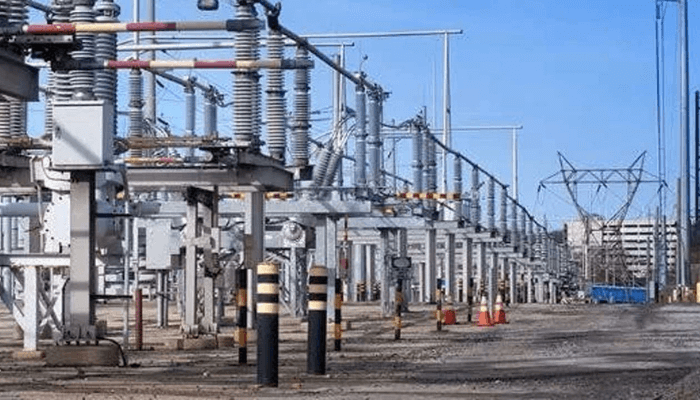
For infrastructure operators, the consequences of sabotage, theft, and insurgent activity can be immediate and costly. For Terrahaptix, that security backdrop intersects with another structural shift: rapid industrialisation. Africa holds roughly 30% of the world’s critical mineral reserves and attracts close to $100 billion annually in infrastructure investment. New mines, refineries, power plants, and transport corridors are coming online at a pace that outstrips the development of conventional security capacity, particularly in remote areas where state presence is thin.
“Africa is industrialising faster than any other region, with new mines, refineries, and power plants emerging every month,” Nwachukwu said. “But none of that progress will matter if we don’t solve the continent’s greatest Achilles’ heel, which is insecurity and terrorism.”

Terrahaptix says its systems are deployed to protect infrastructure assets valued at approximately $11 billion across multiple African countries, including hydro-power plants in Nigeria and gold and lithium mining operations in Ghana. The company works with both governments and private infrastructure operators spanning energy, mineral resources, urban infrastructure, maritime assets, border security, and counter-terrorism. As of last year, the startup had secured contracts worth more than $12 million and maintains a robust pipeline of commercial and public-sector engagements.
The company’s product suite includes long- and mid-range drones such as the Archer VTOL and Iroko UAV, unmanned ground vehicles known as Duma, and autonomous sentry towers called Kallon. These systems are linked through ArtemisOS, which combines data intelligence, AI-powered threat detection, and command-and-control capabilities. Artemis Cloud enables customers to store and analyse surveillance data in real time, while Artemis Autonomy supports mission planning and coordinated responses across multiple assets simultaneously.
In January, the company conducted a controlled field exercise integrating its aerial, ground, and fixed systems to validate what it described as multi-domain operations. The exercise tested end-to-end mission workflows, cybersecurity resilience, and operational safety, and demonstrated the ability of a single operator to monitor and control multiple unmanned platforms through a unified interface. For Terrahaptix, the milestone marked a year of development across its autonomous ecosystem and provided a proof point as it pursues larger-scale deployments.
Manufacturing scale is central to that ambition. The Abuja factory, recently inaugurated, has an annual production capacity of about 10,000 drones. Executives say the newly raised capital will fund expanded production lines, deepen local supply chains, and accelerate deployments across Nigeria and allied African countries. The company also plans to grow its engineering, software, and business development teams across Africa, London, and San Francisco, with the engineering workforce composed primarily of African talent—a point the founders emphasise as central to their vision of technological self-reliance—reflecting an effort to bridge local manufacturing with global capital and expertise.
Beyond private-sector clients, the startup is strengthening ties with government institutions. In February, Terrahaptix signed a memorandum of understanding (MOU) with the Defence Industries Corporation of Nigeria (DICON) to establish a joint venture focused on local production, assembly, research and development, and specialised training in high-technology systems, including drones, robotics, and cybersecurity platforms. The agreement, executed under the DICON Act 2023, is designed to enhance domestic industrial capacity, promote technology transfer, and reduce reliance on imported defence equipment.
Under the framework, the joint venture will operate as a subsidiary of DICON, jointly promoted and owned by DICON and Terrahaptix. The partnership aims to position Nigeria as a regional hub for advanced manufacturing and high-tech defence systems while creating skilled employment opportunities and strengthening local sourcing of materials and components.
The company is also moving beyond the continent. In February, Terrahaptix signed an agreement with Saudi industrial contractor AIC Steel to establish a joint manufacturing facility in Saudi Arabia focused on infrastructure surveillance and security systems. The facility will produce autonomous aerial platforms, sensor networks, and supporting software tailored to energy assets, transportation networks, and industrial facilities across Saudi Arabia and the wider Middle East.
The expansion aligns with Saudi Arabia’s Vision 2030 push to localise advanced industrial and defence capabilities and gives Terrahaptix access to regional customers and additional production capacity. While Africa remains its primary market, the company sees parallels between security challenges in parts of the continent and those emerging in other developing regions.
Executives describe their broader vision as building sovereign intelligence and security capacity in markets where infrastructure growth outpaces traditional security models. Rather than relying exclusively on imported systems, Terrahaptix argues that locally designed and manufactured technology can better address terrain, climate, and operational realities while maintaining greater control over data.
“We believe in a future where local defence technology prevails, because security is the prerequisite for all economic growth,” Nwachukwu said.
With $34 million in fresh funding, expanding production in Abuja, and new partnerships spanning Nigeria to Saudi Arabia, Terrahaptix is attempting to convert early traction into lasting scale.
Babatunde Ibrahim Alaya, a major general in the Nigerian military and director general of DICON, hailed the partnership with the company as a “transformational step” toward import independence, noting that Terrahaptix would provide technical expertise, production equipment, tooling, spare parts, and access to established defense supply chains.