|
Getting your Trinity Audio player ready...
|
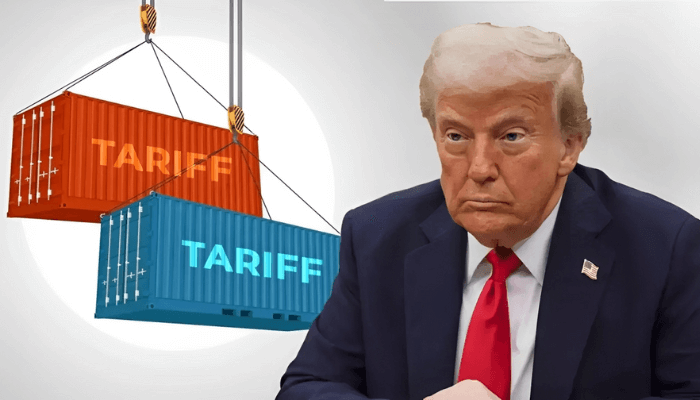
In April 2025, President Donald Trump’s announcement of sweeping tariffs sent shockwaves through global financial markets. The immediate aftermath saw a reconfiguration of asset classes, with investors scrambling to reassess risk and reposition portfolios. The varied performance across different assets underscores the complexities introduced by abrupt policy shifts and the interconnectedness of today’s global economy.
“The market reaction to Trump’s tariffs suggests investors are preparing for a protracted period of trade friction.”
Bitcoin: The digital refuge
Amid the turbulence, Bitcoin emerged as a surprising beneficiary, appreciating by 13.3 percent. Traditionally viewed as a speculative asset, Bitcoin’s resilience suggests a growing perception of it as a hedge against geopolitical and economic uncertainties. Analysts attribute this surge to a combination of factors, including its decentralised nature and increasing institutional adoption, which collectively bolster its appeal during times of traditional market stress.
Gold: The traditional safe haven

Gold, the age-old sanctuary in times of crisis, saw a modest increase of 2.6 percent. While the rise was less dramatic than Bitcoin’s, it reaffirms gold’s role as a stabilising asset. The precious metal’s performance reflects investor caution and a preference for tangible assets amidst currency fluctuations and equity market volatility.
Equities: A mixed bag
European equities experienced a 1.9 percent uptick, buoyed by a shift in investor sentiment favouring markets perceived as less directly impacted by U.S. trade policies. This movement suggests a strategic reallocation of assets towards regions with more stable trade environments.
Emerging market equities, however, displayed minimal growth at 0.1 percent, indicating a cautious approach by investors wary of potential ripple effects from the U.S.-China trade tensions. China’s equities bore the brunt, plummeting by 5.2 percent, a reflection of the country’s direct involvement in the tariff disputes and concerns over its export-driven economy.
In the U.S., the S&P 500 and the S&P Small Cap 600 declined by 0.5 percent and 3.9 percent, respectively. The sharper drop in small-cap stocks highlights their vulnerability to domestic economic shifts and reduced international exposure, making them more susceptible to internal policy changes.

Read also: US court blocks most Trump tariffs, says president exceeded his authority
Fixed income: Shifting sands
The bond market responded with notable volatility. U.S. Treasuries saw a slight decrease of 0.2 percent, while U.S. investment-grade bonds and high-yield bonds fell by 1.4 percent and 0.5 percent, respectively. Emerging market bonds experienced a more pronounced decline of 1 percent, underscoring the heightened risk aversion and the reevaluation of credit exposures in developing economies.
Currency and commodities: Dollar doldrums and oil’s slide
The U.S. Dollar Index dropped by 3.8 percent, signalling a loss of confidence in the greenback amidst the trade upheaval. This depreciation reflects concerns over the long-term implications of protectionist policies on the U.S. economy and its fiscal health.
Brent oil prices suffered a significant setback, declining by 16.9 percent. The steep fall is attributed to fears of reduced global demand stemming from slowed economic activity due to the tariffs, particularly affecting industries reliant on international supply chains.
Real estate: REITs Retreat
U.S. Real Estate Investment Trusts (REITs) declined by 2.5 percent, indicating apprehension in the property sector. The downturn may be linked to expectations of higher construction costs due to tariffs on imported materials and potential decreases in consumer spending affecting commercial real estate.
What comes next?
The market reaction to Trump’s tariffs suggests investors are preparing for a protracted period of trade friction. Bitcoin’s and gold’s outperformance signals a preference for non-traditional and inflation-resistant assets. Meanwhile, the steep declines in Chinese equities and Brent crude highlight the vulnerability of trade-dependent sectors.
If tariffs remain in place or escalate, several trends could strengthen:
· Bitcoin may continue rallying as an alternative store of value.
· Gold could see further upside if the dollar resumes its decline.
· Chinese equities may remain under pressure unless Beijing introduces substantial stimulus.
· Oil prices could stay volatile, with downside risks if global demand weakens further.
For now, markets are pricing in uncertainty rather than outright crisis. But if trade tensions intensify, the April performance trends may only be a preview of bigger moves ahead.
Conclusion: Navigating the new normal
The aftermath of April’s tariff announcements has underscored the fragility and interdependence of global markets. Investors are now tasked with navigating a landscape where traditional safe havens may no longer offer the same security and where geopolitical decisions can rapidly alter economic trajectories. Diversification and agility in investment strategies have become more critical than ever, as the long-term effects of protectionist policies continue to unfold.
Dr Oluyemi Adeosun is BusinessDay’s Chief Economist.