Life is gradually returning to normal as the world enters the fourth year of the post-COVID-19 pandemic. Most countries have ramped up efforts to achieve health and well-being for all, in furtherance of the realization of United Nations Sustainable Development Goals (SDGs) whose progress was negatively impacted by the pandemic.
Taiwan fully supports health-related SDGs and the World Health Organization’s triple billion targets. Indeed, Taiwan is committed to building a more resilient and equitable health service supply chain, maintaining an inclusive and equitable universal health coverage system, and providing disease prevention and management through a robust primary healthcare system.
Taiwan is willing and able to share its experience in creating a cross-sectoral, innovative, and people-centred health approach to help the international community work toward the realization of the SDGs related to health and well-being.
It is in this regard that it becomes pertinent to the global community that Taiwan is allowed to participate meaningfully in the meetings, mechanisms and activities of the World Health Organization (WHO) and the World Health Assembly (WHA).

It is common knowledge that the World Health Organization (WHO) is the leader in global public health, dedicated to safeguarding the right to health for all. However, as a result of political considerations, the WHO has been unable to uphold professionalism and neutrality in the discharge of its mandate. Taiwan has not been invited to the WHA since 2017.
By excluding Taiwan from WHO events, the esteemed organization is unwittingly jeopardizing global health. Taiwan, therefore, calls on every nation, including Nigeria to support its bid to attend the World Health Assembly (WHA) scheduled to take place in Geneva, Switzerland later this month (May 21- 30).
It is a well-known fact that during the COVID-19 pandemic, Taiwan effectively mitigated the spread of the disease, leveraging its comprehensive public healthcare system, well-trained anti-pandemic personnel, and epidemiological surveillance, investigation, and analysis systems.
Read also: Nigeria must invest in Physics education, and research to meet SDG goals – NIP
When compared with the 38 Organisation of Economic Co-operation and Development member states and Singapore, Taiwan ranks sixth-lowest in COVID-19 mortality and case-fatality rates. Taiwan also ranks fourth highest for coverage rates of at least one COVID-19 vaccine dose and third highest in terms of vaccine boosters administered.

A reading of the WHO Director-General’s outlined five priorities for the subsequent five years, which are promoting health, providing health services, protecting health, powering progress, and performing; in addition to WHO’s Achieving well-being: A draft global framework for integrating well-being into public health utilizing a health promotion approach further justifies the need for all peoples to be involved in WHO’s commitment to health for all.
Taiwan remains committed to work with the global community to ensure the fundamental right to health enshrined in the WHO Constitution, and in the spirit of the SDGs, it is our considered view that no country should be left behind – especially not Taiwan that has made significant contributions to global public health.
It is time for the global community to recognize Taiwan’s contributions to global health and allow the country to participate meaningfully in the WHO and WHA, to enable us share valuable experience in innovative health technology and universal health coverage.
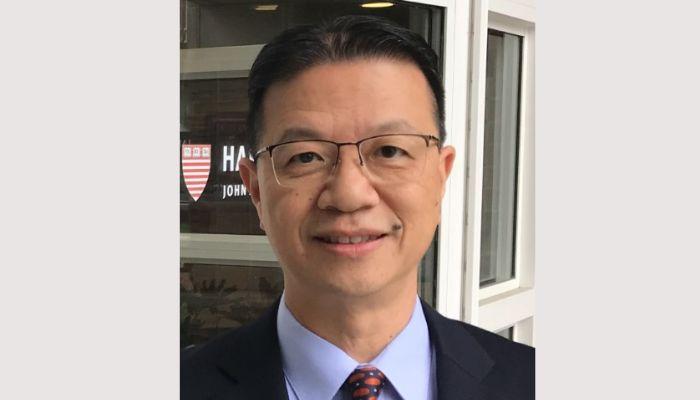
Yih-Ping Liu, Taipe representative/head of mission in Nigeria