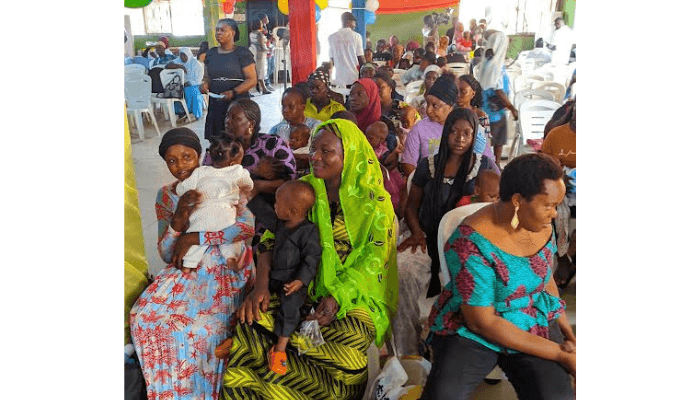
Nigeria is underinvesting in Early Childhood Development. And it is stunting economic growth.
Nigeria’s policy makers are fixated on GDP growth, local production, exports and jobs. Yet a silent crisis undermines these ambitions long before the Nigerians who will be needed to achieve these goals enter the workforce: persistent underinvestment in Early Childhood Development (ECD). By virtually all international standards, early childhood – the most sensitive stage of learning and human development – is overlooked in Nigeria’s public financing and policy priorities.
There is clear evidence from around the world that investment in the earliest years correlates with higher long-term economic returns. Without urgent corrective action, the economic promise, assumed in the policy goals, of Africa’s most populous nation risks being lost before it begins.
Nigeria’s economy (the fourth-largest in Africa) is growing, with real GDP expanding at around 4% annually on average over the past 3 years. Yet GDP per capita remains low at about US$1,084, far below regional peers on a purchasing power basis and substantially lower than in Egypt or South Africa.

Significant portions of the population live in poverty and food insecurity, with 33% of her people experiencing multidimensional poverty, and millions experiencing acute hunger. Conditions of deprivation – malnutrition and the maternal and early childhood stresses related to poor environments – directly impair brain development in the crucial earliest years.
As a result, the ECD indicators for Nigeria are of significant concern. An estimated 32% of Nigerian children under the age of 5 report stunted growth, as a result of chronic malnutrition. This will lead to long-term effects on physical and cognitive development.
Nigeria is not dedicating enough to ECD development. Less than 15% of the budget was allocated to both Education and Health in 2025. A small percentage of that was dedicated to interventions that directly impact ECD. This is way below the 15%-20% benchmark for Education alone, advocated by UNESCO, and the 15% pledged by African Union States for Health. The Basic Health Care Provision Fund (BHCPF) was only allocated N298.4 billion in 2025; 10% of the N2.48 trillion Health Budget. A similar percentage of the education budget is devoted to ECD and pre-primary education.
Why does it matter?
ECD is not simply “social intervention” or “social spending”. Brain development before age five shapes lifetime cognitive ability, health, behaviour and productivity. Overwhelming evidence points to early childhood development boosting school readiness and, in the long term, increasing earning potential. There is also the long-term future cost reduction on special education, healthcare and criminal justice. Improved ECD outcomes will yield long-term benefits in macroeconomic indicators such as labour force participation, productivity and improved socio-economic resilience. These are the conditions Nigeria needs ot break the cycles of poverty and underemployment and experience real growth.
Why the Neglect?
There are several reasons why ECD seems to be almost an afterthought in Nigerian policy deliberations. ECD results are long-term; the investment made in child development at ages 0-5 will yield results 2 decades later. Politicians tend to prioritise policies that yield payoffs within the 4-8 year electoral cycle, pushing long-term foundational programmes down the agenda.

ECD interventions span health, education and social sectors. The ministries involved in these sectors tend to be insulated and do not act in coordination. There is also the disconnect at the federal, state and local government levels with disparate priorities.
Nigeria is one of the top recipients of ECD-related aid. There is a tendency, especially in parts of the country where the situation is acute leave the problem of maternal and early childhood intervention to donor agencies and charity organisations, which are typically focused on nutrition and less on early learning and other sustainable interventions. This allows governments, especially at the state level, to leave ECD as an afterthought.
What Needs to Be Done
The obvious first step will be to prioritise ECD in Nigeria’s budgets. There needs to be minimum ECD budgetary allocations that are at global benchmarks. Several states in Nigeria already dedicate above benchmark budgetary allocations to Education and Health (Enugu, Kaduna and Kano States, for example); this is a good development that should be matched at the federal level.
There is a need for coordination and an integrated ECD policy plan that will be coordinated across ministries and at all levels of government. The policy plans must be data-driven, as the situations and needs vary from state to state and from region to region. One coat will not fit all.
Even as reduced dependence of donor agencies is recommended, their experience and expertise should be leveraged, especially in policy development and delivery, especially at the last mile and in hard-to-reach areas.
There are more than 30 million Nigerians under the age of five. In two decades, the economic fortunes of the country will depend on them. In a time of global uncertainty, Nigeria has to take responsibility for its future. That responsibility begins from the earliest years of its people.
Ikenna Okonkwo is the Data Intergrity Lead at SBM Intelligence