|
Getting your Trinity Audio player ready...
|
In a bid to deepen Nigeria’s industrial base and enhance economic self-reliance, the Federal Ministries of Steel Development and Defence have signed a Memorandum of Understanding (MoU) for the local production of military hardware at the Ajaokuta Steel Company.
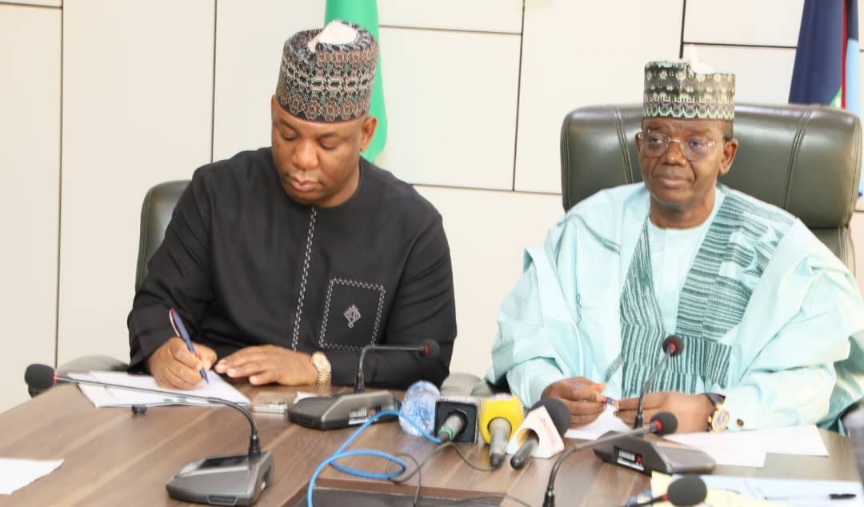
The agreement, sealed in Abuja by Prince Shuaibu Abubakar Audu, minister of Steel Development, and Bello Muhammad Matawalle, minister of State for Defence, marks a major milestone in efforts to revive Ajaokuta and channel its output towards national security and manufacturing growth.
The pact also includes a second MoU between the Defence Industries Corporation of Nigeria (DICON) and Ajaokuta Steel Company Limited, providing an operational framework for the production of essential military equipment — including armored vehicles, helmets, and weapons components — using locally produced steel.
Read also: Steel ministry goes digital with enterprise management system

Prince Audu described the agreement as “a bold step towards achieving self-sufficiency in defense manufacturing and unlocking the strategic potential of Ajaokuta as a backbone for Nigeria’s industrial future.”
He added that the partnership aligns with President Bola Tinubu’s renewed push for industrial diversification, job creation, and national security enhancement.
Matawalle emphasised the dual economic and security benefits of the deal, noting that “this particular MoU is unique because it simultaneously addresses national security needs and economic growth.”
“For too long, Nigeria has depended on foreign nations for essential defence equipment. Yet we have all it takes the raw materials, human capital, and expertise to manufacture these products locally,” Matawalle said.
He added that the collaboration reflects the President’s directive for Nigeria to rely on itself, build domestic capacity, and enhance national security through innovation.

Babatunde Ibrahim Alaya, director-general of DICON, said the collaboration would stimulate domestic production capacity, reduce dependence on foreign imports, and create thousands of skilled jobs in steel and defence manufacturing.
Economic analysts say the partnership could revive Ajaokuta’s operations and attract new investments into Nigeria’s long-stalled metallurgical and defense-industrial complex.
If successfully implemented, it would significantly cut Nigeria’s foreign exchange outflows on military imports while positioning the country as a regional defense equipment hub.
Both ministries expressed optimism that the project will serve as a foundation for broader public-private partnerships in the defence-industrial value chain and drive Nigeria’s long-term industrialisation agenda.