|
Getting your Trinity Audio player ready...
|
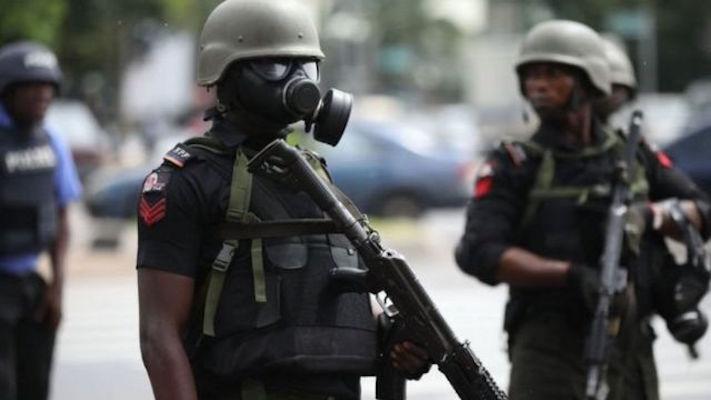
It seems that for the past few days, insecurity has reared its ugly head in every corner of the Nigerian federation. There were reports of kidnapping, bandit attacks, and terrorist acts in a few specific areas throughout the nation. In all these cases, the victims of security lapses are innocent civilians who continue to suffer from their loss. About 51 people were killed in Plateau State’s Zikke village attack by suspected herdsmen. Other attacks in the state’s villages are regrettable and ought to be stopped immediately and prevented from getting worse and causing further reprisal attacks. Attacks by terrorists also shook Borno State. Monitoring security is a constant, round-the-clock task.
The question of whether to maintain the current centralisation structure or decentralise the police force is one that Nigeria is currently facing. Many proponents believe that a more dispersed approach to operations is necessary to replace the existing, centralised one. Senior police officers who benefitted from centralisation, however, are constantly trying to dissuade the nation from decentralisation because they think state governors will use the police as a political tool to intimidate their rivals in the state. Nigeria is not ready for the state police, according to some commentators. When will Nigeria be ready for state police? That is the unsettling concern I have.
The Nigerian Police Force (NPF) is centralised, and the Inspector General of Police (IGP) has jurisdiction over the whole nation. The centralisation framework conflicts with its statutory functions, rendering it ineffective. Because of its perceived incapacity to govern various regions of Nigeria’s largely huge and diverse geography in a secure and safe manner, now more than ever is the time to disband this centralised, moribund institution by decentralising it for effective policing of the nation. Many nations have decentralised their police responsibilities when they realised the scope of police operations and the necessity for efficiency.
Some pundits suggested reform. The problem isn’t with NPF reforming; you may adjust and reform it as often as you like. In actuality, the output will always be inefficient since it is not able to endure the test of time and weather, much like a house built on quicksand. It will eventually fall apart regardless of how strong the bulwark or support is. To police the entire nation, the Federal Police’s current organisational structure is unsustainable. For the best outcomes, efficacy, and efficiency, policing must be adapted to state and local authorities.

Do we find it surprising that over 20 percent of Nigeria’s police officers are connected to politicians, business magnates, and other private citizens who could be providing money to the top police officers? The fact that police officers accompany pastors, imams, members of the National Union of Road Transport Workers, and other supposedly powerful individuals across the nation astounds me. In Nigeria, being escorted by Nigerian police is a sign of prestige. I saw a video of a Muslim preacher in Ibadan bragging that he had been given police escorts by his Abuja friend, who is a powerful politician. Other nations do not manage their police forces in this manner. When you have made the police service profit-orientated, you cannot have the best officers.
Federal law enforcement in the United States is a multi-tiered system in which the FBI, DEA, and U.S. Marshals each have specific, though complementary, roles to play. The FBI operates with a wide remit, upholding more than 200 categories of federal law. In turn, the DEA focuses on drugs, and the U.S. Marshals handle judiciary protection, fugitive apprehension, and the Witness Security Program. These organisations often team up for intricate, high-stakes investigations that sometimes stretch across borders. Beyond the federal level, each state maintains its own police force, and the local landscape includes more than 18,000 agencies—ranging from city police and county sheriffs to private security details employed by universities and major corporations.
Additionally, the national police force that enforces federal laws in Canada, a federal state like the US, is the Royal Canadian Mounted Police (RCMP), also referred to by the locals as “the Mounties”. According to the constitution, each Canadian province is allowed to create its own police force. Local police units, which oversee upholding law and order in Canadian cities and towns, are normally supervised by local councils. Similarly, the Australian Federal Police handle complex crimes with both local and international issues, such as terrorism and organised crime. Each of the six states has its own police force with jurisdiction for local law enforcement. State police usually undertake operations locally through regional commands, even if there isn’t a separate local police force.
Countries like Brazil, Mexico, India, and Japan have police and security systems that operate on different levels. Police at the national and local levels in Mexico ensure safety and order in the cities and solve the local problems, and at the level of national agencies like the Federal Police and the National Guard are the means to handle greater threats. In India, the same principles are applied. So, states and cities such as Delhi and Mumbai have their own police forces, whereas the Indian Police Service—the national police of India—is the body responsible for the national training and is an advisory body to the states and local communities. The local and civil-military precincts, as well as the federal police, create the three tiers of policing in Brazil. The police are divided into three: the federal police; state police, which have civil and military branches; and local guards. Unlike Brazil and Mexico, Japan possesses a single law that changes the police to be local and highlights the local connection by putting up mini community theme stations called Koban and Chuzaisho in every prefecture supervised by the National Police.
The United Kingdom is unique in that they have a decentralised policing system that is designed to suit the needs of the local area. England and Wales have about forty-three separate local territorial police forces. A body of elected police and crime commissioners helps hold them to account. In addition, Scotland and Northern Ireland demonstrate some degree of autonomy by having their own police forces, Police Scotland and the Police Service of Northern Ireland, respectively. These days, local forces can also receive specialised assistance from national agencies like the National Crime Agency. This entire arrangement promotes local accountability and responsiveness, which is fantastic.

Going forward, the conversation about decentralisation of Nigerian police has gained momentum and support among Nigerians in all strata of society. This is the time to save us from ourselves. Indeed, getting it done will require constitutional amendments, knowing that the current law only recognises a centralised police force bequeathed to us by our colonial master. The transition will require administrative acumen, commitment, and support of all and sundry. The traditional institutions across the country—the federal government, the national assembly, the state governments, the local governments, the Nigerian Bar Association, civil society organisations, the Nigerian Judicial Commission, the Nigerian Police Force, the military, and other paramilitary institutions—must be carried along to address the inherent risks and ensure that the benefits of decentralisation are realised without compromising national unity or security.
Rotimi S. Bello, a public commentator, peace and conflict expert, and HR Advisor writes from Canada