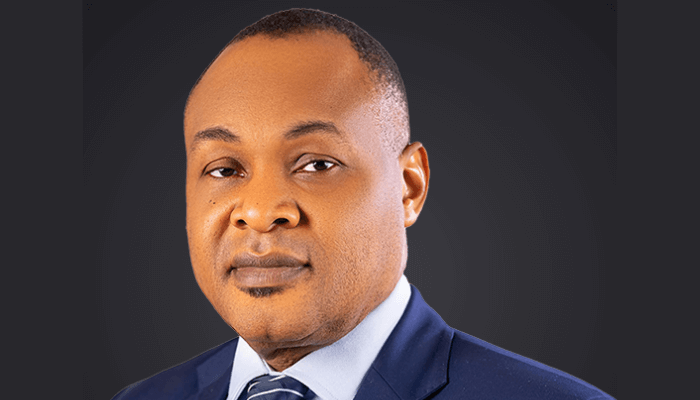
National Credit Guarantee Company (NCGC) is a long-awaited institutional intervention in the Nigerian credit market, said Biodun Adedipe, founder/chief consultant, B. Adedipe Associates Limited. He noted this on Monday during his presentation at the stakeholders’ engagement forum organised in Lagos by NCGC.
“It is that component of the credit market that can strongly drive inclusive growth and deepen industrial manufacturing. All stakeholders should collaborate to make it work. Perhaps the greatest risks are moral hazard and political interference. It has potential to operate profitably”.
“The company has started on a good note with well-defined modus operandi and mechanics, and it has a solid leadership team,” Adedipe said.
Read also: FG, stakeholders oppose bill proposing new agency for decommissioning of oil assets

The forum was not just a formal gathering it was a strategic call to action. With a N100 billion initial capital, NCGC complements existing interventions by providing credit guarantees that unlock sustainable financing for underserved sectors. NCGC mandate is clear: to play the crucial role of a guarantor of loans, thereby reducing the risks for lenders and encouraging increased credit availability.
NCGC does not lend directly; rather, the company provides partial credit guarantees, covering a portion of potential loan defaults. This innovative approach incentivises financial institutions to extend more credit, confident in the knowledge that a part of the risk is borne by the NCGC.
While many Nigerians struggle to finance essential needs for housing, vehicles, healthcare, education, consumer credit remains under penetrated. As of January 2025, total outstanding was N4.12 trillion, down from N4.42 trillion in November 2024, and still represents only about 15.5 percent of total bank credit (about N8.24 trillion).
In his address at the event, Bonaventure Okhaimo, MD/CEO, National Credit Guarantee Company (NCGC) noted that President Bola Ahmed Tinubu visionary leadership led to the establishment of the National Credit Guarantee Company (NCGC).
“By providing this much-needed safety net, we aim to expand access to finance to MSMEs, local manufacturers and credit consumers; thereby minimizing the risk exposure of Participating Financial. Institutions (PFIs), lowering default rates, and ultimately driving economic growth and promoting financial inclusion.

“Our success hinges on inclusive partnerships and collaboration with all stakeholders in the financial ecosystem. We firmly believe that by working together, we can build a more inclusive, resilient, and dynamic credit market in Nigeria. To achieve this, we will partner with PFIs, leverage data and technology, engage industry groups, build capacity, raise public awareness, and advocate for enabling credit policies,” Okhaimo said.
This bold initiative reflects the administration’s strong commitment to de-risking lending, promoting financial inclusion, and improving access to credit for Micro, Small and Medium enterprises (MSMEs), local manufacturers and credit consumers across Nigeria”, Okhaimo said.
“Nigeria’s macroeconomic outlook reflects a steady trajectory toward inclusive and sustainable growth, driven by gradual reforms and sectoral diversification. Recent data from the National Bureau of Statistics (NBS) shows a commendable Gross Domestic Product (GDP) growth of 3.13 percent in first-quarter (Q1) 2025 after rebasing, a significant improvement from the previous quarters.
Read also: Stakeholders task FG, NASS on agroecology policy framework
“This growth was supported by strong performance in the services and non-oil sectors, indicating the economy’s growing resilience amid inflationary pressures, rising interest rates, volatile exchange rates, and elevated energy costs that have significantly eroded the purchasing power of consumers and increased operating expenses for MSMEs, and local manufacturers,” he said.
He noted further that these macroeconomic headwinds, coupled with inherent structural inefficiencies, have created a complex environment for credit access. “Among the most affected are Micro, Small, and Medium Enterprises (MSMEs), which form the backbone of Nigeria’s economy,” Okhaimo said.