|
Getting your Trinity Audio player ready...
|
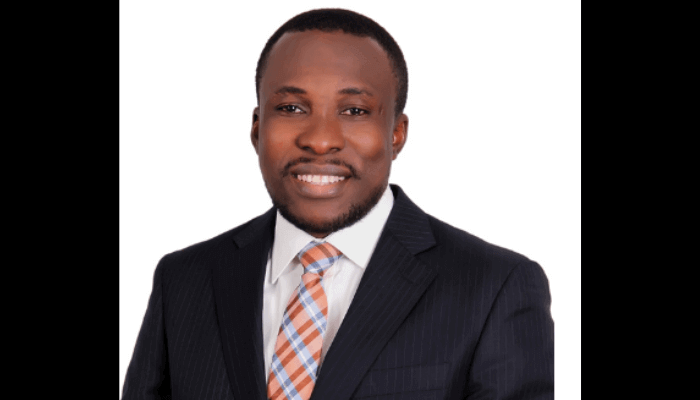
Ernest Debo Akinlola is the chief executive officer of Ntel. With vast knowledge in telecommunications, Akinlola explains the dynamics of telecoms in Nigeria today, saying that last mile is a major challenge for every player in the industry. In this interview with Jumoke Lawanson, he talks about the steady growth of Ntel, its hurdles and what consumers should expect from the company in future.
Why and how did you decide to join Ntel?
When my predecessor left, the company started a search and because telecommunications is a very small world, I was contacted in August last year and came for a three days rigorous interview process and I was very happy to finally emerge as the chosen CEO. I take this as my own company and I am very keen to see growth. To me, it is more about the pride of Nitel, all of my colleagues from around the world have sent me messages on Linkedin saying that I am now running the BT (British Telecoms) of Nigeria and that is exactly what it is, it is the BT of Nigeria. We definitely have a mountain of challenges but we also have massive opportunities. It is not going to happen overnight but the opportunity to make it happen was irresistible to me. I actually said yes to the job before I asked for the package. I was keen to re-vitalise the business and put it in the right path before we then start talking about it, so that is what I have spent my time doing.
What have you tried to do to grow Ntel, considering that the telecoms sector is currently swamped with challenges and what have you seen within the company that you are working to change?

The macro telecoms environment has had a fair share of challenges but these challenges including the MTN fine and what is currently going on with 9mobile are not terminal. MTN was able to weather the storm. I talk to me peers, and there is one thing that is really clear, that is the fact that the eco-system has to survive. Nobody wants another player to fail. If MTN collapsed it would not be good for us, neither would it be good for 9mobile. We need confidence because as a body, we work very closely together. There is a high level of indebtedness across the whole industry but we also have a very good regulator as enabling body. Every single role I’ve had in my career, the company I work with is always the last one to come into the industry, so I am naturally drawn to problem cases and when I see challenges in the market, I also see opportunities. In the last five months I noticed that when Ntel launched into the market, we had the 4GLTE only preposition and my view was that this was the wrong strategy to have because if you have a 4G LTE service which is really high-end, how are you going to get the mass market when you are the fifth entrant, arguably the sixth entrant because a lot of people compare us to Smile Communications, although we should surpass Smile this year in terms of subscriber numbers. We launched with 4G LTE, with limited handsets into a market where there is a massive barrier to entry, so that was a concern to me and I made it very clear when I was discussing with the board of Ntel. Although I was challenged on it, I gave them the example of what Swaziland did with Swazimobile. They grew their customer base to about 100,000 in about a month because they had 2G and 3G. Ntel should have factored that in, and built a network that could have captured all subscribers. Even if it was just 4G, it would have been better than 4G LTE because 4G has a much wider range of compatible handsets, so we get a lot of customers complaining that their handsets don’t work with Ntel SIM cards because 4G LTE is a different band. I personally felt that this strategy was fundamentally flawed and too ahead of its time. However, we now have a number of OEMs bringing out LTE compatible handsets, so the market will definitely catch up but it might take another two to three years. How is a business then going to survive on a very narrow range? When I came on board, I saw that we had a very low subscriber base and an even lower active base of those subscribers and what I have done since I have joined is that I have sat down with the team and strengthened it with a commercial preposition. Lack of funding in the company meant that Ntel could not expand nationally but we are in the three key areas of the market where we have 40 percent of spend, so we are where we have to be as a minimum. Ntel has seen a 45 percent growth in the last five months. Right now, we are just under 120,000 subscribers and when I joined we had only about 82, 000 subscribers.
What strategy are you taking on to refocus Ntel as a business?
My predecessor laid more emphasis on the network so the commercial set up of this organisation in October when I joined was almost non-existent. We had branding and sales but we did not have any marketing strategy that we needed to do to grow the base, so I re-focused sales and drew up a budget to run some cluster campaigns. Now, we are using the little money we are generating more effectively, to the point that since I have arrived, we have now grown our customer base by 45 percent in five months; that is what we have done differently. It is the same team but with focus this time. I live on one mantra – what gets measured is what gets done. We measure sales every single day, and as we speak, we did the highest sales number in a day just yesterday, in the history of this business. Every month since October, we have been growing. In September 2017, we grew about 10 percent, by November we grew 15 percent, as challenging as December was for us, we grew seven percent and in January 2018 we saw 52 percent growth in customer acquisitions. In February which has only 28 days, we grew 47 percent and this is fact.
What would you say is the major contributory factor to growth recorded in the last few months?
We focused sales and split them into their right structure – indirect sales channel and direct sales channel and the online sales channel which is coming up. We then launched propositions like the new ‘Wawu’ offer. In addition, you can now buy our SIMS from anywhere, do a pre-KYC and then be directed through our below the line campaign management which didn’t exist before, to then go to your nearest store. By focusing every single team on their lanes and driving them with targets every single day, there is bound to be constant growth. The ideas are all from the team and I just enable them. If I had said in October that I needed the staff to give me a 300 percent increase in their daily acquisitions, people would have just left, but now, we are almost on 400 percent increase on daily acquisitions and we are still going for more.

Last year, you announced a national roaming agreement with 9mobile. Please give details of this deal and when is it expected to kick off?
At the time when Etisalat, now 9mobile encountered its debt crisis and management was taken over by the owed banks, I went to see Boye Olusanya, the new CEO of 9mobile because we were also interested in acquiring the company after it lost about seven million subscribers. On paper, 9mobile was down to about 13 million subscribers from 21 million subscribers and I thought if 9mobile have lost over seven million subscribers and they have a network built for 21-22 million subscribers then they have enough capacity. I told Boye that Ntel needs 2G and 3G to build scale so that we can then use that to grow our base and then move them over to 4G. Instead of carrying the cost of 22 million subscribers, I suggested that we do a national roaming deal and that was how we entered into the agreement which is approved by the NCC and we are currently at the stage of agreeing commercials. We are doing the commercial rates and we are going to get a good landing on it.
How sure are you that the preferred bidder for 9mobile acquisition will be interested in holding up the national roaming deal?
One of the concerns that the board on Ntel had was that; how would we be sure that the people that buy 9mobile will be favourable to supporting the national roaming agreement? And there are certain parties that we will be more concerned about in the list of potential bidders. Some of the eco system players might not have been supportive, but I always believe that business is business. It is illogical for you to kill a deal especially when whoever buys 9mobile is inheriting a huge amount of debt from the banks. So the banks are the ones that will say that if this deal is bringing in revenue then why kill it. The revenue is passive because you don’t have to do anything to get the revenue. You are enabling the environment, enabling the eco system and you might even gain access to some of our own spectrum, so I can’t see Teleology, if they are the ones that have subsequently secured 9mobile, doing anything but support it. In fact, I have seen that everybody is now keen for this deal to happen, especially the people that have acquired it because it makes good business sense.
How do you reconcile the fact that you have grown your revenue and subscriber base, when at the same time, there has been a lot of complaints about the sudden hike in Ntel’s data bundle prices?
Ntel’s unlimited data bundle offer which sold for N12, 500 was increased to N17, 500. It was initially set at N12, 500 because the offer was very aggressive and we had to be competitive in the market at the time. However, to have completely unlimited internet access is not a sustainable proposition because what started to happen was that because people had completely unlimited data, there were situations where there were numerous users blowing that plan; people were using that plan to run their businesses and it was almost like reselling it because it was unlimited. We found that there were very few people on our network accounting for over 60 percent of the data capacity. No other network offers completely unlimited data; there is a fair usage policy. Although we lost some of our customers and we knew that there will be a fall-out so we gave customers a soft landing in the sense that, we carefully explained to them that we needed to move with the times and then we introduced an offer where they could pay the new price of 17,500 for two months and get the third month for free. Our weekly plans also became very popular and because we know what their behavior profile is, we send them messages specific to what their behavior is and we are beginning to automate the whole process to win customers back.
What would you say about the fact that people believe Ntel; riding on the Nitel infrastructure should be able to offer cheaper data with the same quality of service?
The former Nitel had a guided liquidation of assets and they had suffered from under investment for years. On that basis, what Ntel subsequently acquired had been encroached, we don’t have continuous cable, and we have even had our SAT-3 cable to Port Harcourt cut; even the roads have been dug up. You know in China, it is a criminal offence to dig up fibre but here it is rife. Last mile is a major challenge for every single player in this industry, so it is something that will be addressed as we start to plug those gaps – and we are looking at strategic acquisitions and partnering with people. Nobody, not even the mighty Nitel has continuous last mile access. All the eco-system players have to cooperate with each other and when it comes to last mile.
Ntel is only present in three states across Nigeria – Lagos, Abuja and Port Harcourt, when do you plan to roll out services across other parts of the country?
Once we launch national roaming by April 2018, it would give us the opportunity to be across Nigeria because the customer would not know if their internet service is 9mobile powered or powered by another player, because we are also talking to other eco-system players that are interested in doing national roaming with us. The message is going to get stronger because we would be everywhere; not with our 4G LTE service, but wherever the host network is for 2G and 3G services and the 4G of the operators, so customers will be able to buy their Ntel SIMS in all these places in April. If we find that we suddenly have about 300, 000 subscribers through the national roaming in Oyo State, compare to another state where we have about 50,000 using our service, we automatically know that Oyo State is the next best place to roll out our 4G service. So national roaming is crucial from two points of views; it helps give us the right insight to where to roll out and gives us mass market, customer base which makes us a more credible player.

What’s your take on the National Broadband Plan (NBP); do you think the 30 percent penetration target is achievable by the end of 2018?
We are currently at 21 percent mobile broadband penetration and I think the eco-system players have a very vital role to play in achieving this target. I know for a fact that once we get the funding that we are expecting, which is imminent, we would be able to beat our drum. So from a mobile point of view, I have no doubt that we would get to that 30 percent target; because of what Ntel is doing and because of what other players including MTN will be doing. There is a real race because data is the future. With fixed lines for broadband, there are a lot more issues including the Right of Way (RoW) issues and it is much more capital intensive, so I think that the industry will give it a fair run for its money and once we get fully funded and we start to generate the cash flow that we know we can generate, we would then start to look into the fixed lines, but for now, it is mobile first.
What are Ntel’s plans for funding and how do you intend to get new investors on board?
We have been able to grow our base by 45 percent in five months with no external funding and that is a testament to the team. So, this business will grow regardless of whether we get external funding or not, although it may be at a slower pace. We might not be able to expand but we will densify our coverage in the cities where we are currently present and we will be a sustainable business. But what funding will do is that it will give us the ability to continue our roll out and to drive more above the line awareness, which is what we really need to support the sales team on ground. Prior to me joining Ntel, I was interviewed by investors both home and abroad. However, I noticed that around November/December when I kept on reporting continuous improvement from the low base that we had, we started to get a lot of requests to offer us funding. We have also developed a very good antenna to identify the serious investors. Ntel also has a substantial board and all the members are individually successful in their own right including our chairman and vice chairman, but they are all investors, and every investor looks at the progress of the business and management team.