For Nigeria, as Africa’s second biggest oil producer, to overcome its power generation challenges in the foreseeable future, industry experts have challenged the Federal Government to create the right climate to address needed investment in renewable energy sources.
They insist that Nigeria needs to be able to leverage investment in huge alternative energy sources like solar, wind and coal, which are in abundance in several regions of the country, stressing that by so doing, the country can create opportunities that will in turn reduce cost and improve power generation.
They observed that as in most sectors of the economy, electric power sector in Nigeria continues to grapple with several challenges such as poor infrastructure, poor maintenance, unavailability of gas, poor grid and near impossibility of evacuation of power from certain points of the grid and liquidity problems.
”Nigeria needs to look at harnessing other sources of power; we need to diversify our energy base because 70 percent concentration on gas as a major energy base is too much, as it renders us vulnerable whenever there is an attack on gas trunk lines”, Dolapo Oni, head, Energy Research, Ecobank Development Company (EDC) Nigeria Limited, says.
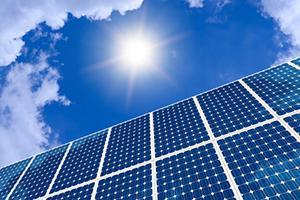
Analysts observe further that Nigeria, with population of over 180 million people is playing catch up with $1.75 billion investment on solar energy compared with Morocco’s $9 billion investment, as Morocco makes progress with $9 billion solar energy investment.
They say that while Nigeria targets 30 percent of its energy requirement from solar power by 2030 with 1,125 megawatts, Morocco is targeting 2,000 megawatts and 52 percent of its energy from solar power.
Wale Shonibare, Managing Director, Investment Banking, United Capital, says that a step into achieving this aspiration should start with the introduction of the domestic gas obligation, which imposes an obligation on the oil companies to assign certain percentage of the gas being produced for domestic use.
Shonibare sees a significant opportunity for the country to use it gas domestically for power purposes, saying, “Looking at what is going on in the industry, the future is selling our gas domestically because the international prices are in decline.”
The issue of funding and raising financing for renewable or sustainable energy projects, in the opinion of Rolake Akinkugbe, head, Energy and Natural Resources, FBNQuest, is particularly challenging despite the economic dividends to be enjoyed.
Akinkugbe observes that while there is growing acknowledgement of the falling costs of renewable energy technologies, the upfront capital investment required to develop such projects is significant.
A range of commercial and structural dynamics in energy markets also drives funding renewable energy technologies broadly. Critical considerations are feed-in-Tariffs (FITs), which go a long way in providing investment security, as they guarantee payments to project developers for the electricity they produce.
She further says that given the level of innovation now trailing renewable energy projects globally, it has become pertinent to develop creative funding structures too. The best models adapted today are focused on building scale around projects, both in terms of the funding structures and in terms of the target assets.
Despite the evolving regulatory climate for renewable energy, many local banks may not be willing to take on risk, given capital constraints, and may require high interests, high level returns with short tenures.
Report indicates that currently Nigeria depends on an estimate of 1.1 trillion standard cubic feet of gas per day from Escravos Lagos Pipeline System, which serve as a backbone of power supply.
Meanwhile, analysts in the energy sector are optimistic that Nigeria electricity generation output will receive a 15,000 megawatt increase once the Federal Government provides an enabling business environment for renewable energy take off.
At least, $20 billion would be needed to develop gas infrastructure in Nigeria over the next few years, Akinkugbe says.
“The current situation in global oil and gas markets also necessitates urgency for Nigeria in focusing on creating domestic markets for her gas, given the muted demand in our traditional exports markets including Asian emerging markets,” she points out.
Nigeria is extremely rich in natural gas reserves, and the main thrust appears to be the delivery of gas in sufficient volumes that would boost Nigeria’s power generation capacity, she says.
“I think that level of production is quite achievable, but it is going to require significant capital investment and a strong and water-tight regulatory framework to drive it,” she says.
KELECHI EWUZIE