The euphoria which attended Nigeria’s solid minerals sector at the commencement of President Muhammadu Buhari’s administration is waning, as under-funded artisanal and small-scale miners seek N2 trillion to keep the sector rolling in the next 30 years.
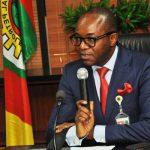
Buhari identified the solid minerals sector as a major focus and source of government revenue as well as foreign exchange, after inauguration, and appointed Kayode Fayemi to superintend the ministry of solid minerals development.
So much was said about banks setting up mining desks, or Nigeria having a mining bank early in the administration, but the country’s banks are treading softly in that direction, as the sector is not yet formalised and has no clear investment data, says Patrick Odiegwu, partner in Anthracyte Limited, a general earth science company and player in the solid minerals sector.
States were asked to partner with the private sector to explore abundant solid minerals within their jurisdictions but no state has successfully announced earning revenue or FX from solid minerals, which necessitates the monthly shuttle to Nigeria’s capital Abuja by commissioners of finance for federal allocation.
Twenty states in Nigeria owe workers and pensioners salaries and entitlements, ranging from one to 36 months, according to a BudgIT nationwide survey in June.
An Australian private mining syndicate announced in August 2016 that it found a potentially ‘world class and highly unusual’ nickel discovery in a town near Kaduna, Nigeria.
However, nothing has been said about exploration of the mineral or private sector investment, many months after. Foreign investors are yet to demonstrate interest in Nigeria’s mining sector.
At a Kaduna International Trade Fair held in 2016, which focused on mining, Ibrahim Garba, a geologist and vice chancellor of Ahmadu Bello University, Zaria, said Nigeria is not known by investors as a mining destination.
Garba said the country should show with data, that it is a mining destination.
“The investor has a choice as to where to go. We must realise, understand and deliver what the investor wants. If your country has a reputation for instability, no investor will come, and if you do not have a good educational system that will give the investors cheap labour, he may not come because it is expensive to bring in foreign labour to work on mining sites,” Garba said.
However, Nigeria’s minister of solid minerals, Kayode Fayemi, has unveiled a road map or master plan for the solid minerals sector and announced securing $150million from the World Bank for the Mineral Sector Support for Economic Diversification (MSSED or MinDiver) programme. Fayemi has also launched N5 billion mining fund, domiciled in the Bank of Industry Nigeria (BoI), for artisanal miners.
Nigeria has 44 identified solid minerals, but fewer than 15 are being mined, processed and marketed.
Some of the minerals found in the country include kaolin, baryte, limestone, dolomite, feldspar, glass sand, ganstones, gold, iron ore, lead-zinc, tin (and its associated minerals), and gypsum.
“We need the injection of N2 trillion over the next 30 years. We also want five percent of the national budget devoted to mining each year,” Shehu Sani, president, Miners Association of Nigeria (MAN) told BusinessDay.
“The major challenge we have is funding. As part of the rejuvenation efforts, the Ministry of Solid Minerals and the BoI launched a N5 billion soft loan for artisanal miners. We want to appeal to BoI to structure a friendly modality that will enable miners to access the facility,” Sani said.
He urged government to attract private capital to mining, as well as funds from the World Bank, the European Union, the African Development Bank (AfDB) and other international partners.
“We need big pocket investors. The central area in mining is exploration and it simply means search. While searching, you can either get or not. You may get what is not up to your expectations. This is why we need multinational miners with funds to do exploration,” he said.
He stated that miners are looking at exporting bulky minerals through the waterways, adding the sector needs new technology and better infrastructure to move products.
ODINAKA ANUDU