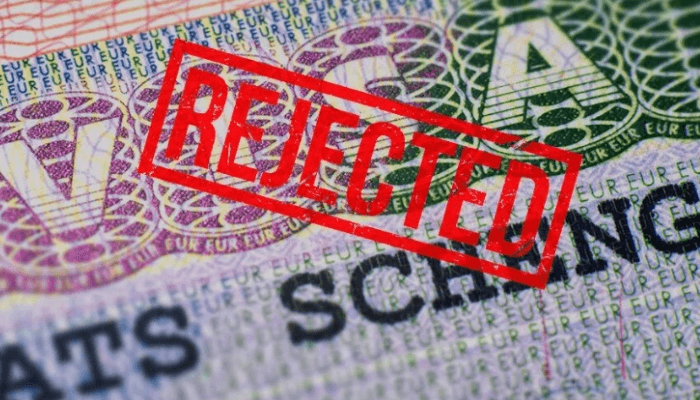
The online and social media worlds have numerous benefits. But if used wrongly it could come to haunt the user in unexpected ways, as a Nigerian entrepreneur finds out too late
Imagine you have a valid visa to any of the countries in the Global North, particularly a US visa, and you are bursting with excitement at the prospect of finally experiencing the famed American Dream. Considering the many challenges you have had to overcome to get the visa – truly, getting a US, Canadian, UK, France, or other Global North’s visa from Nigeria is comparable to climbing a staircase carrying a heavy object – the excitement is understandable.
Turned back at the airport despite a valid visa
So, you have obtained a valid visa to the US. You bought your flight ticket, the cost of which bore a lagoon-size hole in your pockets, costing you millions of naira. Then you said your goodbyes, see you soon (if your travel is a visit) or I will be in touch (if it is permanent relocation) to family and friends. The D-day arrived and you commuted to the airport and boarded your flight with hardly any fuss, bar the seemingly institutionalised ‘anything for us’ line from the customs and immigration personnel at the airport. Even the security personnel’s shenanigans could not dampen the volcanic-like excitement welling up in your tummy nor erase the faint smile you wore like a diamond necklace. After all, the journey is about to unwrap a whole new chapter or adventure in your life.

Then your aircraft touched down in the US and your mind became a Dichroic Sphere of emotions resembling a typical Lagos Monday morning traffic. You became excited, expectant of what the US holds for you, anxious about the unknown, relieved to be finally in the US, marveled at the cleanliness and size of the airport, and surprised by the quiet efficiency. By now, you have forgotten the fatigue from the 12-hour journey. What is playing on your mind is to be done with the immigration checks and formalities so you can proceed to town, to possibilities.
Then suddenly you were jolted from your revelry by a US immigration officer telling you that you are denied entry into the dreamland. You first experience disbelief, then your mind takes a detour as you process the information. Then the floodgate of inner soul searching: Why? I have a valid visa; I’m not a criminal; I wasn’t unruly or antagonistic on the flight, and on goes the introspection. The entry denial was then followed by detention and immediate deportation back to Nigeria. It all played out like a badly staged Netflix series in your traumatized mind.
The above scenario appears farfetched, right? It is not. In fact, many have been victims, not only in the US but across the world. Individuals who had valid visas but were denied entry into their country of interest. And with countries now viewing social media as part of diplomacy, foreign policy/affairs, immigration policy, and national security, turning back valid visa holders at the point of entry of a country due to social media mistakes may become a regular occurrence.
Somto’s social media faux pas and deportation
Recently, a Nigerian businesswoman, Somto Okonkwo, was denied entry into the US despite having a valid US visa and with no known criminal records. Her social media activity was her undoing. Yes. You heard right. An individual’s social media activities and affiliations are increasingly being used by Western governments to either allow or deny him/her entry into their country.

Before now, immigration-related social media monitoring had been fairly commonplace in the US. Since 2017, social media activities have formed part of the visa screening process to detect false or inconsistent information between the visa application and the applicant’s social media persona and posts.
But, the Executive Order 14161 issued by Trump this year has expanded the scope to incorporate the need for US visa applicants to include social media data as part of their application, with failure to comply likely leading to visa denial, even when all other requirements are met. The government had even encouraged visa applicants “to adjust privacy settings on all of their personal social media accounts to ‘public’ to facilitate vetting necessary to establish their identity and admissibility.”
With the new visa policy, an applicant’s social media is not just checked to detect inconsistencies or false information; LinkedIn, Instagram, X, Thread, Facebook, and others are now being screened for content the US may consider inappropriate or that seems to contradict its immigration and national security laws. Thus, posts are analysed to see if the owner expresses sympathy or support for terrorism-related activities, violence, anti-Semitic or hate speech.
A tearful Ms Okonkwo said her Instagram page says something “different” from what was on her visa application, hence her entry denial, detention, and deportation. Her US dream was terminated even before it began. Okonkwo is not unique, though, in getting sent back due to social media activities, a valid visa notwithstanding. The Australian government cancelled American singer Kanye West’s visa for a song he shared on social media that seemed to glorify Nazi ideology. Some have been denied entry due to their followership, some of whom were considered of doubtful character.
Why the social media-tied visa regime matters to Nigeria
Nigerians are famous for their globetrotting, seeking employment and career opportunities and adventure. With increasing fluidity in employment opportunities and career globally, across geographical locations, young Nigerians have been known to pursue their dreams outside the country. Western destinations like the US, Canada, the UK, France, Germany, Italy, Sweden, and others are favourites.
Nigerian youth are some of the most active on the internet, especially on social media platforms. They are usually very vocal in support of or against issues, causes, and trending developments, across the globe.
In today’s fractured world, global relationships are marked by suspicion, fear, and distrust. And the soft power the internet and social media possess continues to be exploited by global players, including state and non-state actors, to gain an advantage over opposition or perceived enemies. Thus, countries are increasingly scrutinizing social media activities during visa application processes to determine if an applicant is an ally or a potential threat. An out-of-place post, a like, share, follow, or retweet on a visa applicant’s handles that does not align with a country of interest’s laws and expectations is an immediate red flag that could lead to visa denial or entry denial.
Need for caution online
Nigerian youth must be mindful of their activities online, affiliations, comments, what they support, their language, and general comportment in the online world. Whatever one says or does online can be used against them in real life, and like Okonkwo, it may be when it mattered most that their lies and aggression online will come back to haunt them.
Netizens often hide behind the veil of anonymity to say or do some uncharitable things that on hindsight they may not be proud of. With the new visa policy in the US and other developed societies, bad behaviour online may get its rewards.