|
Getting your Trinity Audio player ready...
|
The Financial Times newspaper is a bastion of the British ruling class. Its views and reports matter in boardrooms and governance forums.
It operates from London, the capital of Britain, Nigeria’s former colonial master. It issued an editorial on Tinubu’s first two years.
Tinubu’s fans and APC folk celebrate it as an endorsement. Other people think it was critical.
Financial Times Verdict on Tinubu’s Two Years

The Financial Times (FT) delivered a highly critical assessment of President Bola Tinubu’s economic policies after his first year in office, a view that continues to shape discourse as he marks two years. The FT described Tinubu’s approach—dubbed “Tinubunomics”—as “disjointed,” arguing that his policies have not only failed to alleviate hardship but have deepened it for tens of millions of Nigerians.
The FT editorial specifically highlighted:
• Fuel Subsidy Removal and Naira Devaluation: It highlighted Tinubu’s prompt elimination of the fuel subsidy and the floating of the naira as key factors driving rampant inflation and the most severe cost-of-living crisis in a generation. The naira’s value plummeted, and petrol prices surged from ₦145 to ₦710 per litre, exacerbating imported inflation and rendering basic goods unaffordable for many.
• Rising Poverty and Food Insecurity: The FT noted, “hunger levels are soaring, and millions of children are foregoing meals and school,” with the measures pushing “tens of millions of already impoverished people deeper into misery.”
• Policy Critique: The FT questioned the coherence of Tinubu’s economic strategy, warning that “shock therapy will probably fail if important adjustments are not made.”

Responses to the Financial Times’ Critique
Official Government Response:
• Tinubu’s spokespeople, including Ajuri Ngelale and Bayo Onanuga, were either unavailable or dismissive. Onanuga claimed the FT’s criticism was “not new” and accused some Nigerian outlets of quoting the paper out of context, but did not directly address the substance of the critique.
Domestic Political Reactions:
• The FT’s verdict provoked criticism from the opposition. Former Vice President Atiku Abubakar and opposition parties (PDP, CUPP, ADC) condemned Tinubu’s administration, citing economic hardship, surging inflation, unemployment, insecurity, and mounting debt.
• Atiku described Tinubu’s government as “one of the most incompetent, disconnected, and anti-people governments in Nigeria’s democratic history,” attributing to it the deepening of poverty and the mismanagement of public funds.
• The PDP and other groups echoed the FT’s concerns, criticising policies that disproportionately harm people with low incomes and benefit the elite. They also condemned the administration’s handling of insecurity, education, and healthcare.
Public and Analytical Perspectives:
• The FT’s assessment echoed widespread public frustration, reflected in protests over food prices and living costs across several states.
• While acknowledging the pain caused by Tinubu’s reforms, some analysts argue that the high costs are a “necessary trade-off” for a long-term economic reset, given the dire situation Tinubu inherited, including a dysfunctional exchange rate regime and entrenched subsidies.
Summary Table: Key Points from the Financial Times’ Verdict and Responses
Aspect Financial Times Verdict Government/Allies Response Opposition/Analyst Response
Economic Policy Disjointed, exacerbates hardship Dismisses criticism as old/out-of-context Condemns as anti-poor, incompetent
Fuel Subsidy & Naira Removal/devaluation worsened crisis Policies necessary for reform Reckless, triggered inflation and poverty
Poverty & Hunger Soaring, millions worse off No direct response Nigeria now “poverty/malnutrition capital”
Policy Coherence “Tinubunomics” barely deserves the name No direct response Policies target poor, benefit elite
Public Reaction Protests, widespread discontent Supporters rally, but many dissatisfied Calls for reversal of “suffocating” policies
2. President Bola Tinubu’s Self-Assessment After Two Years in Office
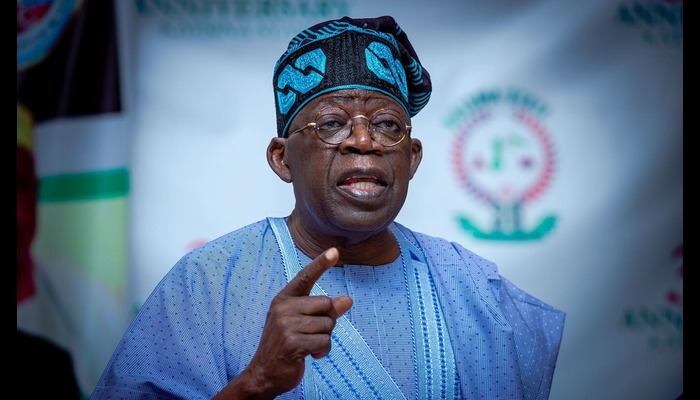
President Bola Tinubu, marking his second anniversary in office on 29 May 2025, offered a self-assessment that acknowledged the unprecedented hardships faced by Nigerians but strongly defended his administration’s policy choices as essential for the country’s long-term recovery and future prosperity.
Key Points from Tinubu’s Self-Assessment
• Acknowledgement of Hardship and Public Resilience
• Tinubu openly recognised that Nigerians have endured “unprecedented hardship” during his tenure. He praised citizens’ “resilience and undaunted spirit,” saluting their ability to withstand the economic and social challenges of the past two years.
• Inherited Challenges and Rationale for Reforms
• He emphasised the difficult situation he inherited, stating that Nigeria was at a “historic” crossroads requiring bold action.
According to Tinubu, the removal of fuel subsidies and the unification of the foreign exchange market were “necessary policies” to prevent the country from “drifting into the precipice.” He described these longstanding policies as unsustainable and a “chokehold on our nation’s neck, strangling our nation’s future.”
• Defending Economic Reforms
• Tinubu insisted that his administration’s reforms aimed to restore and reinvigorate the national economy, strengthen the social fabric, and ensure the viability of all tiers of government. He argued that these tough decisions, though painful in the short term, are essential for long-term stability and growth.
• Progress and Optimism
• Despite widespread criticism and ongoing hardship, Tinubu asserted that “undeniable progress” had been made. He expressed optimism, declaring that “the worst is over” and that “Nigeria’s future is bright.” He thanked Nigerians for their “unrelenting support and belief in the grand vision we share to uplift our nation and renew our collective hopes and aspirations.”
• Security and Governance
• In earlier media engagements, Tinubu highlighted security improvements, claiming that previously unsafe roads had become viable for travel and that the military remained vigilant. He also cited fiscal discipline, increased revenue generation, and greater autonomy for local governments as evidence of progress.
Summary of Tinubu’s Self-Assessment
Theme Tinubu’s Position
Hardship Acknowledges hardship, praises public resilience.
Economic Reforms Defends as necessary, says they prevent national collapse.
Progress Claims “undeniable progress” and insists “the worst is over”.
Security Points to improvements and safer travel
Fiscal Management Emphasizes financial discipline and increased revenue
Local Governance Highlights enhanced autonomy for local governments
Outlook Expresses optimism for the future, thanks Nigerians for support
Excerpt from Tinubu’s Anniversary Address
“Fellow Nigerians, as we mark the second anniversary of our administration, I salute your resilience and undaunted spirit… The economic and general situation of the country I inherited required us to redirect the nation’s affairs with a bold and new vision. I immediately implemented two necessary policies to prevent our country from further drifting towards the precipice… While our administration has implemented the reforms to restore and reinvigorate our national economy and strengthen our social fabric as a strong and united country, I must thank my fellow citizens for your unwavering support and belief in the grand vision we share to uplift our nation and renew our collective hopes and aspirations.”
3. The 750 Units Emefiele Duplexes
The “750 units” Emefiele duplexes are a luxury housing project allegedly connected to former CBN Governor Godwin Emefiele.
An Abuja High Court has transferred them to the Federal Government. Emefiele is currently under investigation for potential links to financial misconduct. The project has become a focal point in Nigeria’s ongoing debate about public accountability, elite privilege, and the fight against corruption.
The project comprises 753 luxury duplex units and has attracted public and media attention due to its scale, opulence, and the controversy surrounding its funding and ownership. The EFCC recovered it in December 2024.
The massive property, comprising 753 housing units, was recovered by the Economic and Financial Crimes Commission in December 2024.
The EFCC claims this is the most significant single asset recovery since the agency was established in 2003. It encompasses over 150,000 square metres and includes duplexes and various types of apartments.
The estate was recovered following a final forfeiture order issued on 2 December 2024 by Justice Jude Onwuegbuzie of the Federal Capital Territory High Court in Abuja.
Key Facts About the Emefiele Duplexes
• Scale: 750 luxury duplex units, establishing it as one of Nigeria’s most significant single-site luxury residential projects.
• Ownership and Funding: The duplexes are reportedly linked to Godwin Emefiele, and speculation suggests that the funding may have originated from misappropriated public funds during his tenure as CBN Governor.
• Controversy: The project became the subject of investigation following Emefiele’s suspension and arrest in 2023–2024, as part of broader probes into alleged financial misconduct and abuse of office at the CBN.
• Reports citing the Housing Ministry say the project is not completed yet. The Ministry assures that it will sell the units to low—and middle-income earners.
• Public Perception: The project’s scale and luxury have attracted criticism in a country grappling with a severe housing deficit and economic hardship.
Why Are the Emefiele Duplexes Significant?
• Symbol of Alleged Corruption: The project is frequently mentioned as a symbol of purported elite corruption and the misuse of public office for personal gain.
• Ongoing Investigations: The Economic and Financial Crimes Commission (EFCC) and other agencies have reportedly seized or placed properties under investigation as part of efforts to recover assets associated with financial crimes.
• Media Coverage: The duplexes have featured prominently in Nigerian news, especially in exposés and reports about the CBN under Emefiele’s leadership.
Citizens’ Comments on the Court Forfeiture Order on the Emefiele Duplexes
The court-ordered forfeiture of the so-called “Emefiele Duplexes” has generated widespread public reaction across social media, news platforms, and civic forums. Here’s a summary of typical citizen comments and sentiments:
1. Support for the Forfeiture
Many Nigerians have expressed strong support for the court’s decision, seeing it as a positive step in the fight against corruption:
• “It’s about time the government recovered stolen assets. Too many public officials have gotten away with looting for too long.”
• “Let the law take its course. These properties should be used for the public good, not private luxury.”
• “We need more of this. If you steal from the people, you must pay the price.”
2. Scepticism and Distrust
Some citizens remain sceptical, doubting whether the recovered assets will genuinely benefit the public:
• “They will seize the duplexes, then another set of politicians will take them over. Nothing ever changes.”
• “Will the money from these forfeitures ever reach ordinary Nigerians?”
• “This is just a show. The real looters are still out there enjoying their loot.”
3. Calls for Transparency and Accountability
There are demands for transparency in the management and allocation of the forfeited properties:
• “We want to see a transparent process. Auction them and use the proceeds for hospitals and schools.”
• “Who will monitor what happens to these duplexes? We need accountability.”
4. Anger Over Corruption
The scale of the alleged corruption has angered many, especially given Nigeria’s economic challenges:
• “Imagine how many families could be housed with 750 duplexes! Meanwhile, millions are homeless.”
• “This is why we have poverty everywhere—leaders stealing what belongs to everyone.”
5. Demand for Broader Action
Some comments urge the government to pursue more cases and not stop at Emefiele:
• “Let this not be the end. Go after all corrupt officials, past and present.”
• “Emefiele is not the only one. What about others?”