Small capitalised stocks led the chart of gainers in the first month of trading on the Nigerian Stock Exchange (NSE), outperforming the wider All Share Index (ASI), which fell by 1.76 percent as investor sentiment soured on the increase in CRR on public deposits to 75 percent and EM turmoil amid the US Fed’s tapering of another $10bn in bond purchases.
Investors poured money into smaller companies leading to a 135-percent gain (ytd. Jan 31) in logistics firm Trans-nationwide Express Limited, which has a market capitalisation of N600 million, Costain WA plc (+71.77 percent, market cap. N2.2 billion), IHS Nigeria (+46.3 percent, market cap. N16.8 billion), John Holt plc (+25 percent, market cap. N544 million), and Neimeth International (+24.6 percent, market cap. N2.1 billion). The smaller capitalised companies’ performance compares to a sell-off in larger companies such as Conoil, the worst performer on the NSE for January and down 23.47 percent (market cap. N36 billion), Oando (-20.99 percent, market cap. N144 billion), Zenith Bank (-14.96 percent, market cap. N737.8 billion), Skye Bank (-11.82 percent, market cap. N53 billion), and Ashaka Cement (-10.91 percent, market cap. N41.4 billion).
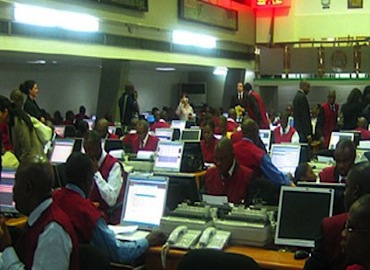 Smaller companies who are usually more domestically-oriented often have less institutional investor and foreign funds present in them, making their stocks less susceptible to global investor sentiment.
The nearly 2 percent fall in the NSE in January also represents strong bearish sentiment towards the banks which make up almost 30 percent of the index, although this was cushioned by the 7.08 percent gain in heavyweight bellwether, Dangote Cement.

Only two bank stocks – FCMB and GTB – rose in January, with the rest falling as investors digested the potential impact of tighter liquidity (CRR) and greater regulation on bank profits.
FCMB led banking stocks in January, rising by 3.79 percent, followed by GTB with gains of 1.78 percent. All other bank stocks fell or remained flat in January.
Stanbic IBTC stock lost (-1.64 percent), Union Bank (-4.47 percent), Access Bank (-5.21 percent), Diamond Bank (-5.21 percent), Sterling Bank (-7.6 percent), UBA (-8.3 percent), ETI (-9.26 percent), Wema (-9.84 percent), Fidelity (-10.04 percent), and First Bank (-11.35 percent) in January.
The coming week may see more sell pressure on the NSE, note Meristem Securities analysts in a recent update.
“We expect the reaction to the Fed’s further QE tapering to sustain the sell pressure on equities in the current week; hence, bearish sentiments may still likely take precedence. While the sell sentiment may dominate in the week, some investors may also take position both in anticipation of impressive corporate actions and on the basis of low prices,” Meristem analysts said.

Some positives for the NSE, however, include the increase in the weighting of Nigerian stocks in the MSCI frontier markets index and the relative outperformance of the naira during the recent emerging market (EM) volatility.
Nigeria will avoid the EM turmoil as the markets see a relatively stable exchange rate and single-digit inflation as CBN Governor Lamido Sanusi’s most critical achievements, which are likely to be defended, according to Samir Gadio, emerging markets strategist at Standard Bank, London.
Nigeria was ranked as the 15th top frontier market and first in Africa for 2014 in a recent Bloomberg ranking of the most-promising markets in which to invest.
The Bloomberg ranking is based on 19 measures of the investing climate, from forecasts of gross domestic product growth for the next two years to the ease of doing business.
By: PATRICK ATUANYA