|
Getting your Trinity Audio player ready...
|
A survey has shown that 95 percent of Nigerians sampled across all geo-political zones are aware of recent increase in petrol pump price. They are however uncomfortable with the price rise the policy has engendered. The survey further showed that 74 percent of respondents nationwide are not in support of the increase. Interestingly there are more Female (87 percent) than Males (62 percent) respondents in this category. On the other hand 26 percent of respondents nationwide are in support of the increase.
The survey clearly revealed that in the South-East region 90 percent of respondents do not support the increase, closely followed by the South-South region (87 percent). On the other hand, the North-East region (41 percent) accounted for the largest portion of respondents who are in support of the increase in the price of petrol and this was followed by the North-West zone (36 percent).
When respondents were asked to state their reasons for supporting or not supporting the increase made on petrol pump price, an analysis of the open-ended answers revealed that respondents who did not support the increase mentioned ‘Economic hardship of the masses’ (41 percent), ‘Increased cost of living’ (40 percent), ‘increase in prices of goods and services’ (8 percent) and ‘Increase in cost of transportation’ (5 percent) as reasons for not supporting the increase in petrol pump price among others.
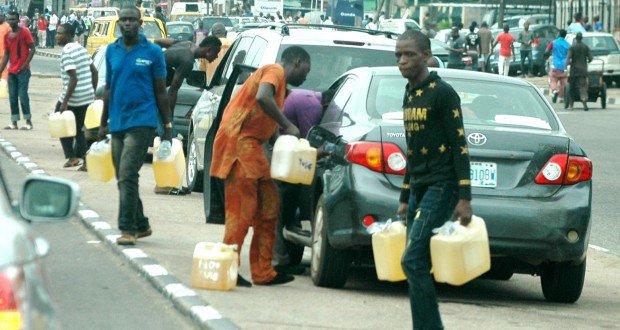
Furthermore, the availability of petrol since the recent increase in petrol pump price was measured across Nigeria, and the poll revealed that 86 percent of respondents nationwide stated that petrol is now readily available in their various localities. The North-West region (93 percent) had the highest proportion of respondents with this report. In addition, 14 percent of respondents, mainly from the North-East zone (21 percent) affirmed that petrol is not readily available in their localities.

But the impact of the increase has not been even across age brackets. An analysis of the impact of the increase across age brackets shows that those in the 61+ age-group category have been mostly affected by the increase. Most Nigerians in this category are pensioners or senior citizens that depend on their pension.
Respondents were also asked to state the effect or pains of the increase. Most Nigerians have been mostly affected by the increase in cost of transportation (33 percent) as a resulting effect of the increase in petrol price. Other mentions include ‘High cost of goods and service’ (24 percent), ‘Change in spending pattern’ (17 percent), ‘High cost of living (14 percent) among others.
Obodo Ejiro