



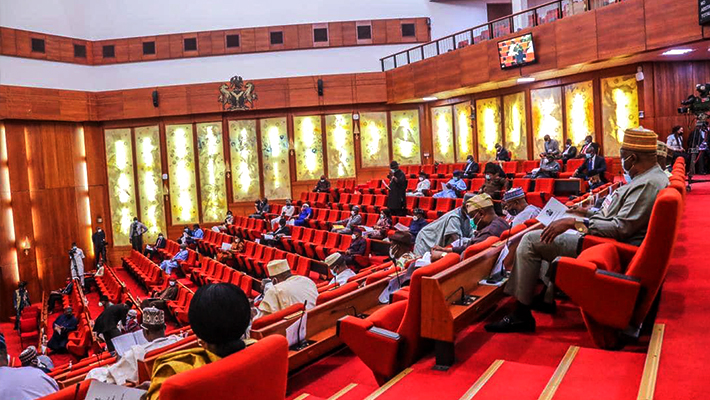
In response to the worsening security situation across the country, the Senate has announced plans to convene meetings with key stakeholders in each geopolitical zone to identify the root causes of insecurity and develop practical solutions to restore peace and stability.
The Senate emphasised that no amount of investment in infrastructure can yield meaningful development in the absence of security.
This was the central message delivered by Opeyemi Bamidele, the Leader of the Senate and Chairman of the Senate Ad-hoc Committee on National Security Summit, at the committee’s inaugural meeting held on Wednesday at the National Assembly Complex, Abuja.

The 20-member ad-hoc committee was recently constituted to coordinate the National Security Summit and propose actionable recommendations to tackle the country’s mounting security challenges. Alongside Bamidele, members include Senate Chief Whip, Senator Tahir Monguno; Minority Leader, Senator Abba Moro; Minority Whip, Senator Osita Ngwu; and other chairmen of relevant Senate committees, including Defence, Army, Navy, Interior, and Police Affairs.
Addressing the committee, Bamidele highlighted the regional dimensions of the security crisis and stressed the importance of localised engagement.

“The summit is designed to ensure that every Nigerian can live and work in peace, regardless of their location or social status,” he said.
“No amount of money invested in infrastructure development will translate into meaningful outcomes without peace and security. That is why the National Security Summit places the transformation of widespread insecurity into lasting peace at its core,” he added.
According to him, the committee will begin by meeting with critical stakeholders across the six geopolitical zones to identify the causes of insecurity, uncover the key actors involved, and propose targeted interventions. Victims of armed violence will also be consulted to gather a broad spectrum of perspectives.
“We will interact with people on the ground, listen to their fears and suggestions, and use their input to shape strategies for restoring order,” Bamidele said.
He stressed that national unity and development can only thrive in an atmosphere of peace, assuring Nigerians that the committee will work tirelessly to deliver far-reaching recommendations.
“The summit will involve all segments of society; traditional institutions, government agencies, the military and intelligence community, local authorities, the media, and other public-spirited individuals and groups with constructive ideas to contribute,” he explained.
Bamidele also outlined the varying security threats affecting different regions: banditry and kidnapping in the North-West; terrorism in the North-East; herder-farmer clashes in the North-Central; separatist agitations and gang violence in the South-East; environmental conflict and oil theft in the South-South; and ritual killings and abductions in the South-West.
He noted with concern that the activities of insurgents, previously confined to parts of the North, have now spread more widely. “Kwara is increasingly affected, and the situation in Benue is deteriorating. In the South-East, separatist violence and kidnappings have become almost daily events, while the South-West battles a rise in ritual killings. The South-South faces continued oil theft, piracy, and sabotage of national infrastructure,” he said.
Bamidele expressed confidence that with collective effort and inclusive dialogue, the committee would be able to recommend sustainable solutions to Nigeria’s security woes.





