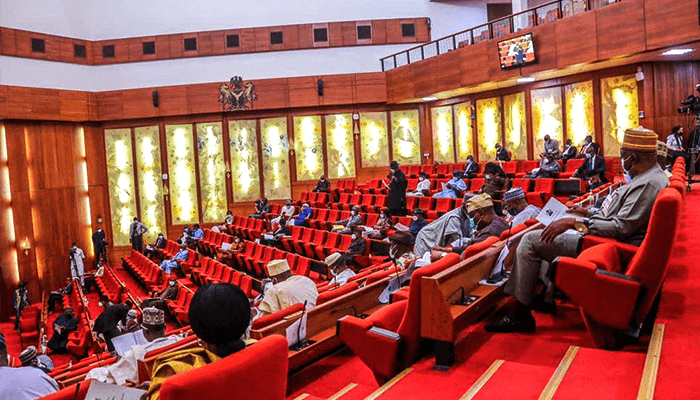
The Nigerian Senate has advanced the Local Automotive Industry Patronage Bill, 2025, through second reading, setting the stage for legislation that would compel Government Ministries, Departments, and Agencies (MDAs) to give preference to vehicles produced within the country.
Sponsored by Patrick Ndubueze, a Senator, who represents Imo North, the Bill is designed to strengthen the domestic auto industry, foster employment, stabilise the naira and promote sustainable economic development.
While presenting the Bill during Thursday’s plenary session, Ndubueze criticised the country’s heavy reliance on imported vehicles, describing it as detrimental to Nigeria’s manufacturing capacity and economic resilience.
Read also: Tinubu seeks Senate approval for ₦1.78trn FCT budget

“Nigeria has consistently ignored homegrown products in favour of foreign alternatives that are not necessarily superior.
“This neglect contributes to the naira’s ongoing depreciation and rising inflation”, he remarked.
He disclosed that although 54 licenses had been issued for automobile manufacturing in Nigeria, only six companies remain operational.
The lawmaker attributed this to inadequate infrastructure and foreign exchange constraints, which had driven several licensed firms to relocate to countries like Ghana, where they are now building vehicle assembly plants targeted at the Nigerian market.
To reverse this trend, Ndubueze urged the Government to adopt a comprehensive automotive policy that would mandate that at least 75% of vehicles purchased by public officials be produced locally,not just assembled.

He, however, made case for the exemption of the president and vice-president as well as the Senate President and Speaker to be excluded from the policy in its initial stage.
He further proposed strict criteria to qualify as a local manufacturer, including the employment of a workforce that is at least 70% Nigerian, domestic investment of 75% of R&D funds, and the possession of advanced manufacturing equipment such as robotic painting systems and electrophoresis technology.
He argued that supporting local vehicle manufacturers should be regarded as a matter of national security, not just economic policy.
Drawing comparisons with Countries like China, India, and Malaysia, the Senator noted that these nations initially restricted vehicle imports to boost their local industriesan approach that ultimately led to them becoming exporters, including to Nigeria.
Other lawmakers expressed strong backing for the Bill. Tahir Mongunu, Senate Chief Whip, emphasised that the legislation would provide statutory support for a previous Federal Executive Council directive on local procurement, safeguarding it against potential reversal by future Governments.
Read also: Senate approves appointment of five new INEC RECs
“This Bill offers permanence to a policy that was previously vulnerable to political shifts,” Mongunu said.
Deputy Senate President Barau Jibrin also lent his support, stating that the proposed law would generate jobs for Nigerian engineers and draw in more investment to the automotive sector.
The Bill was thereafter passed for second reading and been forwarded to the Senate Committee on Public Procurement for further consideration, with the Committee expected to present its report within four weeks.