|
Getting your Trinity Audio player ready...
|
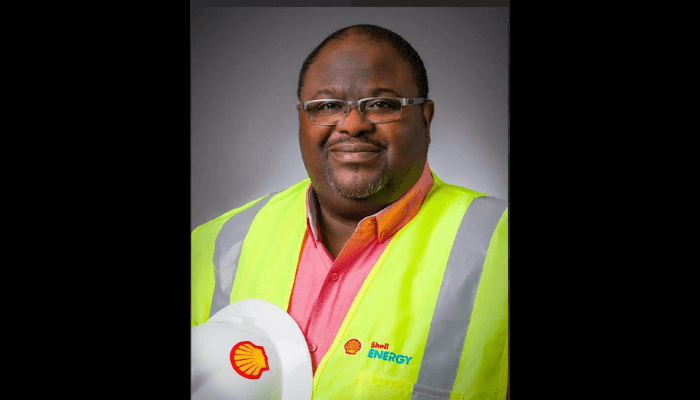
At a time when climate shocks, grid failures, and energy insecurity threaten communities around the world, one Nigerian-born engineer is shaping the systems that will define the future of power. Olanrewaju Idris Dairo, a global project leader and a senior clean-energy engineer, is emerging as one of the most influential voices driving the modernisation of the world’s energy infrastructure.
In the recent years, Olanrewaju has managed to build well over a total of 1 gigawatt of renewable-energy projects with batteries backup, in the two major independent power markets in the United States, spanning the CAISO market (California Independent System Operator) in San Diego and Temecula, up to NAPA valley in Northern California, as well as in ERCOT(Electric Reliability Council of Texas). Idris, as he is widely known, stands at the intersection of innovation and necessity. In this exclusive interview, he discusses how the world must rethink modern energy systems, the responsibility engineers carry, and why Nigeria and Africa must not be left behind in the clean-energy revolution.
You’ve worked across four continents, building both traditional and renewable energy systems. What first sparked your commitment to engineering energy infrastructure?
For me, energy has always been the foundation of development. Growing up in Nigeria, unreliable electricity was the silent barrier behind every challenge, economic, educational, and social. I knew early on that solving the energy problem was the key to unlocking opportunities. When I graduated in electrical & electronic engineering, I felt a responsibility, so I decided to attend graduate school in Engineering in Germany. Engineering wasn’t just a profession; it was a pathway to impact. I wanted to build systems that last, that empower people, and that strengthen nations worldwide.

Today, you are leading some of the most advanced renewable-energy projects in the U.S. When you talk about “modern energy systems,” what exactly do you mean?
Modern energy systems are intelligent, distributed, low-carbon, and incredibly resilient. They combine solar plants, battery storage, microgrids, EV charging, and distributed energy resources into one flexible ecosystem. They must also be cyber-secure, adaptive, and capable of supporting both dense cities and remote communities. A modern system is not just about supplying power; it’s about ensuring stability, security, and efficiency in a world that is changing faster than traditional grids were ever designed to handle.
What have been some of the most significant challenges you face in designing these new systems at scale?
Integration is the biggest challenge. The grid was built years ago for one-way power flow from central plants to consumers. Today, we’re dealing with thousands of distributed sources feeding back into the grid. Engineering that safely and efficiently delivers this two-way power generation is complex. Battery systems pose another challenge: safety, lifecycle, and cost must be balanced carefully. And then there’s the human element: managing “Design and Build” contractors, field teams, regulators (e.g., AHJs—Authorities Having Jurisdiction), permitting, and customers, all while maintaining absolute HSSE discipline, what we call “Goal Zero,” a journey to zero incidents. I tell my teams all the time: technology will evolve, but safety must remain constant.
You are leading 1 gigawatt of clean-energy development. Is there a particular project that captures your vision for the future?

Yes, the community microgrid projects and the utility-scale battery energy storage systems (BESSS), that we have built from paper design to implementation. Storage is the heart of the future grid. Without it, solar and wind remain limited by weather. But with large-scale storage, renewable energy becomes predictable, stable, and reliable enough to serve entire communities and cities. Successfully engineering and managing the field installation of those systems, safely, efficiently, at scale is one of the most meaningful contributions I have made. When a project like that goes live, I know we are not just delivering power; we are redefining what is possible, breaking new frontiers.
The energy transition often raises concerns around equity. How do you ensure these systems benefit underserved communities?
Equity is non-negotiable. If clean energy doesn’t reach vulnerable communities, then we’re simply replacing one imbalance with another. Microgrids and distributed energy resources are powerful because they bring energy closer to people, rural areas, underserved cities, and industrial clusters. I’m passionate about designing systems that can be replicated in developing countries like Nigeria. Imagine stable, off-grid solar-plus-storage systems powering farms, schools, and healthcare centers. That’s the vision clean energy that empowers everyone.
You’re known for merging technical excellence with strong leadership, especially in safety. Why is HSSE such a core part of your identity as an engineer?
Because nothing, absolutely nothing, is more important than human life. I have led teams across high-risk construction sites, refineries, and energy hubs. One mistake can change a family forever. When I talk about Goal Zero—zero incidents, zero harm, it’s not a slogan. It’s a culture. A responsibility. Engineers build things people depend on; our work must be safe, ethical, and accountable. That’s leadership.
Looking ahead, what do you see as the biggest shifts coming to the global energy landscape?
The biggest shift will be decentralization, with energy moving from a centralized grid to community-level systems supported by smart storage, AI-driven demand response, and distributed generation. We will see microgrids powering industrial clusters, ports fully electrified, and grids becoming more adaptive and self-healing. The U.S. is moving aggressively in that direction, and Africa, particularly Nigeria, cannot afford to lag. The energy transition is not a trend; it’s a global transformation.
And what role do you hope to play in shaping that future?
I want to continue to contribute to building systems, leaders, and opportunities. My work in the U.S. is directly contributing to infrastructure that will serve generations. But I also want young Nigerian and African engineers to see that global excellence is possible. My goal is to expand modern energy systems in ways that strengthen nations, enhance energy resilience, and accelerate climate progress. This is not just my career; it is my purpose.
In a world searching for solutions to an increasingly complex energy future, Olanrewaju Idris Dairo represents the kind of leadership the transition demands: visionary, technically extraordinary, disciplined in safety, and uncompromising in purpose. From Nigeria to Germany, the UK, Canada, and now Houston, Idris is truly a global engineer who continues to break barriers and new frontiers, whose work continues to light pathways for nations seeking a cleaner, more resilient energy era.