|
Getting your Trinity Audio player ready...
|
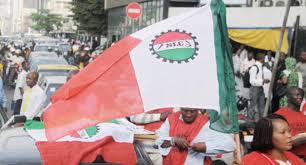
The leadership of Nigeria Labour Congress (NLC) on Monday has unveiled plans to engage Federal Government over the planned sale of some national assets.
The Congress, however noted that it will not hesitate to embark on nationwide strike if all its entreaties to be Government’s cooperation to suspend the sale of the national assets fail.
Ayuba Wabba, NLC President who spoke at the inauguration of a 10-member NLC Think Thank to engage government, emphasised the need to explore alternative options to jump start the economy.
“There has been no value added as a fallout of the privatization of the power sector, no improvement in service.
“We are opposed to the sale of those strategic assets in whatever guise. The consequences will be more grievous if we do not take steps to prevent it. A lot of people have stolen a lot and they are hiding the money elsewhere, they want to use the money.
“We are not only saying no, we have also canvassed options. Tax justice, where all citizens should pay taxes. The issue of tax evasion and tax waivers should be avoided,” Wabba said.
In the bid to effectively fix the economy, the NLC chief emphasised the need to realign the fiscal and monetary policy needs, adding that the policy has made a few people millionaires while the current policy has not worked effectively.
According to him, some of the viable options available to government to jump start the economy; include ensuring tax justice, cutting than on the cost of government and intensifying anti-corruption war, particularly in the downstream oil sector.
In particular, Wabba said granting of all sorts of waivers was one of the factors that brought the nation’s economy to its knee, insisting that the revenue worth billions of dollars were being frittered away in the name of tax and import waivers.
The NLC boss tasked Federal Government on the need to ensure tax justice by ensuring that individuals, business concerns and corporations pay proportional tax.
He also urged Federal Government to inject recovered looted funds in the manufacturing and infrastructure sector, adding that it would help to create activities that would benefit the people.
“There is the need to use available resources to drive the process of development. The looted funds should be commuted into the manufacturing sector, critical infrastructure like roads, rail sector.
“We must continue to block leakages; we have not addressed the problem of inherent corruption. That explains why the refineries are not working. It is because of corruption. You make more money when you import. You make N100 million per vessel imported into the country,” he observed.
He alleged that IMF came with devaluation, subsidy removal and sake of assets, not different from what was done in the past in 1984.
While stressing the need to cut down cost of governance, Wabba argued that “some provisions in the budget are mere duplications; it shows that we are not serious about the reduction of the cost of governance at all levels.
“The law does not allow our political elite collecting emoluments from various governments.”
Wabba who blamed the organised Labour and civil society of being complacence, however assured that the coalition of Civil society and labour “must engage the issues from two angles, from the intellectual front and the action the streets, or an interplay of two
He who argued that the sales of the assets would further impoverish the Nigerian workers, lamented the failure of the nation’s policy makers to learn from the past, saying that none of the new-liberal prescriptions had worked for Nigeria at the time of recession.
“When the country was confronted with a similar situation in 1984, the International Monetary Fund (IMF) prescriptions were forced on us. We rejected them and said they would not work. They do not work in any of the African country where they had been introduced. If these new-liberal policies did not work in 1984, it would be preposterous for the proponents to come up with such 34 years after,” he noted.
The NLC boss who faulted the slogan that says, “government has no business in business, maintained that businesses wholly owned by government had operated successfully in other climes.
He cited the case of Ethiopia and South Africa airlines which, according to him, has raked in billions of dollars in revenues for both countries.
According to him, the issue of Nigeria is not pertained to which economy system worked better, but rather in making concerted effort to address the endemic corruption inherent in the system.
He likened the proposition of assets sales to a farmer who wants to sell his farmland to feed his children in time of drought.
Wabba, therefore challenged the federal government to look inward with a view to fashioning out a home-grown solution to the economic recession rather than selling the nation’s common wealth.