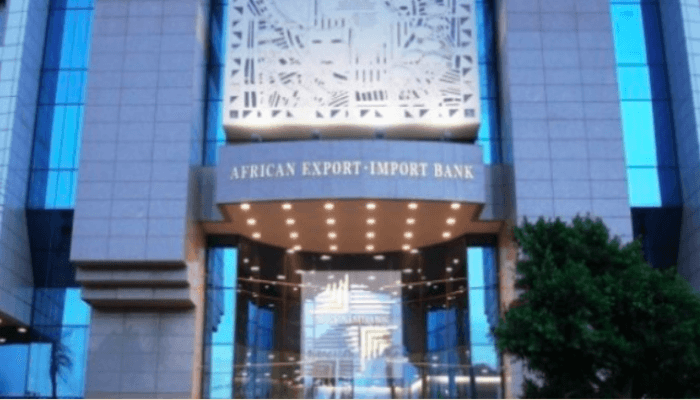
African Export-Import Bank (Afreximbank) has unveiled a $4billion Ukraine Crisis Adjustment Trade Financing Programme for Africa (UKAFPA).
The programme is a credit facility developed by the bank to manage the impacts of the Ukraine crisis on African economies and businesses, according to the board of directors, which gave its approval on March 31, 2022.
Benedict Oramah, president of Afreximbank, who doubles as chairman of the board of directors, speaking after the board meeting held in Abidjan, Cote D’Ivoire, said: “I am delighted that our board has approved the introduction of the UKAFPA, once again demonstrating their responsiveness to the needs of African member states and their citizens.
“This initiative will contribute immensely to averting social anxiety and upheaval that may arise from looming food shortages and high costs of fertilizer and petroleum products.”

Macky Sall, President of Senegal and current chairperson of the African Union expressed his support for the UKAFPA initiative, saying: “I welcome the renewed energy of African institutions that have led our coordinated and successful response to the COVID-19 pandemic. Africa now faces the socio-economic challenges posed by a global context of conflict. Afreximbank has once again shown the way forward by enabling the continent to tackle the impact of the crisis head-on through financing solutions tailored to the specific pressure points facing our member countries. I hope that UKAFPA will play a major role in building resilience in nutrition and food security on the African continent, in line with the theme of the 36th AU summit.”
Read also: Russian-Ukraine war threatens Africa’s food security, US warns
The Russia-Ukraine crisis which escalated on 24 February 2022 has had a significant effect on the global economy. Given the importance of both Russia and Ukraine as sources of crude oil and gas, raw materials and grains, the outbreak of the conflict has wider repercussions on a global scale, including adversely affecting African economies, especially those that rely heavily on grain, fertilizer and fuel imports.
One of the objectives of UKAFPA programme is import re-order cost adjustment financing, to help countries to meet immediate import price increases pending domestic demand adjustments.
Another objective is oil and metals buy-back financing to refinance over-collateralised loans in the context of the current high oil and metal prices, and thereby release more free cash flow for use in meeting other urgent needs – food and fertilizer imports and servicing rising cost of debt.

Afreximbank has a reputation for introducing various emergency intervention programmes, with embedded strong risk mitigations to respond to various crises on a global scale and impacting Africa. Recent examples include the Pandemic Trade Impact Mitigation Facility (PATIMFA) through which the bank disbursed over $7 billion in support of African economies in their fight against the COVID-19 pandemic. That facility expired in March.
In 2015, the bank introduced its Countercyclical Trade Liquidity Facility (COTRALF) that provided a platform for the disbursement of over $10 billion to African commercial and central banks making it possible to avert large scale trade debt payment defaults at the height of the commodity crisis. Both facilities achieved their respective goals and were deemed successful interventions.
UKAFPA is a response to an urgent call for emergency intervention by member states of the bank. UKAFPA – compliant financing requests received from across Africa already exceed $15 billion. There is some urgency to meet these requests to avoid catastrophic social conditions across Africa and reduce the risk of their morphing into political challenges.
Oramah also recalled how the shareholders of Afreximbank approved a $6.5 billion general capital increase in 2021, after securing the endorsement of the African Union (AU), to boost the capacity of the bank to deliver on its mandate, deal with the COVID-19 pandemic, and support AfCFTA.
Beyond the financing, Afreximbank plans to work with the UN Economic Commission for Africa (UNECA), the African Union Commission (AUC) and the African Continental Free Trade Area (AfCFTA) Secretariat to launch the intra-African supply chain coordination group whose aim will be to enable alignment of production and consumption ensuring that what is produced in Africa is prioritised to meet African requirements while reaching out to other entities in other parts of the world to lend support.