Summary: Over the past 25 years, Nigeria’s progress in expanding electricity access has been dismal—barely moving from 44.9 percent in 1999 to 61.2 percent by 2023. In that time, peers like Kenya, South Africa, and Cote d’Ivoire surged ahead, lighting up more homes and powering more businesses.
This article explores how a broken electricity system is fracturing Nigeria’s social contract. It unpacks the policy missteps, contrasts them with global best practices, and probes the uncomfortable truth: in a nation of over 200 million people, power remains both a metaphor for governance failure and a literal absence in daily life. As costs rise and reliability falters, the question looms larger than ever—can Nigeria fix its power problem without further disempowering its people?
Over the past 25 years (1999–2023), the proportion of Nigerians with access to electricity has only increased from 44.9 percent to 61.2 percent. In the same period, South Africa improved from 71.3 percent to 87.7 percent, Kenya from 13.2 percent to 76.2 percent, and Cote d’Ivoire from 48.2 percent to 72.4 percent, according to World Bank data.


Moreover, Nigeria significantly lags in terms of electricity consumption, recording just 181.63 kWh per capita annually—the lowest among the countries compared. In contrast, South Africa consumes 3,779.72 kWh, Brazil 3,295.31 kWh, and Turkey 3,726.45 kWh per capita.

Privatisation’s broken promise
The privatisation of electricity, which was done in 2013, has failed to yield the promised results for Nigerians. In that year, then-President Goodluck Jonathan handed over the Power Holding Company of Nigeria (PHCN) to the private sector, aiming to deliver uninterrupted power supply to the population. Today, however, erratic electricity remains one of the biggest challenges for Nigerian businesses.
The Central Bank of Nigeria (CBN)’s April 2025 Business Expectations Survey (BES) highlights this grim reality: 74.2 percent of businesses cited insufficient power supply as one of the major constraints, even after recent tariff hikes and with another increase looming. This concern is underscored by the World Bank’s recommendation in its May 2025 Nigeria Development Update (NDU), which called for cost-reflective electricity tariffs while advocating for a universal subsidy to stabilise the macroeconomy.

This follows the Nigerian Electricity Regulatory Commission’s (NERC) February 2025 report on Distribution Companies (DisCos), which stated that the average actual tariff stood at N116.18/kWh, whereas consumers paid only N88.2/kWh, leaving a subsidy gap of N27.98/kWh.
Adebayo Adelabu, Nigeria’s minister of power, has also hinted at an imminent increase in electricity tariffs.
Read also: How losing Nigeria’s biggest power customers has left the grid unbankable
The subsidy quandary
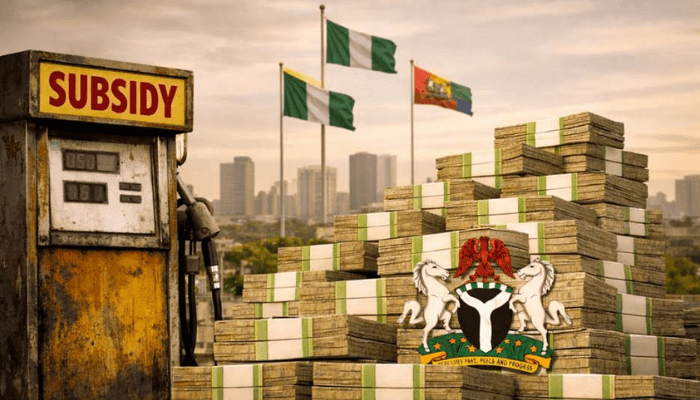
According to NERC’s fourth quarter (Q4) of 2024 report, electricity consumers in Nigeria continued paying the same rates set in July 2024, despite a significant rise in the cost of power generation. To bridge this gap and prevent collapse in the electricity market, the federal government bore N471.69 billion—around 57 percent of the total generation cost—as subsidy, while the DisCos covered the remaining N360.97 billion, or 43 percent.
Yet this approach stands in contrast to earlier official claims. In March 2022, Zainab Ahmed, then minister of finance under President Muhammadu Buhari, asserted that all electricity subsidies had been ‘quietly’ removed. “We have been able to quietly implement subsidy removal in the electricity sector, and as we speak, we don’t have subsidies in the electricity sector. We did that incrementally over time by carefully adjusting the prices at some levels while holding the lower levels down,” she said.
The NERC defines a cost-reflective tariff as one that mirrors the actual cost of producing and delivering electricity, taking into account inflation, exchange rates, generation capacity, gas prices, and other uncontrollable cost drivers within the power sector.
But in truth, recent reforms have worsened Nigeria’s macroeconomic indicators. Without a shift in approach, citizens may find little relief in the near future.
The social contract fractures
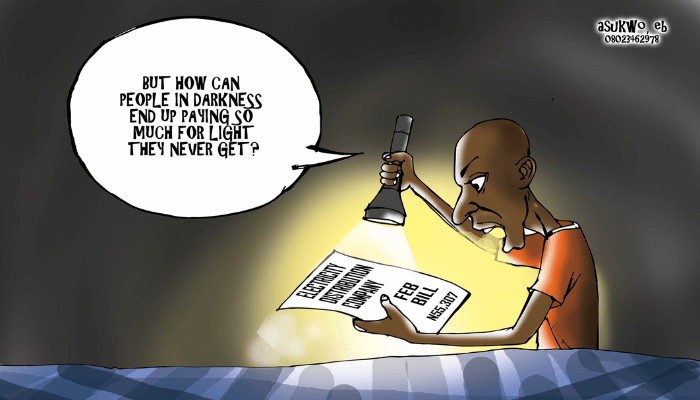
The Nigerian government has, in many ways, broken its social contract with its people by failing to maintain price stability and ensure a bearable standard of living. The most immediate alternative to unreliable grid power—a generator—has become prohibitively expensive. Meanwhile, clean energy solutions such as solar panels and inverters remain out of reach for the average citizen.
According to social contract theory, originally developed by Thomas Hobbes, an English philosopher, individuals surrender certain freedoms to the state in return for protection and order. Hobbes famously warned that in the absence of government, life would be ‘cruel, brutish, and short.’ The social contract implies that the state must preserve peace and provide basic needs. When the state fails to provide stable electricity or affordable alternatives, particularly when even generators become unaffordable, it violates that agreement.
While Hobbes believed citizens had no right to rebel, John Locke, the English philosopher, took a more democratic stance. He argued that when a government fails to protect fundamental rights—life, liberty, and property—the people not only have the right, but the duty, to withdraw their consent. In Nigeria’s case, the inability of the state to provide affordable and reliable electricity erodes its legitimacy, leading citizens to question the value of their continued loyalty.
“When people don’t have steady and affordable electricity, it feels like the government isn’t holding up its end of the deal,” said Habu Sadeik, an energy expert. “Power is such a basic need—for homes, businesses, schools, hospitals—so when it constantly fails, it sends a message that citizens’ wellbeing isn’t a priority. It’s hard to trust leaders when something so basic still doesn’t work. Over time, that really chips away at people’s faith in the system.”
Read also: Running on Empty: Electricity sector reform and Nigeria’s national security imperative
Required investment
Minister Adelabu recently stated that the nation requires $10 billion annually for the next 10 to 20 years to build a functional and reliable power sector. “For us to achieve functional, reliable, and stable electricity in Nigeria, we need not less than $10 billion annually for the next 10 to 20 years,” he said. To put this in perspective, $10 billion (N16 trillion) represents around 29.1 percent of Nigeria’s 2025 national budget. Clearly, private investment will be necessary but the core question remains whether Nigeria can guarantee returns on such investment? Any investor, naturally, seeks profit, but without stable policies and consumer purchasing power, the investment climate remains uncertain.
Lessons from abroad
Global experiences offer valuable lessons. In Indonesia, fuel and electricity subsidies were gradually phased out between 2017 and 2020. Though inflation briefly rose from 5.1 percent to 8.3 percent, the government cushioned the impact with targeted social welfare programmes. The lesson here is clear: phased subsidy removal, when paired with safety nets, can reduce public backlash.
In Egypt, between 2022 and 2024, the government initially cut electricity subsidies for industries, giving households more time to adjust. Household tariffs eventually rose by 45 percent, but power reliability improved, and industries adapted through investments in solar energy. The key takeawayis that reforms should begin with those most able to absorb the shock, rather than imposing hardship on low-income families from the outset.
Nigeria, however, has taken a more abrupt approach—implementing sharp tariff hikes and removing subsidies without establishing any credible protection for the most vulnerable. Without transparency, phased implementation, and support for those most affected, the country risks deepening its economic and social divides. Reforms without empathy are not reforms but rupture.
The data deficit and subsidy injustice
Sunday Oduntan, CEO of the Association of Nigerian Electricity Distributors, captured the gravity of the problem succinctly. He noted that in 2024, the government’s electricity subsidy soared to N2.4 trillion, up from N650 billion in 2023. “This trend is unsustainable, highly inefficient, and, unfortunately, it also fuels corruption, largely because we lack a transparent and effective subsidy framework,” he said.

In a Channels Television interview, Oduntan further highlighted the lack of accurate data as a major barrier to targeted subsidies. “We cannot continue with universal subsidies. Why should millionaires like Aliko Dangote or Sanwo-Olu be subsidised? The government must develop a system to identify and support only the vulnerable pensioners, the unemployed, and those truly in need. But Nigeria lacks the data to do this fairly. Until we fix this, subsidy removal will remain a blunt instrument that harms the poor while shielding the elite.”
This speaks to a broader issue. While subsidies are intended to make essential services more affordable, and taxes are levied to meet public financial obligations, both are underpinned by the same principles of fairness and justice. Omo Aregbeyen, professor of public finance at the University of Ibadan, explains this principle. “In taxation, horizontal equity means people in similar financial situations should be treated similarly, while vertical equity holds that those with greater capacity should contribute more.”
These principles should also guide subsidy allocation. Yet in the absence of reliable data, implementation becomes flawed. Consider a community where both low-income and wealthy individuals reside. A universal subsidy in such an area means that the rich benefit just as much as the poor, if not more. This breaches vertical equity, as the wealthy, who can pay the full price, receive state support meant for the vulnerable. It also undermines horizontal equity, as unequal groups are treated the same.
The result is a deeply inefficient system where massive public spending fails to reach those who need it most. Worse still, it opens the door to abuse, allowing affluent individuals to benefit from scarce public resources under the guise of poverty. Just as a fair tax system ensures the wealthy contribute proportionately, a sound subsidy regime should ensure support reaches only those genuinely in need. Anything less corrodes public trust and squanders national wealth.