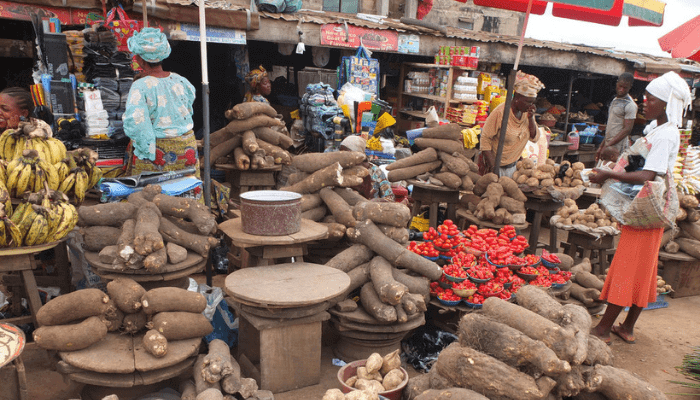
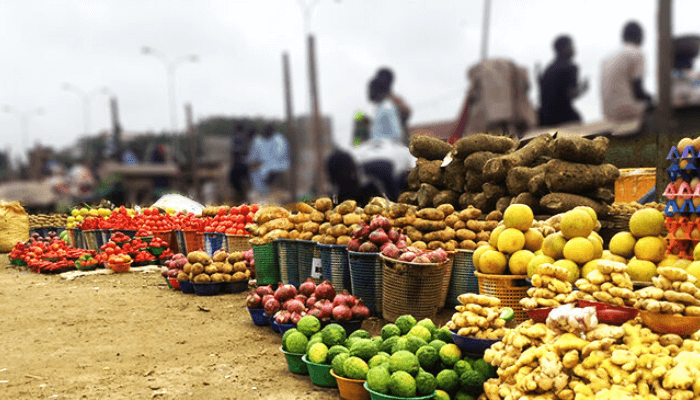
Nigeria’s food security may be under threat owing to the rising flood incidence recorded across the country recently, which adds to the burning pressure on Nigerian farmers who are already contending with diseases and pest infestation.
The recent flood recorded in major agricultural producing states such as Benue and Niger is a major challenge to the country’s food security as many farmlands were submerged in floods beyond the level that the crops could survive.
According to agricultural experts, when severe floods occur, farmers incur huge losses, as their crops get submerged beyond a level they could thrive. Furthermore, fungal diseases usually become more rampant when extensive flooding overtakes farms.
“During flood there’s a lot of fungi development, which leads to a lot of fungal diseases in crop production,” said AfricanFarmer Mogaji, chief executive officer, X-ray Farms Limited.

Recently, more than 16 states have been ravaged by floods and have caused unprecedented havoc across the country with a possibility of more destruction to come if the rainfall continues.
The agricultural sector has been the most affected from the flood disaster as farmers across the country have recorded huge losses owing to the floods that affected their farmlands.
“My 10 hectare of cassava I planted three months ago has been destroyed by flood,” Fedelis Udema, a cassava farmer in Ase-Azaga area of Rivers State.
“The situation is very bad and this would affect our production this year. The country might experience further increase in prices of food this year,” Udema added.
Nigeria’s food inflation index hits its highest level since 2009 as prices of food items across the country continued on an upward trajectory, according to the National Bureau of Statistics (NBS).

During a recent visit to Niger state that many farmlands in Agai, Suleja, Tafa, Borgu and Mashegu local government areas where submerged with flood, thereby resulting to crop and livestock losses.
In many of the farms, rice, wheat, millet and beans were submerged beyond redemption.
According to experts, if the flood situation is not address, the country might experience food shortages in some major crops, as farmers would not be able to farm large areas owing to the huge losses incur during the floods.
The solutions proffered by experts to address the issue of flood include the need to construct more and better drainage systems across the country, and more dams to be developed to take up water from presently overworked reservoirs.
Experts have pointed out the need for farmers to adopt humidity resistant seeds and effective fungal chemicals, which they described as important in managing crop loss.
The solutions proffered by experts to address the issue of flood include the need to construct more and better drainage systems across the country, and more dams to be developed to take up water from presently overworked reservoirs.
The experts further pointed out the need for farmers to adopt humidity resistant seeds and effective fungal chemicals, which they described as important in managing crop loss.
“We need to engage more seeds that are resistant to high humidity,” Mogaji said.
Similarly, the average age of farmers in the country is a setback to the country’s quest for food security as the agric sector. “The average age of farmers in the country is a huge threat to food security. Our agriculture is still labour intensive, so what can 60 years old do?” asked Abiodun Olorundenro, chief executive officer, Green Vine Farms.
The National Hydrological Services Agency had earlier in the year warned against flooding, stating that 35 states in the country would experience severe flooding on the account of a rise in water levels of eight major rivers across the country.
Josephine Okojie