



|
Getting your Trinity Audio player ready...
|
More available loans, premium pricing and speedy uptake are concentrating the attention of developers in Nigeria on commercial properties, away from the residential segment where demand is greater, BusinessDay investigations show.
Awkwardly also, property development is concentrating in highbrow neighbourhoods, away from mid- and low-brow areas where demand is higher.
Analysts say that Nigeria, with a population of over 160 million, a 16-million housing deficit and a meagre 10 percent homeownership level, obviously presents a compelling investment opportunity because these numbers translate to very high demand for housing.
They explain, however, that investment here is rather shrinking for a number of reasons, including the fact that investors’ interest has shifted to commercial property where demand is more effective.

Other reasons for this situation, according to them, include poor strategy by investors and improper dimensioning of the market.
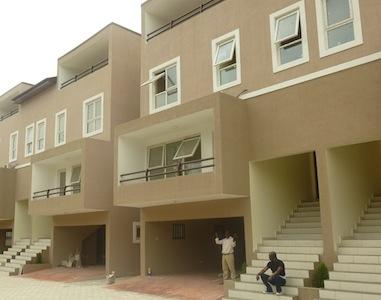
“Pricing is a major issue in the interplay of demand and supply. The developers and investors who supply housing to the market with little or no consideration for the purchasing power of their target market place prices on their products way beyond affordability level,” the analysts further explain.
They also point out that these developers and investors are asking for too much, explaining that this has made them unable to dimension the market properly.
“It is lack of good strategy and greed that make all developers rush to build in Ikoyi, Lekki and other highbrow areas that are already saturated, leaving out the low-income areas where demand is very high. Even the few that build in this low-end market put Lekki and Ikoyi price-tags on their houses. So, price is the issue and not demand, because demand is more than enough at the low end,” the analysts insist.

Explaining to BusinessDay why investors shy away from residential real estate, Gbenga Olaniya, a developer, who is the CEO of Estate Links Limited, says, “Nigeria is a trading economy and, as such, when you start a residential development on a 500-square metre piece of land and a shopping mall, for instance, on another 1,000 square metres of land, you will sell off your shopping mall almost at foundation level, while you will struggle to sell all the residential units in two years.”
Festus Ilaya, a corporate estate manager in Ikoyi, Lagos, points out, however, that though there are pockets of small-size projects delivering 30-40 homes by estate developers, large-scale developments of 200-300 homes, typical of big estates like Victoria Garden City (VGC) and Crown Estate in Lekki, 1004 Estate in Victoria Island, Lagos, Gwarimpa Estate in Abuja, etc, have not come to the market in a long time.
An institutional investor, who is a major player in the commercial segment of the market, agrees that investment in residential real estate is diminishing, explaining that such investment goes with a risk and that it is always hard to achieve reasonable sales in residential buildings.
“To do well in residential development, you actually have to have an aggressive marketing machine. If, for instance, we have to do anything in residential that is going to be of any interest, we will have to do about 200-300 units, and the challenge there is that you have to sell all of these units for the project to make sense,” he says.
“And to be able to sell them means we have to work with someone who has a good selling machine, in which case we will be considering partnering with the likes of UPDC, Fine and Country, HFP Engineering, etc,” he adds.
The investor, who does not want to be named, further says that developing residential houses is challenged by lack of capacity, pointing out that to build even 200 units is daunting, because of quality issues.
“If one could get land in Lekki area, for instance, where one can build about 400 units in high-rise buildings of 20-24 floors, it would be fine. But if you have to do that, how many contractors can you get to build 20-24 floors here? So, there is also the issue of capacity going side by side with quality finishing,” he adds.
Comparing investment in residential with commercial real estate, the investor says return on investment is almost at par, assuming all the units are sold out and all the constraints are fixed, stressing that the margin from the residential is comparable to what comes from commercial, but not fantastic.
CHUKA UROKO




