When a Nigerian entrepreneur looks at the nation’s business terrain, he stands at the intersection of promise and pressure. The terrain is rugged,defined by erratic policies, infrastructural decay, fluctuating currency, and a work culture shaped by survival. Yet, in this seeming chaos lies the furnace that forges some of the most resilient business minds on the continent. I have seen this firsthand in the manufacturing corridors of Lagos, the oil fields of Niger Delta, and the concrete plants that keep our economy growing. This is where true leadership in Africa must be redefined,not by imported doctrines, but by the realities of our soil.
When Dr. James Mwangi of Kenya’s Equity Bank built his empire on empathy and inclusion, he did what few dared: he led with heart in a system long ruled by hierarchy. In Nigeria, this principle remains just as vital. Many of our industries were built on sheer determination, often without institutional support. From construction to energy, our progress has been driven not by policy but by people,ordinary Nigerians whose will to survive has become an economic engine. Leadership in such an environment cannot be transactional; it must be transformational in the truest, contextual sense.
Too long have we mistaken leadership for authority. In our boardrooms, ego often overshadows empathy, and control replaces creativity. The Nigerian business landscape punishes rigidity. Those who lead through fear or title soon discover that influence fades faster than trust can be built. The old Western corporate models, rigid and hierarchical, cannot flourish in a terrain that is fluid and relational. Ours is a people economy; our success depends on trust and adaptability. Leadership here must understand that power is not to be exercised but to be stewarded.
That is why I speak of contextual leadership,leadership born of clarity, community, and character. These are not mere ideals; they are survival principles in Africa’s unpredictable markets. Clarity is the compass. You must know your “why,” for storms will come. In the factory floor, when machines break down and FX volatility shakes your cost structure, only clarity of purpose keeps vision alive. Community is our strength. Nigeria’s informal sector proves that relationships move markets faster than policies do. True leaders build partnerships, nurture networks, and empower teams. Finally, character is the cornerstone. Integrity is not a virtue here,it is capital. In a nation weary of inconsistency, a leader’s word must be his bond.

I have seen ethical leadership transform industries. Ibukun Awosika’s example at First Bank, Aliko Dangote’s commitment to Nigerian industrialisation, and Paul Kagame’s governance model in Rwanda all point to one truth: leadership that balances profit with purpose creates lasting impact. At Colton Group, and in every business I have been privileged to build, this philosophy stands as our foundation. We pursue excellence not as ambition but as service;service to our people, to our nation, and to God. Because in truth, leadership is stewardship, not status.
Africa’s next leap depends not on stronger men but on wiser models. The African Continental Free Trade Area opens a new frontier for collaboration, yet its promise will be wasted if our leaders continue to think in silos. The future belongs to those who lead with openness;leaders who listen, engage, and trust. In a digital age where reputation travels at the speed of light, humility is no longer weakness; it is wisdom.
Our young entrepreneurs are already rewriting the script. From tech hubs in Yaba to logistics startups in Abuja, the next generation is leading without waiting for titles. They embody the new African leadership,participatory, transparent, and people-centered. The challenge before us is to mentor them rightly;to pass down not just wealth, but wisdom; not just systems, but spirit.
The time has come for Africa, especially Nigeria, to build its own leadership blueprint. One that merges the analytical with the spiritual, the strategic with the humane, and the visionary with the practical. Leadership that recognises business not merely as a path to profit but as a ministry of impact. Because in the end, as Scripture reminds us, “the greatest among you shall be your servant.”
The true measure of a leader is not in the wealth he amasses but in the lives he transforms. Africa does not need more powerful leaders; she needs more empowering ones,men and women who see leadership not as privilege, but as purpose.

About the Author
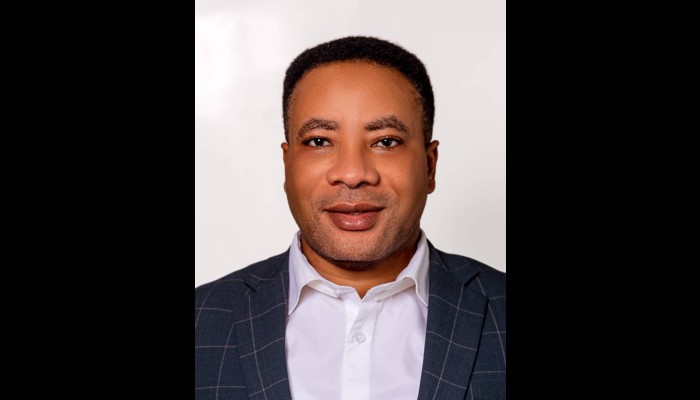
Dr. Cornelius Collins Balogun is a visionary entrepreneur and industrial strategist with a passion for sustainable manufacturing and national development. A founder of multiple Nigerian enterprises, he blends strategy with service, leading with integrity and faith. His works inspire a new generation of African leaders to build with purpose, lead with compassion, and transform with vision.