…political analysts, CSOs knock lawmakers, say lack courage
The House of Representatives’ decision to rescind the bill that sought to strip the Vice President and Governors of immunity has raised concerns , with political analysts and civil society organisations (CSOs) condemning the move as a lack of courage to confront corruption in governance, but rather shield corrupt leaders.
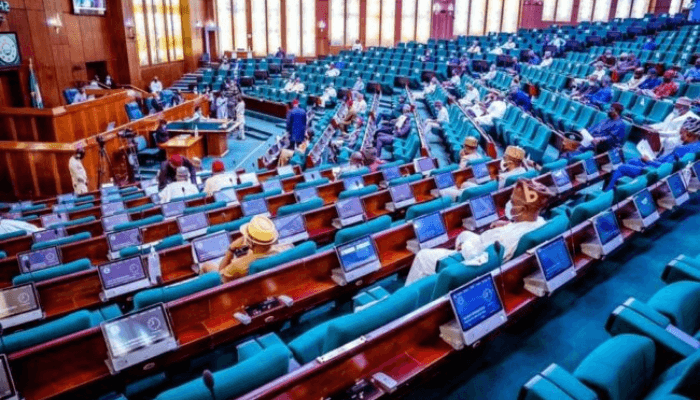
The bill, which initially passed on Wednesday, sought to amend the 1999 Constitution to allow the Vice President, governors and their deputy political officeholders to face legal action while in office. However, in a sudden reversal on Thursday, lawmakers withdrew their decision, citing the need for further debate.
Benjamin Kalu, the deputy speaker of the House of Representatives, who presided over the plenary session said the decision on the bills is to enable the House to conduct a more robust debate by the lawmakers.

“We want to apologise to the sponsors of the bills, but this action is to enable the House to have a further debate considering the importance of the subject matters,” Kalu said.
This has fueled suspicions that the move is a deliberate attempt to preserve the status quo and shield officials from accountability.
The proposed legislation, titled “A Bill for an Act to Alter the Constitution of the Federal Republic of Nigeria, 1999, to Qualify the Immunity Conferred on the President, Remove the Immunity Conferred on the Vice President, the Governors and their Deputies, in Order to Curb Corruption, Eradicate Impunity and Enhance Accountability in Public Office and for Related Matters (HB.1664),” was sponsored by Solomon Bob.
Read also: Reps pass bill to amend requirements for election as president, governor
Nigerians said the lawmakers’ abrupt U-turn has raised concerns that they are more interested in shielding corrupt leaders than in promoting transparency.

Armsfree Ajanaku, the executive director of the Grassroots Centre for Rights & Civic Orientation, criticised the lawmakers’ decision, stating, “We believe the decision to rescind the bill meant to strip the VP and Governors of immunity is yet another indication of lack of commitment to the fight against corruption in public offices. The purpose of the bill was to reduce corruption and enhance accountability of those public offices.
“The bill was also supposed to qualify the immunity of the President. However, by making a volte face, the lawmakers have just demonstrated a lack of courage to confront the corruption and lack of accountability, especially among governors at the sub-national level. Nigeria itself is the loser because as far as corruption continues to thrive in all spheres of governance, our developmental aspirations will not be achieved.”
On social media, Nigerians expressed their disappointment. Asamonye Anthony, posting on X, suggested that external forces had pressured the lawmakers to abandon the bill. “Their masters harass them— Shamelessly they will run back and announce, ‘we are revoking or stepping down.’ Naija legislature,” he wrote.
Another commentator, Kalu Okoroezi, bluntly questioned the integrity of the lawmakers, asking, “How much did it cost them to bribe you hungry poor NASS?”
Chinedu Obi, the Director-General of the Inter-Party Advisory Council (IPAC), argued that the bill should have been given a chance, as it could have promoted accountability and transparency. He noted that the U-turn was likely a move to avoid clashing with state governors, who were against the bill.
“The intention of immunity was actually to shield governors and the VP from distractions, allowing them to deliver on their mandate. But in recent years, we have seen governors become emperors, many getting involved in serious criminal and corruption issues. This strengthens the need to reverse immunity.
“My thinking is that this U-turn is not a good one. The Reps should have had the courage to continue. We should have tried a system where governors can be held accountable while in office. Since we have tried the other way and it is not working, we should have tested this and seen how it worked. I have always known that unless the governors themselves want their immunity stripped, the structure of the Constitution makes it difficult. The state legislatures would have shut it down because they take instructions from governors, but at least the bill should have been allowed to run its course,” he said.
Innocent Awuzie, an Abuja-based politician, echoed similar sentiments, stating that the reversal of the decision signalled a lack of political will to promote accountability.
“By reversing the decision, lawmakers are simply protecting top officials from prosecution, which could undermine efforts to combat corruption. If the immunity clause remains unchanged, it may allow corrupt officials to evade legal consequences while in office, making it harder to fight financial mismanagement and abuse of office,” he said.