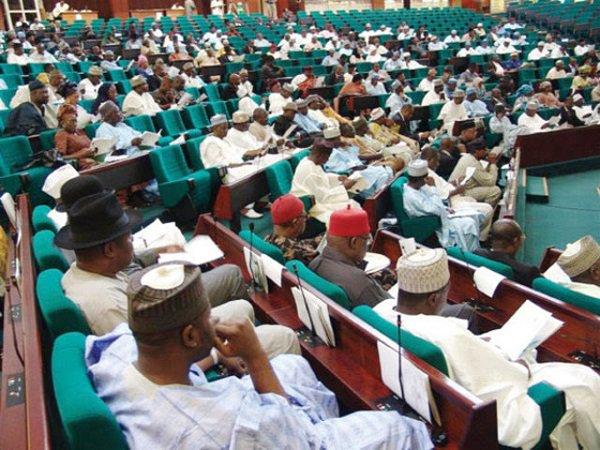
The House of Representatives Tuesday passed for second reading, a Bill to amend the Legislative Houses (Power and Privileges) Act 2017 to preserve the powers of a legislative house and guarantee the separation of power with particular focus on halting the interference of courts in legislative processes.
Titled: ‘A Bill for an Act to Amend the Legislative Houses (Powers and Privileges) Act, 2017 to Preserve the Legislative Powers of a Legislative House and Guarantee the Principle of Separation of Powers; and for Related Matters’ the proposed legislation is sponsored by Abubakar Fulata (APC, Jigawa) and Marian Onuoha (APC, Imo).
Leading the debate on the Bill, Fulata argued that in recent times, there has been several court cases which seek to halt the National Assembly and its committees from carrying out their legislative duties in contravention of section 4 of the Nigerian constitution.
He stressed that in the provisions of the constitution, nobody has the power to stop the National Assembly from doing its duties and by the provisions of the law, one has to wait until after the legislature has concluded its work before he or she can challenge it.

The Chairman House Committee on Rules and Business also said the court cases seeking to stop the lawmakers from performing their jobs goes against the principles or separation of power.
He her contribution, Co-sponsor of the Bill, Onuoha said that it has become a common practice to see people or agencies going to court and brandishing court orders in why they should not appear for investigative hearings, thereby obstructing the performance of their legislative duties.
She stated that by the provisions of Section 4 of the 1999 constitution as amended, no criminal or civil proceedings can be brought against the National Assembly in the course of their legislative duties.
Ruling, Speaker of the House, Femi Gbajabiamila said the legislature has witnessed many cases against the National Assembly conducting its duty but it is only when a matter has been concluded by the legislature that one can go to court to determine whether the matter considered by lawmakers was illegal.