…peg age limit at 60, raises education status to university degree
…rescind bill to strip vice-president, governors immunity in office
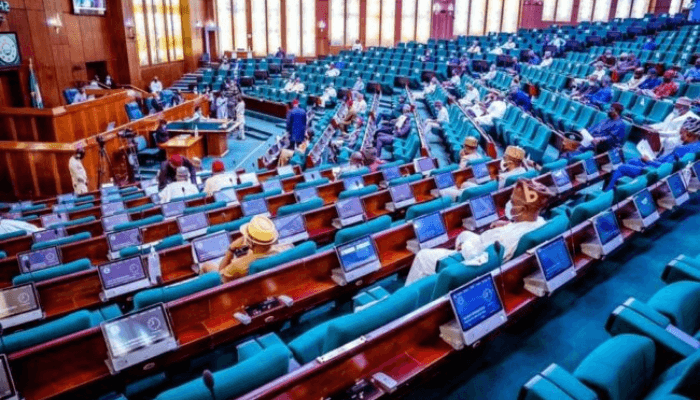
The Federal House of Representatives has passed a bill for second reading that seeks to amend the qualifications required to be elected as President and Governor in Nigeria.
The bill proposes amendments to Sections 131 and 177 of the 1999 Constitution (as amended), raising the minimum educational qualification from a Senior Secondary School Certificate (SSCE) to a Bachelor’s Degree from a University. It also introduces an age limit of 60 years for candidates.

The proposed legislation is entitled, “A Bill for an Act to Alter the Constitution of the Federal Republic of Nigeria, 1999 to Review the Requirements that Qualifies a Persons to be Elected as President and Vice-President of the Federal Republic of Nigeria, Governors and Deputy Governor of a State of the Federal Republic of Nigeria and for Related Matters (HB.202)”, and is sponsored by Ikeagwuonu Onyinye Ugochinyere.
A copy of the bill shows that Section 131 (d) was altered and proposes that “A person shall be qualified to the Office of the President if: he has been educated up to University level and has earned a Bachelor’s Degree in his chosen field of study.
Additionally, a new subsection (e) has been inserted, stipulating that “he is not more than 60 years old at the time of vying for the Office of the President.”
Currently, the Constitution allows a person to contest for the Presidency if they are a Nigerian citizen by birth, at least 35 years old (this was reduced from 40 years by the Fourth Alteration Act in 2017), and have been educated to at least School Certificate level or its equivalent.
Read also: Reps’ constitutional amendment gambit, Senate’s house of horror’ and Jandor’s volte face

The bill also amends Section 177(b) to propose that a person shall be eligible to be elected as Governor if “he has been educated up to University level and has earned a Bachelor’s Degree in his chosen field of study.”
It further sets a maximum age limit of 60 years for Gubernatorial candidates.
Similarly, the Federal House of Representatives has rescinded its earlier passage of a bill seeking to amend the 1999 Constitution to remove the immunity granted to the Vice President, Governors and Deputy Governors, while also qualifying the immunity of the President.
Banjamin Kalu. The Deputy Speaker, who presided over plenary on Thursday, said the decision was aimed at allowing further debate and scrutiny of the controversial amendment.
During Wednesday’s plenary the House passed the proposed legislation, entitled “A Bill for an Act to Alter the Constitution of the Federal Republic of Nigeria, 1999, to Qualify the Immunity Conferred on the President, Remove the Immunity Conferred on the Vice President, the Governors and their Deputies, in Order to Curb Corruption, Eradicate Impunity and Enhance Accountability in Public Office and for Related Matters (HB.1664),” was sponsored by Solomon Bob.
The bill is among the 42 Constitutional amendment bills that scaled second reading during plenary on Wednesday.
The bill sought to amend Section 308 of the Constitution, which currently grants absolute immunity to the President, Vice President, Governors, and Deputy Governors while in Office. Under the existing law, these officials cannot be sued or prosecuted for any civil or criminal offence during their tenure.
However, if passed into law, the amendment will qualify the immunity of the President, meaning the President could face legal action under certain conditions while in Office.
It also seeks to completely remove immunity for the Vice President, Governors, and Deputy Governors, making them liable for prosecution while still serving in Office.